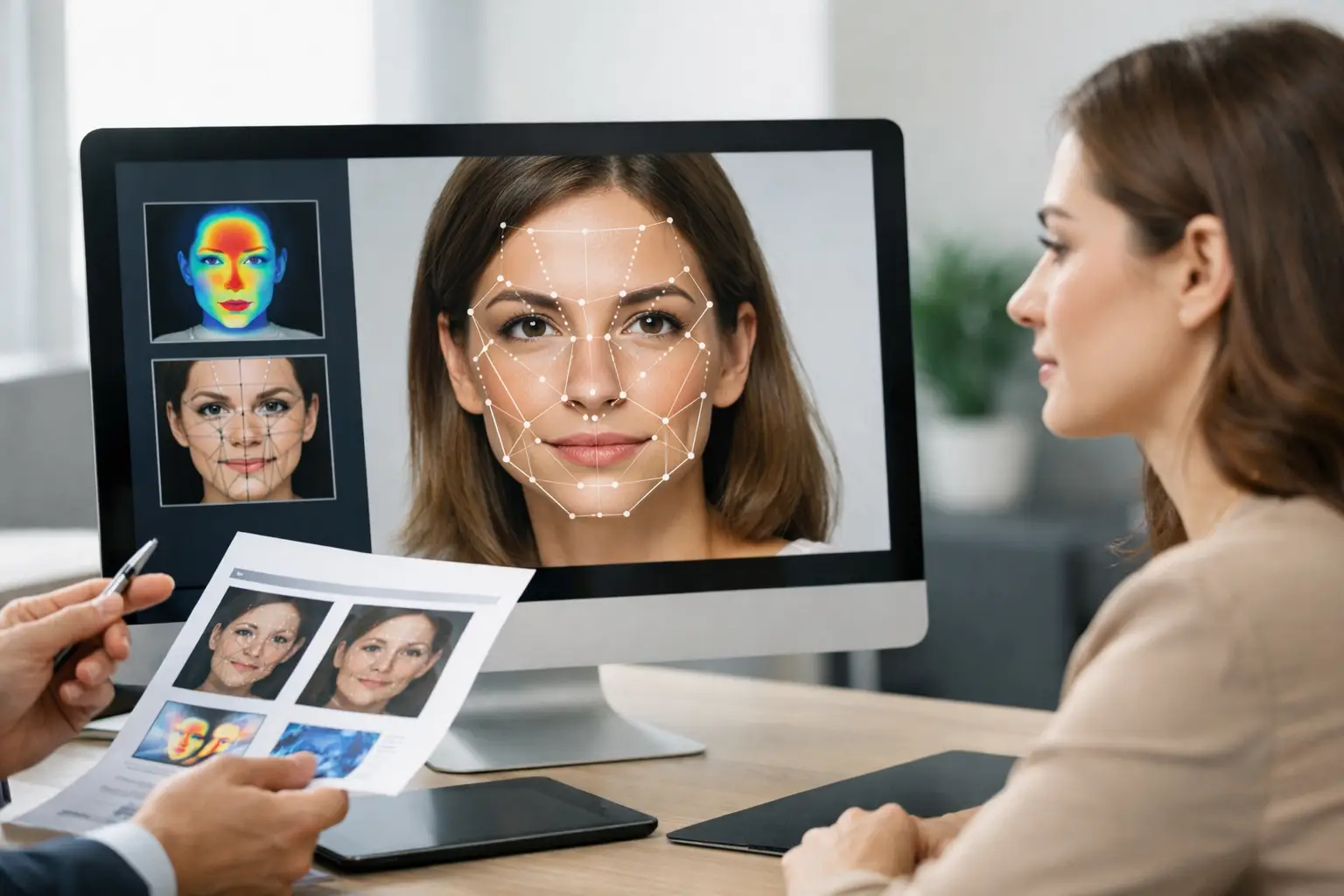
A first impression happens fast. A facial pattern analysis report gives that instinct a structured framework - transforming visible facial cues into an organized read on behavioral tendencies, emotional expression, communication style, and interpersonal fit. Instead of relying on vague guesses, you receive a polished analysis designed to make personality patterns easier to recognize, discuss, and apply.
For people who make decisions around people - managers, recruiters, coaches, team leads, and relationship-minded professionals - the value is speed. You do not need a long questionnaire, a formal assessment session, or weeks of observation to begin building a clearer working picture. You need a signal that is easy to review, practical to share, and detailed enough to start a better conversation.
What Is a Facial Pattern Analysis Report?
A facial pattern analysis report is a visual personality-reading document built from facial structure, proportional relationships, and expression-related signals identified during an AI-guided scan. The output organizes those observations into distinct personality architectural cores rather than leaving you with a generic description.
The strongest reports do more than say someone is “confident” or “sensitive.” They map how a person may process pressure, seek control, express emotion, approach conflict, respond to recognition, and create connection with others. The result is a readable profile that helps explain not only what someone tends to do, but why certain environments, roles, and relationships may bring out different sides of them.
That distinction matters. A person can be highly driven and still need autonomy. They can be socially persuasive yet become guarded when trust is uncertain. They can appear calm while carrying a strong internal need for precision or security. Pattern analysis is useful because people are rarely one trait at a time.
The Pattern Analysis v4.2 Framework
A meaningful facial report needs a framework. Without one, the output becomes a collection of flattering labels that could apply to almost anyone. Pattern Analysis v4.2 is designed to organize the scan around repeatable dimensions that create a more complete personality picture.
Structural Integrity
Structural Integrity examines the visual architecture of the face: balance, contours, proportion, feature placement, and the strength or softness of defining lines. In report language, these cues are used to identify how a person may hold boundaries, organize decisions, handle responsibility, and respond when circumstances become demanding.
A more forceful structural read may point toward directness, self-reliance, or a preference for action. A more adaptive read may indicate flexibility, empathy, or a tendency to consider several perspectives before committing. Neither profile is automatically better. The real advantage is understanding where each style performs best and where friction may appear.
Five-Element Mapping
Five-Element Mapping groups facial patterns into broader behavioral energies. Think of it as a way to identify the operating mode someone reaches for most naturally: decisive momentum, strategic observation, emotional connection, steady support, or inventive change.
Most people are not a single element. They show a primary pattern with secondary influences that can become more visible under stress, in leadership, or in close relationships. This layered view makes the report more useful than a one-word personality label. It can show why a collaborative employee becomes firm when standards slip, or why a highly logical partner needs more reassurance than their outward style suggests.
Emotional Pattern Signals
Emotional patterns are not just about whether someone smiles easily or appears serious. The analysis looks at how a person may signal openness, reserve, intensity, sensitivity, optimism, vigilance, or self-protection through facial presentation.
This can be particularly valuable in communication-heavy settings. A manager may learn that a team member likely responds best to direct expectations and private recognition. A coach may see why a client resists broad encouragement but responds strongly to measurable progress. A person dating or navigating a long-term relationship may gain language for a recurring dynamic that previously felt hard to name.
The report should be used as a perspective, not a final verdict. Context, culture, lived experience, and a person’s own choices always matter. The best use of a scan is to generate more thoughtful questions, not to replace real conversation or professional judgment.
What You Can Use the Report For
A PDF-ready report becomes more valuable when it has a clear job to do. Personal curiosity is a valid starting point, but the insights can also support decisions where people dynamics shape the outcome.
For career direction, the report can highlight environments that may suit a person’s natural pace and motivation. Someone with a high-drive, high-visibility pattern may thrive in leadership, sales, entrepreneurship, negotiation, or roles with clear ownership. Someone with a more analytical and measured pattern may prefer strategy, operations, research, finance, design, or specialist work where depth is rewarded. Career fit is never determined by facial analysis alone, but it can clarify which work conditions deserve closer attention.
For team building, the report can reveal potential collaboration strengths before personalities collide under pressure. A team filled with fast decision-makers may move quickly but overlook nuance. A team made entirely of careful evaluators may produce excellent work but delay action. Seeing likely styles early gives leaders a better way to balance roles, communication, and accountability.
For compatibility, the report can surface likely attraction points and tension points. One person may value warmth and frequent emotional feedback. Another may show care through consistency, problem-solving, or loyalty rather than verbal reassurance. Recognizing that difference does not solve every conflict, but it can stop people from interpreting a different communication style as a lack of commitment.
From Scan to Report in Three Steps
The experience should feel fast because the complex work happens behind the interface. A guided workflow begins by anchoring the analysis to a name, then moves through profile and image discovery before the Neural Scan assembles the report.
First, the identity stage establishes the subject of the analysis. Accuracy starts with using the correct person and an appropriate image. A clear, front-facing photo with good lighting provides a more useful visual input than a heavily filtered, low-resolution, obscured, or extreme-angle image.
Next, the system evaluates the image through its pattern framework. It identifies visual relationships and translates them into organized behavioral themes rather than raw technical data. This is where the scan becomes understandable for a nontechnical user.
Finally, the report is generated in a clean, shareable format. You can review it privately, use it as a prompt for self-reflection, or bring it into a coaching, hiring, leadership, or relationship conversation where all participants have consented to the discussion.
How to Read a Facial Pattern Analysis Report Well
The most useful readers avoid two extremes. They do not dismiss every insight because it is unfamiliar, and they do not treat every sentence as absolute fact. Instead, they look for patterns that connect across the report.
If the analysis repeatedly points to a need for independence, consider where that shows up: decision-making, work preferences, conflict style, or relationship boundaries. If it identifies emotional sensitivity alongside a controlled exterior, ask whether the person tends to process feelings privately before speaking. A report becomes more valuable when you compare its themes with observed behavior over time.
Pay particular attention to internal tensions. A person can have a strong need to lead and a strong fear of being misunderstood. They can be naturally adaptable but become rigid when trust is low. These combinations often explain more than a simple strength or weakness label because they reveal the conditions under which a trait changes.
Use care when analyzing someone else. Consent is the right standard, especially in workplaces, dating, and close relationships. A facial pattern report should support respectful dialogue, not become a shortcut for labeling, excluding, diagnosing, or making high-stakes decisions without additional evidence.
Why a Professional-Grade Format Changes the Experience
A casual observation disappears quickly. A structured report creates a reference point. It gives users a shared vocabulary for discussing communication, motivation, pressure response, and compatibility without turning every conversation into a personality debate.
That is the advantage of a productized framework. SomaScan.ai presents the scan as more than a novelty result: it is an elegant, organized personality snapshot built for review and discussion. The report format makes the output easier to revisit after a difficult team meeting, before a career move, or when a relationship pattern keeps repeating.
A clear face reading does not replace getting to know someone. It gives you a sharper place to start. When used with curiosity, consent, and real-world observation, a facial pattern analysis report can turn a quick visual signal into a more intelligent conversation about how people think, connect, and perform.