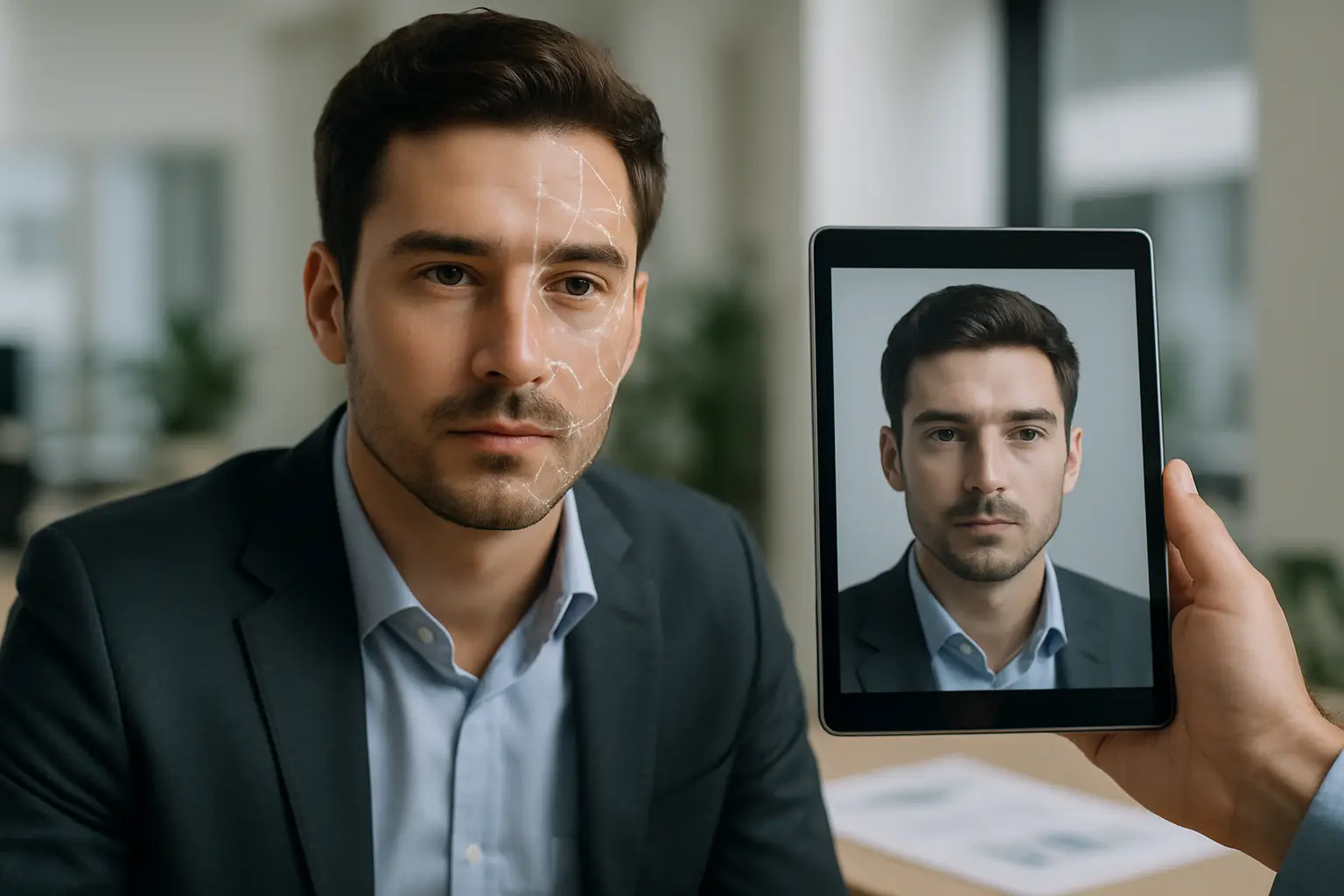
You can sit through a two-hour interview and still miss what matters: emotional defaults, stress behaviors, power dynamics, and the small tells that predict how someone will show up on Monday morning. That’s why the ai face reading report has become the fastest way to get a structured read on personality and interpersonal patterns when time is short and stakes are real.
Not as a replacement for judgment. As an engine for clarity.
What an ai face reading report is (and isn’t)
An ai face reading report is a packaged, PDF-ready personality analysis generated from facial inputs and profile context. The deliverable usually reads like a professional briefing: core traits, character tendencies, emotional patterns, compatibility indicators, and work-style signals.
What it isn’t is magic. It’s pattern recognition - a system that converts visual structure into a narrative framework about temperament and likely behaviors. The value is speed and structure: you get a consistent lens, applied the same way every time, without the fatigue and bias that creep into human “gut reads.”
It also isn’t a clinical diagnosis. If a product implies it can diagnose mental health conditions, treat that as a red flag. The useful versions stay in the lane of tendencies, interpersonal defaults, and behavioral probabilities.
Why people buy these reports instead of taking another assessment
Traditional assessments are slow. They also require cooperation, honesty, and attention span. In real life, you’re often working with partial information: a candidate who interviews well, a new teammate you need to manage tomorrow, a partner you can’t quite decode.
A face reading report sells because it’s frictionless. It doesn’t ask someone to fill out 200 questions. It produces a confident, organized output that people can actually use in conversation.
There’s also a practical reason professionals won’t say out loud: teams already make personality judgments. They just do it informally and inconsistently. A report formalizes that impulse into a repeatable format.
What’s typically inside a strong report
A high-performing ai face reading report doesn’t just throw adjectives at you. It gives you a framework - a set of “cores” and mappings that feel like an operating system. When the report is done right, you can skim it in five minutes and still walk away with talking points that change how you communicate.
Here’s what the best reports usually cover.
Personality cores and behavioral defaults
This is the center of gravity. You’ll see a few dominant “architectures” that explain how a person tends to make decisions, seek security, and express control.
The difference between a decent report and a great one is whether it translates traits into behavior. “Analytical” is vague. “In conflict, defaults to precision and correction before reassurance” is actionable.
Emotional patterns under pressure
Most people can perform social polish for an hour. The real data is what happens under deadline pressure, social ambiguity, or loss of control.
A useful report flags likely stress expressions: withdrawal vs escalation, over-explaining vs shutting down, quick temper vs silent resentment. This matters for managers and partners because you’re not optimizing for someone’s best day. You’re planning for their hard days.
Compatibility and communication friction
Compatibility isn’t just romance. It’s whether two people can share decision-making without constant repair.
A good report identifies the likely friction points: dominance clashes, mismatch in emotional processing speed, different needs for validation, different tolerance for uncertainty. It also suggests what works: directness vs softness, frequency of check-ins, autonomy boundaries, and the kind of feedback that lands.
Career and collaboration tendencies
This is where a report earns its keep for professionals. You’re looking for signals like:
- Do they thrive in ambiguity or need structure?
- Are they energized by people dynamics or drained by them?
- Are they a builder, an operator, a strategist, or a closer?
The point isn’t to label someone forever. The point is to anticipate fit - and to avoid putting a high-potential person into a role that punishes their natural operating style.
How the workflow usually works (fast, guided, repeatable)
Most platforms follow a simple guided scan flow because it keeps conversion high and user effort low.
You start by anchoring identity - often a name - so the system is “reading a person,” not just a photo. Then comes profile and image discovery or an upload step. After that, the system runs its pattern model and produces a structured report that’s designed to be saved, shared, and referenced.
The best experiences feel like a productized diagnostic: clear steps, tight copy, and a report that reads like a professional deliverable instead of a chatty AI paragraph.
If you want an example of a platform that leans hard into proprietary frameworks and a polished PDF outcome, [SomaScan.ai](https://somascan.ai) positions itself as the #1 AI Face Reading Engine with a guided scan workflow and system-style modules that make the output feel engineered, not improvised.
How to judge whether a report is actually good
There’s no shortage of “face reading” tools that generate flattering horoscopes. If you’re paying for an ai face reading report, you want signal, not vibes.
Use these filters.
1) Does it include trade-offs, not just strengths?
Real personality insight always comes with a cost. If someone is “decisive,” they may also be impatient with nuance. If someone is “empathetic,” they may over-absorb group emotion. If the report reads like a compliment sandwich, it won’t help you manage, hire, or relate.
2) Does it predict behavior in specific contexts?
You’re looking for conditional language that maps to situations: conflict, feedback, uncertainty, authority, intimacy, group settings.
A strong report gives you “when X happens, expect Y.” That’s what makes it usable.
3) Does it stay consistent across sections?
Weak reports contradict themselves because they’re generated from generic templates. Strong reports build a coherent model: the same core traits should explain the communication style, the emotional pattern, and the career tendencies without feeling random.
4) Does it give you language you can actually use?
The real ROI is in conversations: interview debriefs, performance check-ins, relationship repairs, expectation setting.
A good report hands you phrasing and prompts that help you ask better questions instead of making snap conclusions.
Where these reports help most (and where they don’t)
Used well, an ai face reading report is a multiplier for decision-making. Used poorly, it becomes an excuse to stereotype.
For hiring and recruiting, the best use is not “reject because the report said so.” It’s “targeted interviewing.” If the report suggests a person avoids direct conflict, you ask about a time they delivered hard feedback. If it suggests they’re high-dominance, you ask how they handle being overruled.
For managers and team leads, the best use is communication calibration. You adjust how you give feedback, how you assign autonomy, and how you structure accountability.
For relationships, the best use is reducing misinterpretation. Some people process emotion out loud. Others need silence before clarity. A report can normalize those differences so every disagreement isn’t treated like a character flaw.
Where these reports don’t belong is as a deterministic verdict. If you treat a report as destiny, you’ll stop listening to the real person in front of you. The tool should sharpen your perception, not replace it.
The ethics question people are thinking but not saying
Yes, there are ethical concerns. The biggest ones are consent, privacy, and bias.
Consent is straightforward: don’t analyze someone’s face without permission if you’re going to use it to make decisions about them. In professional settings, it’s better framed as an optional insight tool rather than a hidden filter.
Privacy matters because a face is personal data. A serious platform should be clear about how images are handled and what users can delete.
Bias is trickier. Any system trained on imperfect data can amplify cultural stereotypes. This is why the best posture is to treat the report as a structured hypothesis. Use it to ask sharper questions, not to end the conversation.
FAQ
Are ai face reading reports accurate?
They’re accurate in the only way that matters for this category: they often produce useful, directional insight fast. But “accuracy” depends on image quality, the model’s framework, and how you use the output. If you expect certainty, you’ll be disappointed. If you expect a structured lens that improves your questions and communication, you’ll see value quickly.
Can I use an ai face reading report for hiring decisions?
Use it as decision support, not as a gatekeeping verdict. The best practice is to let the report guide follow-up questions and team-fit conversations, then validate with interviews, references, and real work samples.
What kind of photo works best?
Clear, front-facing images with neutral lighting tend to produce the cleanest analysis. Heavy filters, extreme angles, and low-resolution shots reduce signal and increase generic output.
Is this the same thing as Face ID or facial recognition?
No. Facial recognition answers “who is this?” Face reading reports aim to answer “what patterns might this person tend to express?” They’re different goals, different outputs, and different risks.
Will the report tell me everything about someone?
It can feel like it does when the narrative clicks, but treat it as a map, not the territory. The report is most powerful when you use it to communicate better and verify patterns over time.
If you want the real advantage of an ai face reading report, don’t use it to label people. Use it to stop guessing in the dark - then walk into the conversation with sharper questions, cleaner expectations, and a calmer read of what’s actually happening between two humans.