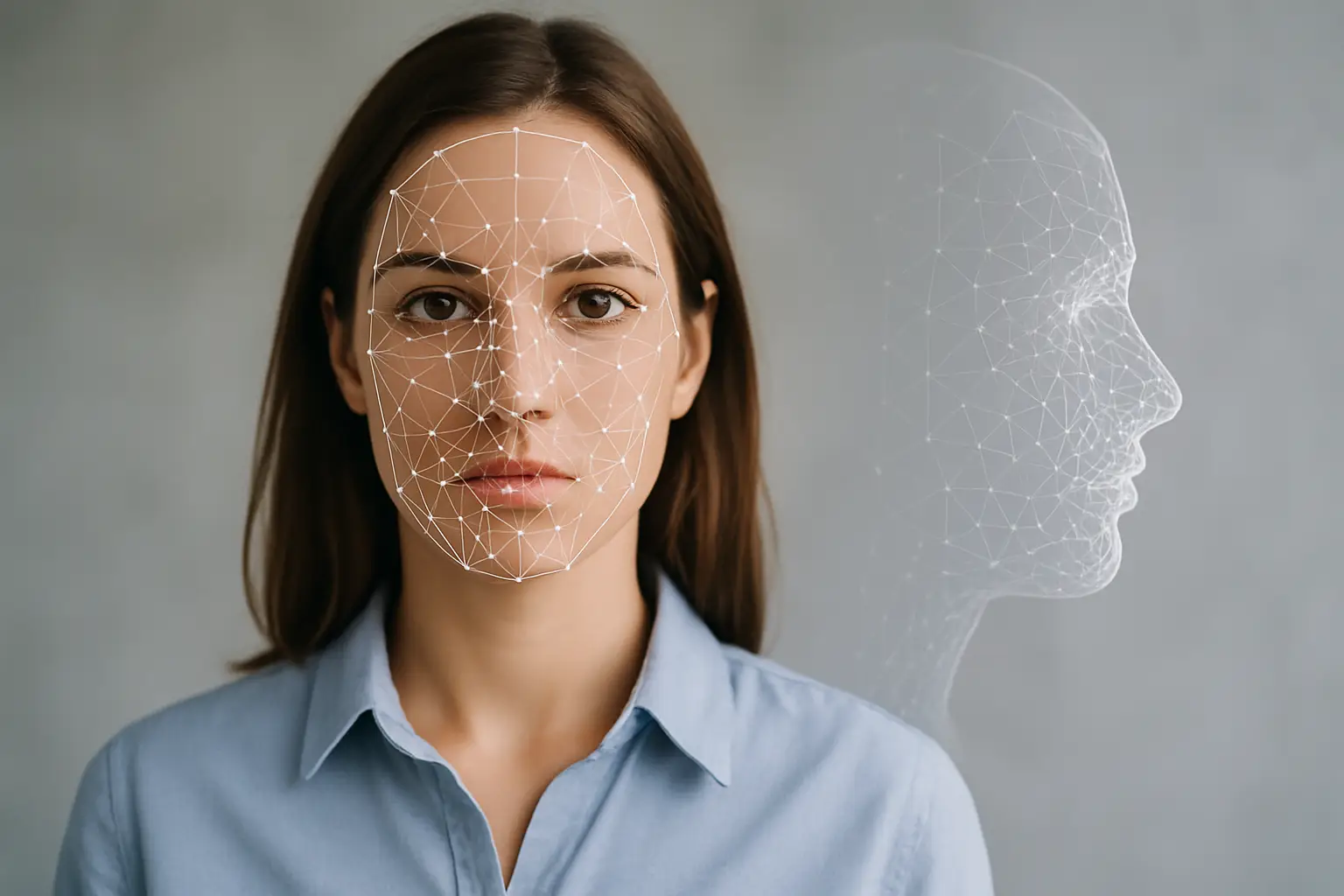
You upload a face photo. Thirty seconds later, you are holding a PDF-ready personality narrative that sounds like it has known you for years. That is the appeal of an ai facial analysis personality test: instant clarity, confident language, and a story you can actually use in conversation, hiring, dating, or self-work.
But here is the real question professionals care about: is it insight, or is it just a high-gloss horoscope with better typography?
The honest answer is more interesting than either extreme. AI-driven facial analysis can produce consistent pattern reads, and those reads can feel surprisingly accurate in the same way a strong interview impression can. At the same time, the leap from pixels to personality is a leap, not a measurement. If you treat it like a structured signal rather than a courtroom verdict, it can be useful. If you treat it like a diagnostic truth machine, you will eventually get burned.
What an ai facial analysis personality test is really doing
Most people imagine a facial personality test as a single magical model that sees your face and “knows” your character. In practice, the experience is usually a pipeline: image detection, landmark mapping, feature extraction, and then a narrative engine that translates those features into trait language.
At the front of the pipeline, computer vision models identify the face, orientation, and key landmarks (eyes, brows, nose, jawline, cheekbones, lip line). Quality matters. Lighting, camera angle, expression, and lens distortion can shift the geometry enough to change the downstream interpretation. That is why many platforms insist on a guided scan flow rather than a casual selfie.
Next comes patterning. Systems can compare facial ratios and structural markers against internal archetype libraries or learned embeddings. This is where “framework naming” shows up - not because it is purely cosmetic, but because the product has to map continuous geometry into discrete categories people can understand. The end product is rarely “you scored 0.73 on extraversion.” It is more like “core tendencies, emotional cadence, stress posture, collaboration style.”
Finally comes language. Even when the underlying model is statistical, the output is typically written to be readable, decisive, and shareable. That is not a flaw - it is the point of a consumer report. The trade-off is that good writing can make weak inference feel strong. That is why you need a rule: trust the structure, question the certainty.
Why these tests feel accurate (even when they are not)
If you have ever watched a skilled recruiter or coach read a room, you already understand part of the mechanism. Humans infer personality from faces constantly. AI systems are, in a sense, industrializing that instinct.
There are three reasons the output often lands.
First, broad traits are easier to hit than narrow predictions. A report that says you prefer autonomy, dislike ambiguity under pressure, and do best with clear roles will resonate with a huge portion of working adults. Second, people recognize themselves in well-written archetypes. If the language is specific enough to feel personal but flexible enough to fit multiple life stories, it sticks. Third, confirmation bias does the rest. You remember the lines that nailed you and forget the ones that did not.
None of that makes facial personality inference “fake.” It just means the value is partly interpretive. Think of it like a structured mirror. The mirror can be useful even if it is not an MRI.
Where an ai facial analysis personality test can be genuinely useful
Used correctly, this category shines in situations where you need a fast, high-level read to start a better conversation.
For individuals, it can accelerate self-reflection. A decisive report gives you language for patterns you have felt but never named: how you handle criticism, what kind of feedback you trust, what you do when you are cornered, what motivates you beyond status.
For teams, it can function like a shortcut to working agreements. If a scan suggests one person defaults to speed and directness while another defaults to harmony and risk control, you can discuss decision rules before the conflict happens. The report becomes a neutral artifact: “This is what the scan flagged. Do we see this in real projects?”
For hiring and recruiting, the best use is not selection. It is calibration. If you are already running structured interviews, work samples, and reference checks, a personality narrative can prompt smarter questions. It can help interviewers watch for communication mismatches or stress responses that matter in the role.
For compatibility, the upside is clarity about friction points. People do not break up because they disagree about values in the abstract. They break up because their patterns collide in daily life: repair style after conflict, jealousy triggers, emotional pacing, and how each person handles uncertainty.
Where it goes wrong: the failure modes professionals should avoid
The biggest risk is overreach. A facial scan can produce a compelling narrative, but it should not be treated as a diagnosis, a legal justification, or a substitute for evidence.
One failure mode is assuming permanence. Personality has trait-like stability, but behavior is shaped by context. Someone can look “high control” on paper and still be collaborative in a well-run culture. Someone can look “emotionally intense” and still be an excellent manager with good systems.
Another failure mode is confusing aesthetics with character. Facial structure is not morality. A strong jawline is not integrity. Wide-set eyes are not honesty. If a platform implies that physical appearance equals virtue, that is not “bold marketing.” That is bad thinking.
A third failure mode is using the output to label people in a way that shuts down curiosity. The moment a report becomes a weapon - “You are avoidant, so you are the problem” - it stops being insight and becomes ideology.
How to get better results from any face-based personality report
If you are going to use an ai facial analysis personality test, treat the process like you would treat any other signal: clean input, structured interpretation, and real-world validation.
Start with the image. Use a clear, front-facing photo with neutral expression and good lighting. Avoid extreme angles, filters, heavy shadows, and wide-angle distortion. If the platform supports multiple images, use them. A single frame can overrepresent a momentary expression.
Then read the report like a strategist, not a fan. Circle the claims that are falsifiable in behavior. “Prefers autonomy” is testable. “Old soul” is not. Translate the content into workplace and relationship behaviors: meeting style, decision speed, conflict repair, tolerance for ambiguity, feedback preference.
Finally, validate it with someone who knows you well. Not to ask, “Is this true?” but to ask, “When have you seen this show up?” Examples are the difference between insight and entertainment.
The proprietary-framework effect (and why it matters)
You will notice that the strongest platforms do not present themselves as generic AI. They present a named engine, a versioned methodology, and internal modules that sound like an assessment system. That is not only branding. It is also usability.
Frameworks force consistency. They define which dimensions get analyzed, how outputs are grouped, and how the narrative stays coherent across users. Without a framework, these tools become random trait soup.
If you are evaluating a platform, look for structural cues: clear stages, repeatable categories, and an output that reads like a professional report rather than a stream of adjectives. A strong example of this productized approach is [SomaScan.ai](https://somascan.ai), which positions itself as a “#1 AI Face Reading Engine” with named analysis layers and a PDF-ready report format designed to be shared in personal and professional settings.
FAQ: Fast answers before you run a scan
Is an ai facial analysis personality test scientifically proven?
It depends what you mean by “proven.” Computer vision can reliably detect facial landmarks and patterns. The step from those patterns to stable personality traits is more interpretive and varies by methodology. Treat it as a structured insight tool, not medical-grade science.
Can I use these results to make hiring decisions?
You can use a report to generate better interview questions and to anticipate communication fit. You should not use it as a sole decision-maker or as a proxy for competence. Real performance evidence still wins.
What photo works best?
A clear, front-facing image with neutral lighting and minimal distortion. Avoid filters and extreme angles. If the system offers a guided workflow, follow it. Small input changes can create big output differences.
Why do two scans sometimes give different results?
Different photos capture different expressions, angles, and lighting. Some systems also update models over time. If you want consistency, standardize your image style and compare results at the framework level, not line-by-line phrasing.
Is this the same as face-based emotion detection?
Not exactly. Emotion detection aims to infer momentary affect from expression. Personality-style reports aim to describe longer-term tendencies. The two can overlap, but they are not the same claim.
If you want the most out of this category, keep one mental model: the scan is a starting signal that becomes valuable when you test it against real interactions. Use it to sharpen your questions, not to end the conversation.