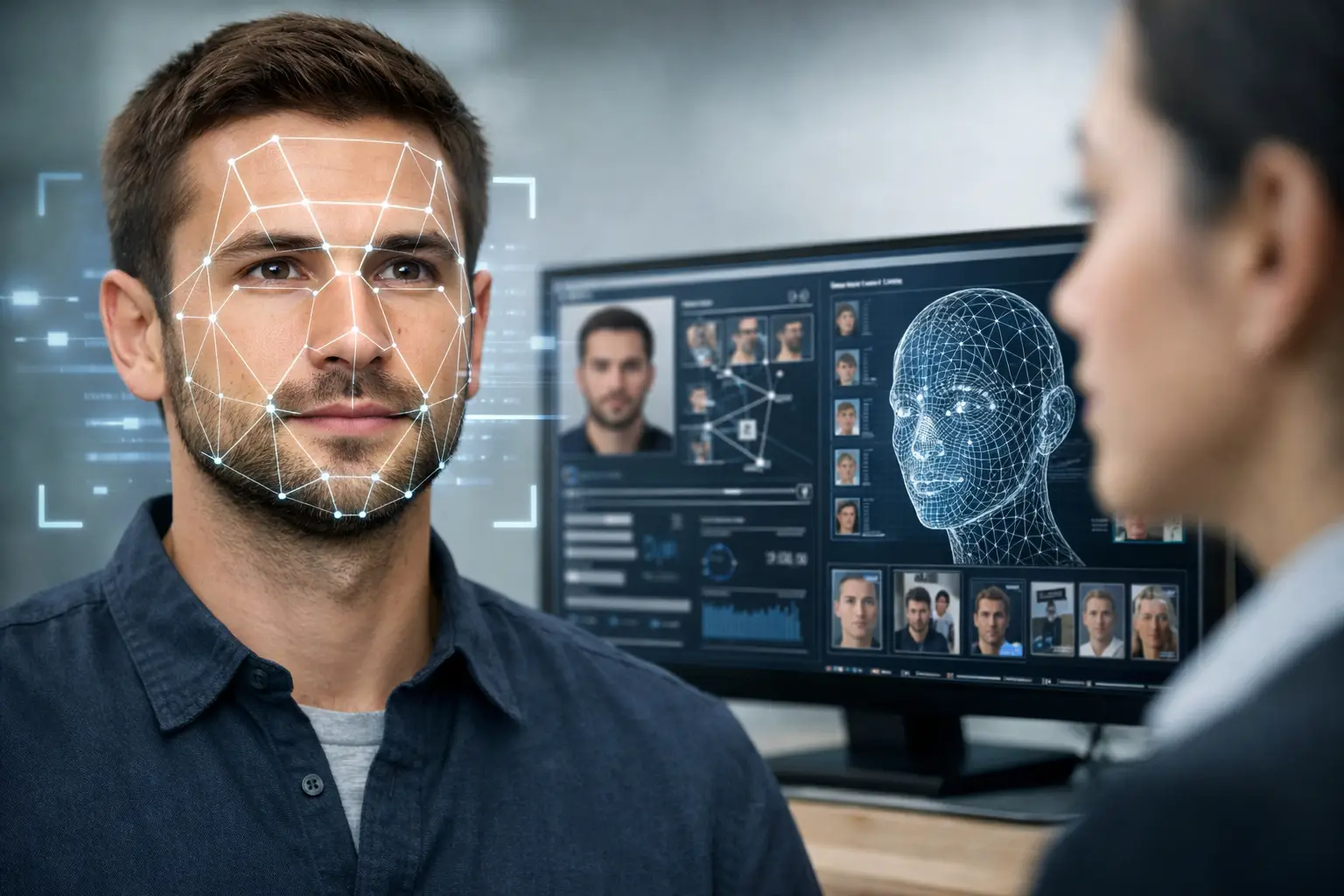
A face can communicate before a conversation begins. A raised brow, a compressed jaw, a relaxed gaze, or a highly expressive smile can shape the first read of confidence, stress, openness, and social energy. The future of AI driven face reading is about turning those fast human impressions into a more structured digital experience - one that is quicker to access, easier to review, and more useful when treated as a starting point for insight rather than a final verdict.
For people who want clarity in relationships, career direction, coaching, or team dynamics, that shift matters. The next generation of facial analysis will not simply produce a longer personality description. It will aim to create a more coherent pattern map: what signals appear consistently, where behavior may change by context, and which questions are worth asking next.
The Future of AI-Driven Face Reading Is Pattern-Based
Older personality tools ask people to describe themselves. That has value, but self-reports are shaped by mood, memory, self-awareness, and the understandable desire to present a favorable version of oneself. Facial analysis introduces another input: observable visual structure and expression.
AI systems can examine facial landmarks, proportions, symmetry, feature relationships, and visible expression patterns at a scale that is difficult to reproduce manually. The real advancement is not merely detecting a feature. It is connecting multiple features into a consistent report architecture.
A modern engine may organize results around elements such as emotional expression, communication style, decision tendencies, social orientation, resilience signals, and interpersonal pacing. This is where proprietary frameworks can make a report easier to use. Labels such as Structural Integrity, Five-Element Mapping, and personality cores give users a clear way to move from raw observations to a readable narrative.
That does not mean a face can reveal every truth about a person. Human character is shaped by experience, culture, health, environment, choices, and changing circumstances. A useful AI face reading report should communicate tendencies and prompts for reflection, not pretend it has measured a person’s private thoughts or guaranteed their future behavior.
From a Novelty Scan to a Personal Insight System
The first wave of consumer face reading was often a novelty: upload an image, receive a few broad traits, share the result. The next wave will feel more like a personal insight system.
Instead of delivering isolated labels such as “ambitious” or “reserved,” stronger platforms will show how themes may interact. A person can appear highly independent yet emotionally sensitive, decisive under pressure yet cautious in unfamiliar relationships. Those combinations are more valuable than one-word character tags because they resemble the complexity people recognize in real life.
Reports will also become more dynamic. With user permission, a system could compare images across time, different expressions, or distinct professional contexts to separate stable visual traits from momentary presentation. A calm headshot and a candid event photo should not be treated as identical evidence. Context-aware analysis is a major upgrade over one-image certainty.
The best consumer experience will remain simple: identify the subject, complete a guided scan, review the pattern analysis, and generate a polished PDF-ready report. Behind that simplicity, however, the engine will need better quality checks. It should recognize when an image is poorly lit, heavily filtered, obstructed, too low-resolution, or unsuitable for reliable analysis. Refusing a weak scan can be more credible than forcing a confident-looking result.
Better Inputs Will Produce Better Outputs
The future belongs to systems that are disciplined about input quality. Camera quality, lens distortion, facial angle, lighting, makeup, facial hair, expression, age, and image editing can all affect visual interpretation. A serious platform should guide users toward a clear, front-facing image and explain why image quality changes the analysis.
This will likely create a two-layer model. The first layer handles scan integrity: Is the image authentic enough, clear enough, and appropriately framed? The second layer generates the personality-oriented pattern report. Separating these functions protects users from mistaking technical noise for a meaningful personal signal.
Multimodal analysis may expand what a user can explore, but it also requires restraint. A facial scan paired with voluntary questionnaires, stated goals, or communication preferences can create a richer self-discovery experience. The facial scan should add perspective, not replace a person’s own account of who they are.
For a platform such as SomaScan.ai, this is the opportunity to make the report feel less like generic generated copy and more like a guided reading framework. Clear sections, consistent methodology, and useful reflection prompts can turn a scan into something people revisit before a career move, a difficult conversation, or a relationship decision.
Privacy Will Decide Which Platforms Earn Trust
Face data is not just another upload. It is sensitive personal information. As AI-driven face reading becomes more capable, the platforms that win long-term trust will be the ones that make privacy controls visible rather than burying them in fine print.
Users should understand what image is being processed, whether it is retained, how long it is stored, whether it is used to improve models, and how deletion works. Consent must be direct, especially when someone is scanning another person. A clean workflow should make it easy to analyze your own image and much harder to casually profile a colleague, date, or stranger without permission.
This matters even more in professional settings. Team leads, coaches, and recruiters may see value in fast personality signals, but consent and responsible use are nonnegotiable. A facial analysis report can support a coaching conversation or help someone prepare for a collaboration style discussion. It should not be used as the sole basis for hiring, firing, promotion, discipline, insurance, credit, housing, or other high-stakes decisions.
That boundary is not a weakness. It makes the insight more usable. People are more likely to engage honestly with a report when they know it is a tool for reflection and dialogue, not an invisible scoring system deciding their opportunities.
AI Face Reading Will Move Toward Explainable Reports
A polished report feels authoritative. But the future will reward reports that are also understandable. Users do not need a dense technical manual, yet they deserve to know the difference between an observed visual pattern, an interpretive framework, and a practical suggestion.
Explainability can be simple. A report might distinguish between visible structural observations, expression-related signals, and broader personality interpretations. It can also include confidence ranges or prompts such as, “Does this tendency show up more at work, at home, or under pressure?” That small amount of transparency encourages better use than an absolute declaration ever could.
The same principle applies to bias testing. Faces vary enormously across ancestry, age, gender presentation, disability, culture, and life experience. Developers will need to test systems across diverse image sets and monitor where interpretations become less reliable. The goal is not to claim perfect neutrality. The goal is to identify limitations, reduce avoidable errors, and avoid presenting assumptions as facts.
What This Means for Professionals and Curious Consumers
For the individual user, AI face reading will become a fast way to generate language for patterns they may already sense but struggle to articulate. A report can prompt better questions: Do I come across as more intense than I intend? Do I default to control when I feel uncertain? What kind of work environment lets my natural style perform well?
For coaches and managers, its strongest role will be conversation design. Use a report to create hypotheses, then test them through observation, direct discussion, and real performance data. A team member is more than a scan, and a scan should never outrank lived behavior.
For relationships, the value is similar. Compatibility is not a fixed score hidden in two faces. It is shaped by communication, values, timing, emotional maturity, and effort. Facial analysis can offer a lens on possible interaction styles, but it cannot substitute for consent, honesty, and sustained attention.
The Next Standard Is Useful Humility
The most powerful face reading engines will be bold about what they can organize and careful about what they cannot prove. They will deliver fast, elegant, high-signal reports without turning personal identity into a permanent label. They will use advanced pattern analysis to create clarity, while preserving the user’s right to disagree, add context, and remain more complex than any profile.
That is the practical promise ahead: not an AI that tells everything about anyone, but an intelligent mirror that helps people notice patterns, ask sharper questions, and make their next conversation more informed.