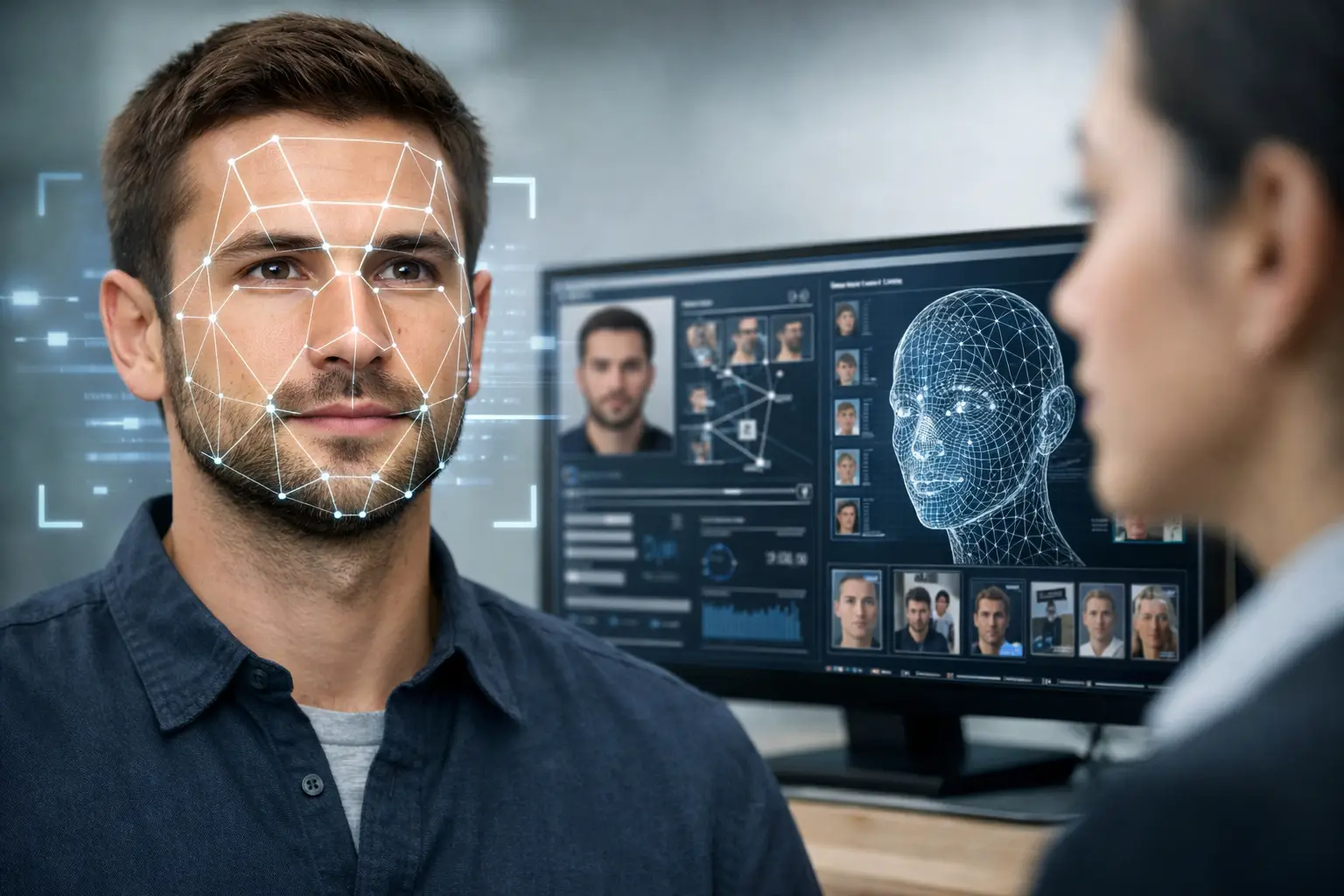
A face scan can feel uncannily specific. It may surface patterns you recognize immediately: how you present under pressure, the emotional signals you lead with, or the kind of environments that drain your energy. But the real question behind the experience is more demanding: is AI face profiling accurate enough to guide a decision about a person?
The honest answer is that it depends on what you mean by accurate. AI can analyze visible facial features and expressions with speed and consistency. It can organize observations into a structured report and prompt useful reflection. It cannot reliably prove that a fixed facial shape reveals someone’s intelligence, honesty, future career success, or full personality. Those are very different claims.
That distinction matters whether you are scanning yourself for insight, comparing compatibility patterns, or looking for a sharper starting point in a team conversation.
Is AI face profiling accurate for personality insight?
AI face profiling is most useful as a pattern-reading and reflection tool, not as a final verdict on human character. A scan can turn visual cues into a clear narrative: how a person may be perceived, what emotional style they appear to project, and which interpersonal patterns are worth examining. The value often comes from giving language to impressions that are otherwise vague.
Accuracy rises when the report is treated as a hypothesis to test against real behavior. If a profile describes a person as direct, private, highly responsive, or conflict-avoidant, ask whether that pattern appears across work, relationships, and stressful moments. A useful insight should create a better question, not end the conversation.
Accuracy falls when a report is used to make sweeping claims from one image alone. Facial appearance is influenced by lighting, angle, age, expression, culture, grooming, health, and the camera itself. Two photos of the same person can communicate very different things. Any system that ignores that variability is overstating its certainty.
What AI can analyze more reliably
Computer vision is genuinely capable in narrowly defined visual tasks. It can detect a face, map landmarks, estimate head pose, measure proportions, distinguish broad expressions, and identify changes in visible cues across images. These are observable image-level tasks. With a high-quality image, a system can perform them quickly and consistently.
That does not mean it has direct access to inner life. A raised brow is visible. The reason behind it is not. It could signal curiosity, skepticism, surprise, a habitual expression, or simply a poorly timed photograph. AI works from patterns in data, not private knowledge of someone’s intentions.
This is why a well-designed face-reading report should separate three layers:
- What is visible in the image, such as facial structure, expression, and presentation cues.
- What those cues may suggest as a personality or communication pattern.
- What should be verified through lived behavior, context, and conversation.
The first layer is measurement. The second is interpretation. The third is judgment. They should never be treated as interchangeable.
Where facial profiling reaches its limits
The biggest limitation is scientific: there is no established evidence that facial structure can consistently diagnose complex personality traits or predict major life outcomes for an individual. People are not static templates. Personality is shaped by temperament, experience, values, environment, role, stress, and choice. A photo captures none of that in full.
Bias is another major concern. AI models learn from training data, and training data can contain uneven representation and human assumptions. If certain ages, skin tones, cultural groups, gender presentations, or image styles appear less often or are labeled poorly, results can become less reliable for those groups. A polished report is not proof that every inference has equal validity.
Image quality also changes the output. A clear, front-facing image with natural lighting gives a system more usable visual information than a filtered selfie, a grainy group photo, or an image taken at an extreme angle. That is why guided scan workflows matter. They reduce avoidable noise before interpretation begins.
Finally, context changes people. The calm executive in a client meeting may be playful with friends, guarded in a new relationship, and highly expressive at home. A profile can describe one visible presentation pattern. It should not flatten a person into one permanent identity.
The right way to use an AI face profile
Use a scan as an efficient first-pass lens. It can help you notice how you come across, identify possible blind spots, and generate questions you may not have asked yourself. For personal development, that can be genuinely valuable. A structured report is often easier to revisit than a vague instinct.
For example, if your report suggests you project intensity or reserve, use that as a prompt: Do colleagues hesitate before bringing you bad news? Do new people read your focus as disinterest? If the answer is yes, you have an actionable communication insight. If the answer is no, the interpretation may not fit your actual context.
For relationship and compatibility exploration, keep the same standard. Compare the report with direct conversation, shared values, communication habits, and observed behavior over time. Compatibility is built through trust, repair, boundaries, goals, and emotional maturity. No facial analysis can replace those signals.
For career reflection, a profile may help you articulate preferred work styles or the impression you make in leadership settings. It should not determine what job you pursue or whether you are capable of succeeding in a role. Career fit requires skills, interests, opportunity, support, and evidence of performance.
Why AI reports can still feel personally accurate
There are several reasons a facial profile can resonate strongly even when its claims need verification. First, human beings are skilled at finding meaning in descriptions that touch recognizable parts of their experience. Second, many personality observations are broad enough to fit multiple people or situations. Third, the act of slowing down to read a report can itself create valuable self-reflection.
That does not make every result meaningless. It means resonance is not the same as validation. The stronger test is specificity over time: Does the insight predict a recurring pattern? Does it match feedback from people who know you well? Does it lead to a better choice or conversation?
A quality platform should make its methodology feel organized without pretending that a version number or technical label turns interpretation into fact. Frameworks such as structural pattern analysis, element mapping, and life-stage reflection can give a report a useful architecture. Their role is to organize insight, not to claim certainty beyond the evidence.
A practical accuracy check before you act
Before using any facial analysis result in a meaningful decision, run it through four filters. Is the image clear and representative? Is the statement specific enough to test? Does it match repeated real-world behavior? Would you make the same call after hearing directly from the person?
If the answer to the last question is no, pause. This is especially critical in hiring, promotion, lending, housing, discipline, medical decisions, or any setting where a person could be unfairly excluded. Facial profiling should never be a screening tool or substitute for job-relevant evidence, consent-based assessment, and human review.
A report is safer and more useful when it is voluntary, private, and framed as personal insight. Do not scan someone else without permission. Do not share their results casually. A face is personal data, and interpretation can carry real social consequences.
FAQ: Can AI tell if someone is lying from their face?
No. AI may detect visible expression changes, gaze direction, or tension-like cues in an image or video, but none of those cues reliably prove deception. People show emotion differently, and a still image provides very little context.
Can AI facial analysis assess emotions?
It can estimate visible expressions associated with broad emotional categories, but it cannot know exactly what someone feels or why. Expression is not a complete readout of emotion.
Should managers use face profiling for team building?
Use it, if at all, only as an optional conversation starter for self-awareness. Do not use it to rank candidates, assign roles, or judge trustworthiness. Better team decisions come from skills, work samples, goals, communication preferences, and direct experience working together.
The best result from an AI face profile is not a label. It is a more precise question you can carry into a real conversation, a coaching session, or your next decision about how you show up.