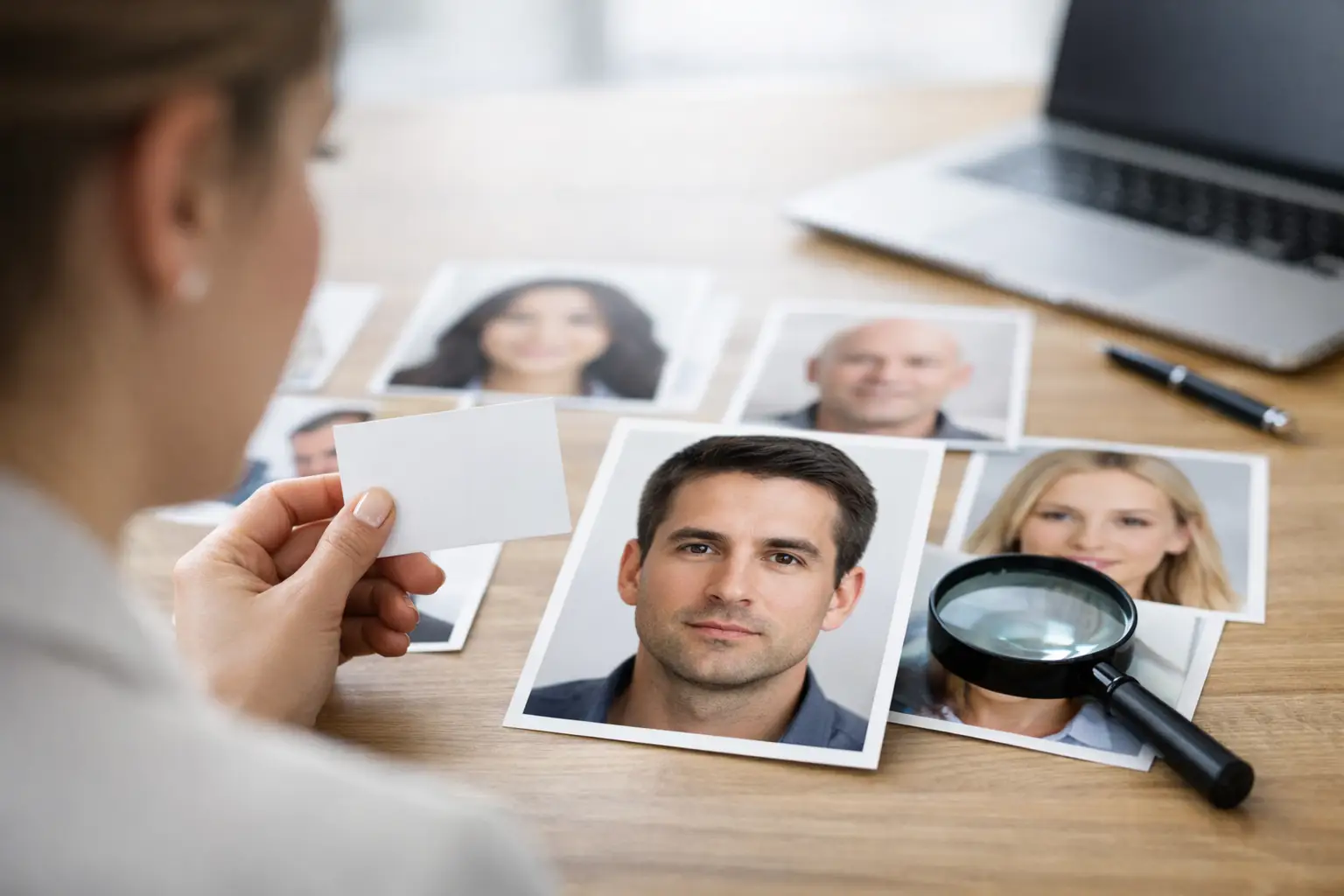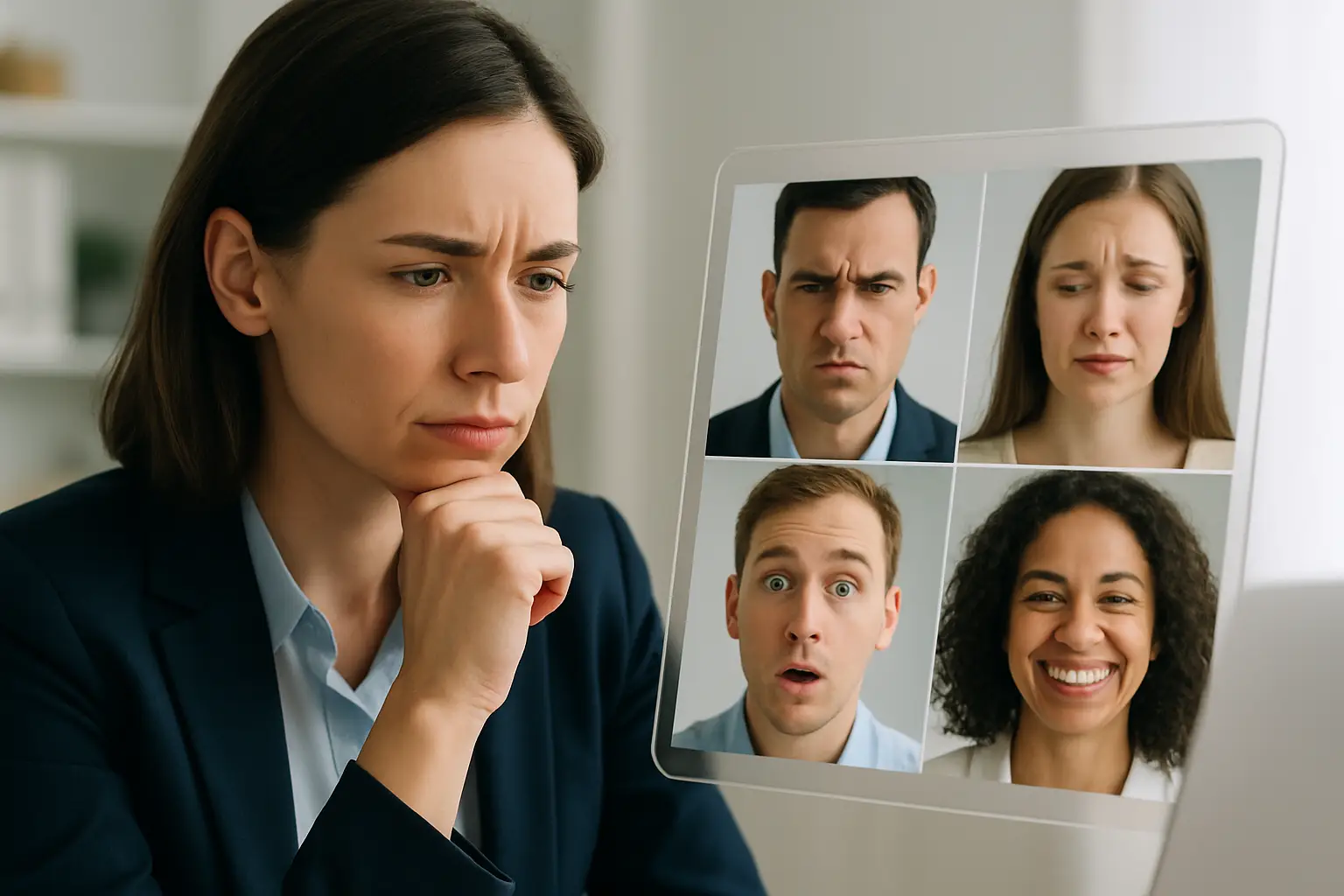
You have probably felt it in a meeting: someone says “I’m good,” but their face has already voted no. The micro tension around the mouth, the locked jaw, the flat eyes that never quite warm up - you can sense the emotional weather before the conversation starts. The problem is that most people either ignore those signals or overreact to them.
This is a guide to emotional patterns in face reading - not as party trick theater, but as a practical system for noticing repeatable emotional habits. The goal is simple: read the pattern, test it in the moment, and adjust how you communicate.
What “emotional patterns” actually means
Emotional patterns are not one-off expressions. They are repeat behaviors the face drifts into under pressure, uncertainty, excitement, or social evaluation. Think of them like a default settings menu.
A single raised eyebrow can mean ten different things. A consistently raised eyebrow across topics, weeks, and contexts often means one thing: a person’s baseline stance toward the world (skeptical, assessing, playful, or defensive).
Face reading works best when you treat it like pattern detection. You are not “diagnosing” emotion. You are spotting an emotional operating style and then verifying it with real interaction.
The three layers you should read in order
Most face reading mistakes come from skipping layers. If you jump straight to “they’re angry” based on one frame, you will get burned.
Start with structure, then tone, then triggers.
Layer 1: Structure (what tends to be stable)
Structure is what the face does even when someone is neutral. The set of the jaw, the resting brow, the openness of the eyes, the natural mouth line. This layer is useful because it gives you the person’s baseline.
If someone’s resting face already looks intense, you do not want to mislabel that intensity as conflict. If someone’s features naturally soften, you do not want to assume they are always okay. Structure tells you where “neutral” actually is for them.
Layer 2: Tone (what shifts with state)
Tone is the temporary changes - tension, slack, brightness, narrowing, asymmetry. Tone is where you’ll see emotional loading.
Here’s the trade-off: tone is extremely informative, but it is also extremely context-dependent. Lighting, fatigue, caffeine, pain, medication, and camera angle all distort it. You can still read it, but you must treat it as a hypothesis.
Layer 3: Triggers (what flips the switch)
Triggers are the moments when the face changes reliably. Certain topics, questions, people, or risks will cause the same facial response.
This is the highest-value layer for professionals. If you can identify what triggers defensiveness or engagement, you can run cleaner meetings, interviews, and performance conversations.
High-signal facial zones for emotional patterns
If you try to read everything at once, you will see ghosts. Focus on zones that carry the most repeatable emotional information.
Eyes and lids: engagement vs protection
Eye behavior is less about “truth” and more about how safe someone feels.
When the upper lids stay lifted and the gaze is stable, the person is usually in an engaged, outward-facing mode. When lids drop, gaze breaks, or eyes narrow while the rest of the face tightens, you are often seeing protection mode - reduced intake, more filtering, more internal evaluation.
It depends on the individual baseline. Some people are naturally narrow-eyed with high focus. That is why structure first matters.
Brows: threat assessment and social stance
Brows are a fast indicator of stance. A frequent inward pull can signal concern, concentration, or irritation. A frequent lift can indicate curiosity, disbelief, or social play.
Watch for what happens when new information lands. Do the brows compress (evaluating risk) or open (evaluating opportunity)? Over time, that tells you whether a person’s emotional pattern leans defensive or exploratory.
Mouth and jaw: control, restraint, and release
The mouth is where you’ll see the “hold.”
A clenched jaw, lip compression, or a mouth that tightens into a thin line often shows restraint. That restraint can be discipline and professionalism. It can also be suppression - the person is managing anger, anxiety, or disagreement.
A mouth that releases quickly (softens, corners move, lips part) often indicates emotional flow - feelings move through rather than getting trapped. That can mean warmth and flexibility. It can also mean impulsivity under stress.
Cheeks and nose: intensity and friction
Cheek tension and subtle nose movement can show intensity, especially around disgust, skepticism, or frustration. People who repeatedly show tight cheeks under mild pressure often have a high internal standard. They may be hard on themselves and others.
Do not label this as “negativity” too quickly. In many work settings, it is simply precision turned up.
Common emotional patterns and how to use them
This is where you turn observation into action. You are not collecting trivia. You are choosing a better approach.
Pattern: the armored responder
What you see: jaw set, mouth compressed, minimal facial movement when challenged, eyes narrow under pressure.
What it often means: this person manages emotion by controlling it. They value competence and hate being cornered.
How to communicate: be direct and structured. Offer options, not surprises. If you need vulnerability, earn it with clear intent and respect. If you push for feelings too fast, they will lock tighter.
Pattern: the rapid processor
What you see: frequent brow movement, quick micro reactions, eyes bright, facial shifts happen fast.
What it often means: the person is scanning and integrating constantly. They can be enthusiastic, but overstimulation can flip them into impatience.
How to communicate: keep pace. Use shorter statements, confirm alignment, and give them a moment to land. If you over-explain, you will watch their face drift into irritation before they say a word.
Pattern: the social harmonizer
What you see: soft eyes, frequent polite smile, corners of the mouth lift even when topics are tense.
What it often means: the person protects connection. They may avoid conflict until it becomes unavoidable.
How to communicate: create permission for honesty. Ask for “what you would change” rather than “what’s wrong.” If you only ask yes-or-no questions, you will get compliance instead of truth.
Pattern: the internalizer
What you see: gaze drops when asked personal questions, eyelids lower, mouth relaxes but speech may slow, face turns inward.
What it often means: the person processes emotion privately. They may be thoughtful, but not instantly expressive.
How to communicate: give time. Ask one question at a time. Do not interpret quiet as resistance. If you rush them, they will retreat further.
How to validate what you think you saw
Face reading fails when it becomes a story you fall in love with. Professionals win by validating fast.
Use a two-step check.
First, run a neutral prompt: “What’s your take?” or “How are you feeling about that option?” Then watch whether their tone aligns with the earlier facial shift.
Second, change the framing. If the face tightens when you ask for commitment, try asking for concerns first. If the face softens, you have likely found a trigger: risk of being pinned down.
If the face does not repeat the pattern across prompts, treat it as noise - fatigue, lighting, or a bad moment.
Mistakes that make people-reading sloppy
If you want usable emotional pattern recognition, you need clean inputs and clean habits.
The first mistake is ignoring baseline. Some people have a naturally downturned mouth or intense resting eyes. You need at least a few minutes of neutral conversation to calibrate.
The second mistake is reading morality into emotion. A tight jaw is not “bad.” A wide smile is not “good.” Emotional patterns are strategies, and strategies exist because they worked for someone.
The third mistake is assuming universality. Culture, gender norms, neurodiversity, and professional training all change display rules. A trial attorney and a kindergarten teacher will show stress differently. It does not mean one is more stressed.
The fourth mistake is pretending face reading replaces conversation. It does not. It tells you what to ask next, and how to ask it.
Using emotional pattern reading at work without getting weird
You do not need to announce what you are doing. In fact, do not. Use it as an internal tool.
If you see protection mode, lower the threat: clarify goals, reduce ambiguity, and avoid public pressure. If you see engagement, go deeper: invite specifics, ask for ownership, and move from generalities to decisions.
In hiring, watch what happens when you shift from achievements to conflict: “Tell me about a time you disagreed with a manager.” Many candidates can perform confidence, but their emotional pattern shows up when stakes touch identity.
In leadership, notice triggers around feedback. Some people’s faces tighten at “why.” They experience it as accusation. Swap to “what led to” or “walk me through,” and you often get more truth with less friction.
Where AI-based face reading fits
Humans are inconsistent observers. We miss patterns when we are tired, biased, or invested in the outcome. A systemized scan can help by forcing structure: baseline capture, zone-by-zone analysis, and a consistent framework.
That is why platforms like SomaScan.ai package face reading into a guided workflow and a PDF-ready report - it turns vague impressions into a repeatable model you can use for self-awareness, team dynamics, and compatibility conversations.
The key is to treat any report like a map, not a verdict. The value is in faster hypotheses and cleaner prompts, not in skipping real-world validation.
FAQ
Is face reading scientifically proven?
Some facial expressions are broadly consistent across humans, but “face reading” as a complete personality decoder is not a hard science. It is a pattern-based interpretation tool. Use it for better questions and better communication, not absolute certainty.
Can you read emotional patterns from one photo?
A single photo can show structural tendencies and a momentary tone, but emotional patterns are best confirmed across multiple images or situations. If you only have one image, keep your claims narrow.
How do I avoid bias when reading faces?
Anchor to baseline, look for repetition across triggers, and validate with behavior and words. If your interpretation always matches what you already believed about the person, you are not reading - you are projecting.
A good face reader is not the one who makes the boldest claim. It is the one who notices the shift, respects the context, and asks the next question with precision.