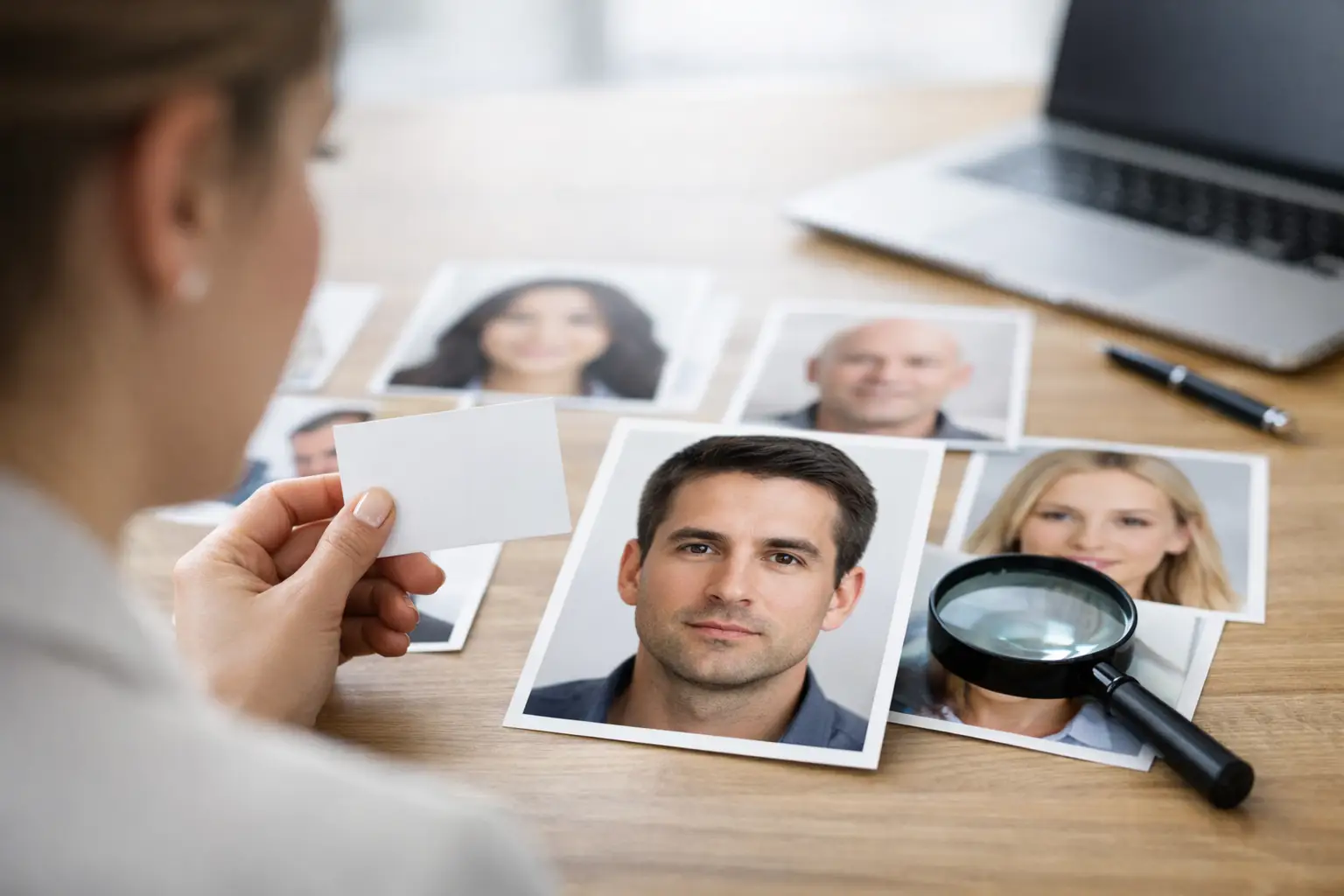
You can tell a lot from how someone enters a room. A photo personality test tries to do the same thing from a still image - reading visible cues, emotional tone, and facial structure to estimate how a person tends to think, react, and relate. That promise is why the format keeps gaining traction with professionals, managers, and curious users who want fast personality signals without sitting through a long questionnaire.
The appeal is obvious. Traditional tests ask people to describe themselves, and that creates friction right away. People answer aspirationally. They overcorrect. They pick the version of themselves they want a boss, date, or team to see. A photo-based system feels different because it starts with what is already there. Instead of asking, it analyzes.
What a photo personality test is actually measuring
A strong photo personality test is not magic, and it is not mind reading. It is pattern recognition. The system examines visible markers that often correlate with behavioral tendencies, emotional habits, and social presentation. That can include facial symmetry, tension patterns, eye focus, expression set, posture cues within the frame, and the overall balance between openness and guardedness.
Some platforms stop at surface-level impressions. They generate vague personality language that could apply to almost anyone. That is where users get disappointed. A more advanced engine goes further by organizing those signals into structured models - the kind of framework that separates emotional reactivity from social dominance, or distinguishes warmth from compliance. That difference matters if the result is meant to be useful instead of just entertaining.
This is also why image quality changes the outcome. A casual selfie with poor lighting can still produce broad signals, but cleaner images improve confidence. Frontal visibility, neutral expression, and clear facial detail give the engine more stable data to work from. If the input is weak, the output tends to be more general.
Why people use a photo personality test instead of a standard quiz
Speed is the obvious reason, but not the only one. A standard personality test depends on self-reporting, and self-reporting has blind spots. The user may not know how they come across under pressure. They may confuse intention with behavior. They may answer based on mood.
A photo personality test feels more objective because it starts outside the user’s own story. For recruiters, team leads, and coaches, that can be useful as a supplementary signal. For personal users, it often feels more confronting in a productive way. People are used to hearing who they think they are. They are less used to seeing how their face may project discipline, caution, intensity, empathy, restraint, or volatility.
That said, the best use case is not replacement. It is acceleration. A photo-based read can give you a sharp first-layer profile quickly. Then you can decide whether that profile deserves a deeper conversation, a fuller assessment, or no action at all.
Where a photo personality test helps most
The strongest use cases are the ones where first impressions already matter. Hiring is one example, though it needs restraint. Managers often want a faster sense of communication style, pressure tolerance, or interpersonal fit before they invest more time. A photo scan can help frame questions for an interview, but it should not become a hidden hiring shortcut dressed up as certainty.
Team building is another strong fit. If one person presents high control and low emotional transparency while another projects openness and fast expressiveness, that contrast may explain friction that a skills matrix misses. Relationship curiosity is also a natural category. People want to know how they are likely to connect, where misunderstandings may form, and whether emotional patterns look complementary or combustible.
Career reflection may be the most underrated use. Some users are not trying to decode someone else. They want a sharper read on how they present to the world. Do they project steadiness or hesitation? Vision or rigidity? Authority or distance? A well-built report can surface image-to-identity gaps that users rarely see on their own.
What separates a credible result from fluff
Most people can spot empty personality language within a few lines. If every result says you are both independent and collaborative, both analytical and creative, both reserved and outgoing depending on the situation, nothing useful has been said.
A credible photo personality test makes real distinctions. It prioritizes tensions over compliments. It tells you where your strongest patterns likely show up, how those patterns help, and when they create cost. That is the part casual tools usually skip.
For example, high facial intensity may be framed as focus, but it can also signal difficulty relaxing others. A controlled expression may indicate discipline, yet also reduced emotional readability. Strong social presence can read as leadership in one setting and dominance in another. Good analysis does not flatten these trade-offs. It names them.
This is where product design matters. A system that uses clear interpretive layers - identity anchoring, image discovery, pattern extraction, and report synthesis - produces a more coherent result than a novelty app that spits out generic traits in ten seconds. SomaScan.ai is built around that kind of structured workflow, which is exactly why serious users prefer report-style outputs over throwaway quizzes.
The limits of any photo personality test
This is where authority matters most: knowing what not to claim.
A photo personality test can estimate tendencies. It cannot deliver total truth about a person. Context changes behavior. Culture changes expression. Stress changes the face. Age, styling, camera angle, and even whether someone knows they are being photographed can alter the signal.
There is also the difference between presentation and core temperament. Some people train themselves into a professional mask. They may look composed while carrying high emotional sensitivity underneath. Others project warmth naturally while making very hard decisions with little hesitation. A photo can capture part of that architecture, but not all of it.
That does not make the method useless. It makes interpretation more disciplined. If you treat the result as a directional read rather than a verdict, it becomes much more valuable. It can sharpen questions, reveal patterns, and expose blind spots without pretending to replace real-world observation.
How to get a better photo personality test result
Input quality drives output quality. If you want the read to be more than entertainment, use a clear, current image with good lighting and minimal visual obstruction. Avoid heavy filters. Keep the face visible and the expression close to neutral unless the platform specifically asks for a natural candid.
It also helps to know what kind of insight you want. Some users care most about emotional patterns. Others want signals for compatibility, work style, or personal presence. A stronger system can organize findings into those categories, which makes the result easier to apply.
Most important, read the report for pattern clusters, not isolated labels. One trait alone rarely tells you much. But when composure, guardedness, analytical tension, and low outward affect show up together, that starts to form a believable profile. The same goes for warmth, directness, high expressiveness, and low inhibition. Personality is structure, not a single adjective.
Should you trust a photo personality test?
Trust it the way you would trust any fast diagnostic tool - enough to pay attention, not enough to stop thinking.
If the output is specific, internally consistent, and aligned with real behavior people have already observed in you, it is probably picking up something meaningful. If it feels broad, flattering, or interchangeable, it is probably packaging ambiguity as insight. The difference is usually easy to feel.
For professionals, the smart move is to use it as a decision support layer. For personal users, it works best as a mirror with sharper edges than a typical self-help quiz. Either way, the value is not in hearing that you are unique. The value is in seeing which patterns you broadcast before you say a word.
That is why this category keeps growing. A photo personality test offers something people want right now: speed, structure, and a read that feels immediate. Used well, it will not tell you everything about anyone. It will tell you enough to ask better questions, see people more clearly, and notice the signals you used to miss.