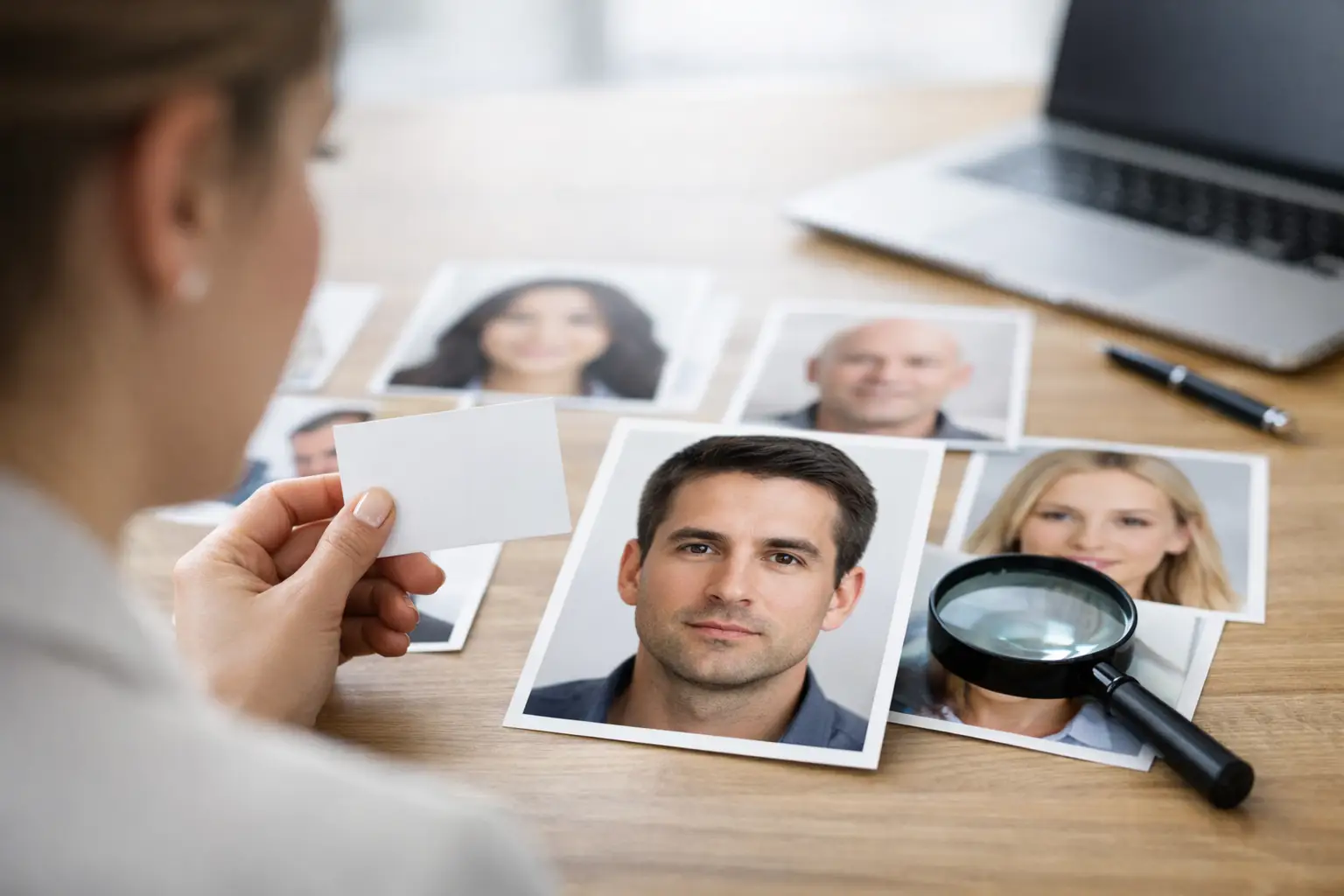
Most people do not compare these two tools until they need an answer fast.
A hiring manager wants a sharper read on a candidate’s communication style. A coach wants cleaner language for emotional patterns. Someone in a new relationship wants to know whether the spark is chemistry or a mismatch in temperament. That is where the real question shows up: face scan report vs astrology - which one gives you usable insight, not just an interesting story?
The short answer is simple. They do different jobs. But if your priority is speed, structure, and practical interpretation, a face scan report usually fits modern decision-making better.
Face scan report vs astrology: what are you actually comparing?
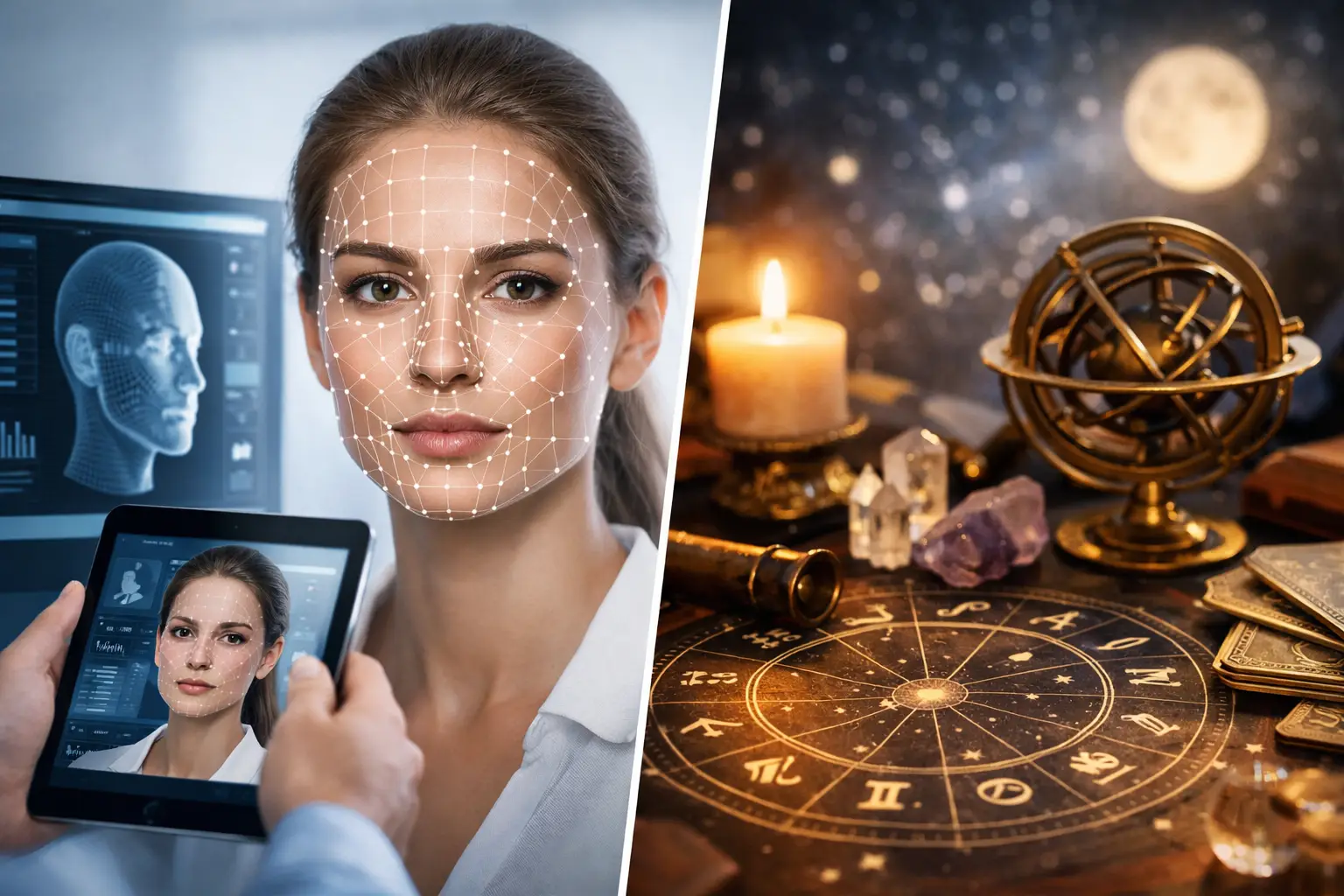
Astrology is birth-data based. It builds interpretation from your date, time, and place of birth, then maps those details into a symbolic system of planets, houses, and signs. Its strength is narrative depth. A full chart can feel expansive, reflective, and surprisingly personal.
A face scan report starts from visible human data. It analyzes facial structure, proportions, expression tendencies, and pattern signals to generate a profile of personality architecture, emotional habits, social tendencies, and compatibility cues. Its strength is directness. You upload, scan, and get a report built around observable inputs rather than celestial timing.
That distinction matters more than most people realize. Astrology asks, "What does your birth pattern suggest?" A face scan report asks, "What does your current facial pattern reveal?" One is symbolic and time-based. The other is present-facing and image-based.
Neither approach is a medical test. Neither should be treated like a courtroom verdict. But for people who want fast personality signals, the gap in usability is real.
Why astrology still appeals to smart people
Astrology has staying power for a reason. It gives people language for complexity. Good astrology does not just label someone as emotional, ambitious, or detached. It explains tension, contradiction, timing, and inner conflict. That can feel richer than many modern personality tools.
It also has cultural familiarity. A lot of people already know their sun sign, maybe their rising sign, and probably the personality stereotypes attached to both. That makes astrology easy to start and easy to share.
But astrology has a practical limitation that matters in business and real-world decision support. You need accurate birth data. Many people do not know their exact birth time. Others know it only approximately. A small data error can shift key chart elements and change the reading.
There is another issue. Astrology often requires interpretation by an experienced human to feel precise. Automated astrology tools exist, but many produce broad descriptions that sound impressive without being actionable. If your goal is speed and clarity, that can become a bottleneck.
Where face scan reports have a clear edge
A strong face scan report is built for immediacy. You do not need a birth certificate, a family member’s memory, or a one-hour consultation to get started. You need an image and a system designed to turn facial inputs into a structured personality read.
That is why face scanning has traction with professionals. It matches the pace of modern evaluation. Recruiters, managers, coaches, and team leads are not usually looking for a symbolic life philosophy. They are trying to reduce ambiguity around communication style, social energy, emotional pressure points, and compatibility.
A face scan report can package that into a format that feels operational. Instead of abstract discussion about planetary placements, you get a tighter breakdown of tendencies and patterns. That makes it easier to use in conversations about collaboration, leadership style, and interpersonal fit.
The best systems also present their output as a method, not a mood. Structured categories, named frameworks, and report-based delivery increase trust because the experience feels more like analysis and less like entertainment. That is one reason platforms like SomaScan.ai are gaining attention with users who want a polished, professional-grade output instead of a vague personality quiz.
Face scan report vs astrology for relationships
In relationship questions, both systems can be useful, but they help in different ways.
Astrology is good at building a story around chemistry, attraction, emotional style, and long-term friction. People often use it because it gives language to emotional dynamics they already feel but cannot articulate. For couples who enjoy reflection and symbolism, it can open real conversation.
A face scan report is stronger when you want a quick read on observed tendencies. Is this person likely to be emotionally guarded or expressive? Do they project dominance, stability, flexibility, or volatility? How might they handle conflict, attention, or stress? That kind of profile can feel more grounded when you are evaluating a real dynamic in front of you, not a birth chart in theory.
If you want a ritual, astrology has the advantage. If you want a fast pattern breakdown, face scanning usually wins.
Face scan report vs astrology for career and hiring
This is where the difference becomes sharper.
Astrology can offer an interesting lens on ambition, motivation, and work style. But in professional settings, it often feels too interpretive and too personal. It also raises immediate questions about legitimacy because the path from planetary symbolism to hiring insight is not obvious to most people in a workplace.
A face scan report is not a replacement for interviews, references, or skills testing. That should be said clearly. But it can function as a fast supplemental lens. For managers and recruiters, that matters. They are often looking for pattern indicators they can compare against team needs - communication style, leadership energy, resilience, social orientation, and compatibility signals.
The report format also fits how professionals consume information. Clean sections. Direct language. Fast interpretation. PDF-ready output. That makes it easier to share, discuss, and reference in practical settings.
If the question is which one feels more usable in business, face scan reports have the stronger case.
The trade-off nobody should ignore
Here is the honest part: both tools can become misleading if users expect certainty where only probability exists.
Astrology can overfit meaning to symbolic patterns. A face scan report can overstate confidence if it is poorly built or framed as infallible. The problem is not the category alone. The problem is how the tool is presented and how the user applies it.
A serious user should ask better questions. Is the output structured or generic? Does it identify tendencies, or does it pretend to know a person completely? Can you use it as a discussion tool, or is it trying to replace judgment?
That is why the best use case is not blind belief. It is guided interpretation. A good report should sharpen your read, not shut down your thinking.
When astrology is the better choice
Astrology is the better choice when you want meaning more than speed. It is also stronger when your goal is self-reflection over decision support. If someone wants to understand recurring life themes, timing cycles, or emotional contradictions, astrology offers a broader symbolic map.
It is also more appealing for users who enjoy mystery, ritual, and narrative depth. Some people do not want a precise-looking report. They want a system that feels expansive and interpretive. Astrology does that well.
So this is not a case of old versus new where one completely replaces the other. It depends on what kind of answer you want.
When a face scan report is the better move
A face scan report is the better move when you need insight now, not after collecting birth details and decoding a chart. It is built for low-friction entry and fast output. That alone makes it more practical for many consumers and professionals.
It also fits audiences who prefer modern systems language over spiritual language. Terms like pattern analysis, structural traits, compatibility mapping, and personality architecture feel more aligned with how many people make decisions today. They want interpretation that sounds organized, direct, and ready to use.
That does not automatically make every face scan engine credible. Quality still matters. The strongest platforms differentiate with a guided scan workflow, image discovery, proprietary frameworks, and report design that feels intentional rather than generic. When that system is executed well, the result is more than a novelty. It becomes a fast-read intelligence layer.
So which one should you trust?
Trust is the wrong first question. Usefulness is the better one.
If you want a reflective framework that helps you think about identity over time, astrology has real appeal. If you want immediate, structured signals about personality tendencies, emotional patterns, and interpersonal fit, a face scan report is usually the more efficient tool.
That is why the face scan report vs astrology debate is not really about belief. It is about context. One is built for symbolic interpretation. The other is built for rapid analysis.
For people making real decisions - about teams, relationships, communication, or career direction - speed and structure matter. The best tool is the one that gives you a clearer read you can actually use the same day.
If you are choosing between wonder and signal, pick the one that matches the decision in front of you.