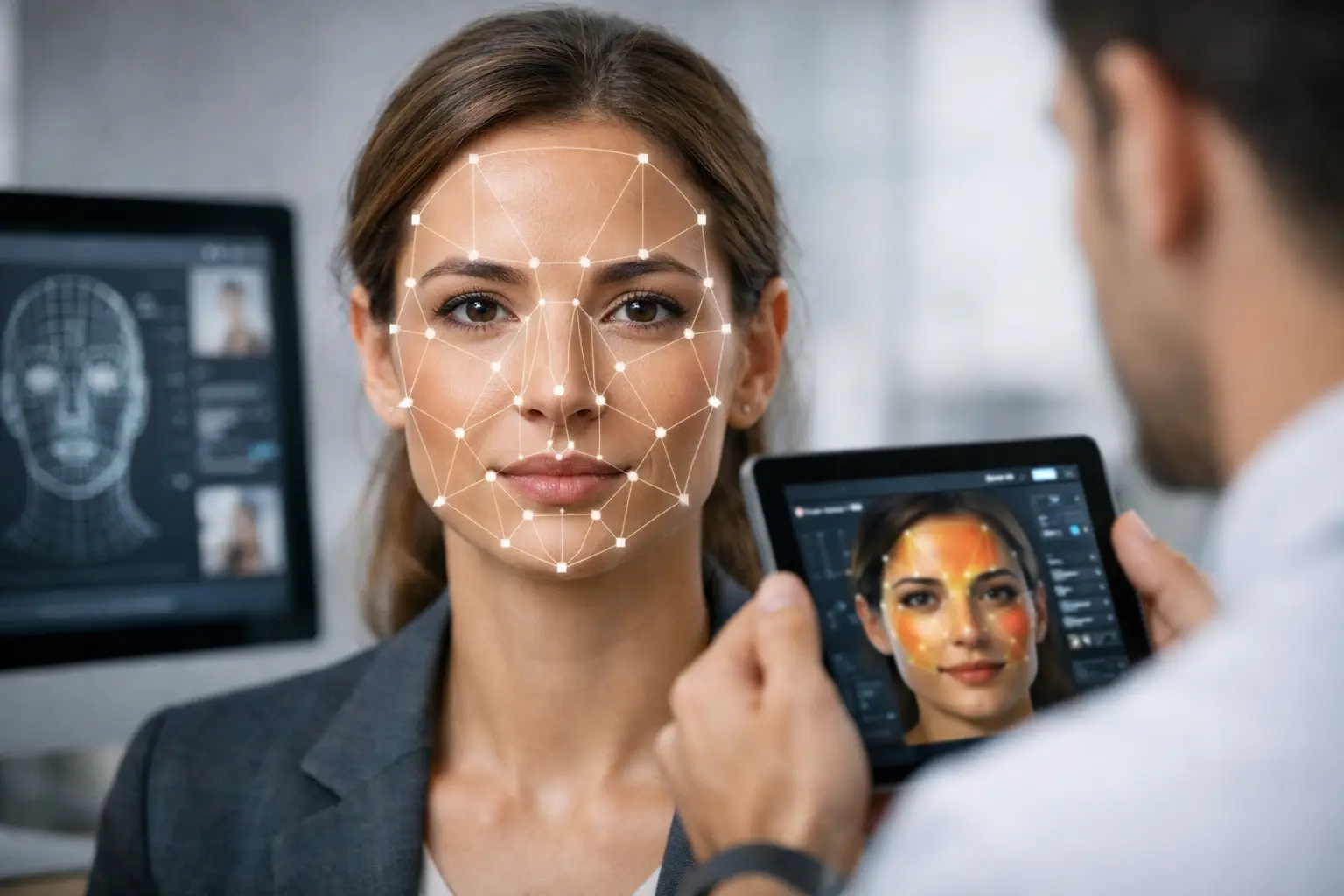
You can read a resume, skim a profile, and still miss the pattern that actually drives how someone shows up under pressure. That gap is exactly why AI face reading has traction. People do not just want more data. They want faster signals on temperament, emotional style, compatibility, and likely behavior.
A real guide to AI face reading methodology starts there. Not with hype, and not with vague claims, but with the actual mechanics behind the scan. If the system is worth using, it should do more than label a face. It should convert facial inputs into a structured personality model that feels coherent, repeatable, and useful in real decisions.
What a guide to AI face reading methodology should explain
Most people assume AI face reading is a single-step image analysis. It is not. A serious engine runs as a staged workflow. First, it anchors identity. Then it processes image quality and facial structure. After that, it maps visible patterns to a personality framework and translates those signals into a readable report.
That matters because the output is only as strong as the methodology behind it. If the scan jumps straight from photo to personality claim, the result feels generic. If the system has layers, defined pattern groups, and reporting logic, the result feels closer to an analysis engine than a novelty generator.
The difference is structure. Structure creates confidence.
The core stages in AI face reading methodology
Stage 1 - Identity anchoring and subject discovery
The first stage is not the most glamorous, but it shapes everything that follows. Many platforms begin with a name or subject reference because analysis works better when the scan is tied to a specific person rather than a floating image with no context. This helps the workflow stay clean and reduces confusion when multiple photos or profiles are involved.
For the user, this stage feels simple. Enter the person. Begin analysis. But under the hood, the methodology is establishing a single analysis target so later pattern interpretation remains consistent.
Stage 2 - Image selection and quality control
Not every photo deserves equal weight. A strong AI face reading system checks image clarity, face angle, lighting, obstruction, and expression intensity before analysis logic fully engages. A front-facing image with balanced lighting gives a different level of confidence than a cropped social photo or a heavily filtered portrait.
This is one of the biggest trade-offs in the entire process. Faster scans are convenient, but convenience can lower signal quality if the image is weak. The best methodology does not pretend every input is perfect. It filters, ranks, and works with the highest-confidence visual data available.
Stage 3 - Structural facial mapping
Now the real engine begins. Structural mapping looks at stable facial characteristics rather than only temporary expression. That can include proportional relationships, symmetry patterns, contour geometry, spacing, forehead-to-jaw balance, eye region definition, and other persistent visual markers.
This is where the analysis moves beyond simple computer vision. The methodology is no longer asking, what face is this? It is asking, what repeated structural patterns appear, and what do those patterns suggest when interpreted through the platform's model?
In productized systems, this stage is often framed with proprietary language because users need more than raw detection terms. They need a readable framework. Labels such as Structural Integrity or Pattern Analysis v4.2 give the process shape and communicate that the engine is evaluating pattern clusters, not making random guesses.
Stage 4 - Trait inference and pattern weighting
Once structural signals are mapped, the system assigns interpretive weight. This is the decisive step in any guide to AI face reading methodology because it determines how visual data turns into statements about personality.
A mature engine does not rely on one feature equaling one trait. That would be too brittle. Instead, it weighs combinations. A certain facial balance might suggest steadiness when paired with one eye pattern, but suggest rigidity when paired with another. This is why high-quality outputs often describe tendencies, emotional defaults, and interpersonal style rather than simplistic absolutes.
There is an important nuance here. AI face reading is strongest as a pattern interpretation system, not a mind-reading machine. It can surface likely dispositions, leadership style, social energy, decision speed, or compatibility tendencies. It cannot replace lived observation, direct conversation, or domain-specific assessment when the stakes are high.
Stage 5 - Framework translation into a report
This is where methodology becomes product. Raw pattern inference is not useful until it is organized into a clean, decision-ready narrative. The strongest consumer platforms translate scan findings into sections such as personality architectural cores, emotional patterns, career alignment, relationship style, and compatibility dynamics.
That translation layer matters more than many people realize. Users are not buying feature detection. They are buying interpretation they can act on, save, share, or discuss. A polished PDF-ready report creates that bridge between analysis and application.
Why proprietary frameworks matter
A lot of face-reading content online feels thin because it stops at surface traits. Real methodology needs a framework strong enough to hold multiple dimensions at once. That is why branded systems often introduce names like Five-Element Mapping or a 100-Year Life Map. These labels do more than market the product. They organize complexity.
When the framework is clear, the report becomes easier to trust. The user can follow the logic from scan to pattern group to outcome. Without that structure, every result risks sounding like recycled personality filler.
The best frameworks also help with consistency. A recruiter, manager, coach, or individual user needs outputs that feel stable across similar scans. That does not mean every report should sound identical. It means the engine should apply the same logic standard every time.
Where AI face reading is most useful
AI face reading performs best when the goal is early insight, not final judgment. For personal use, that means self-discovery, relationship reflection, and career pattern spotting. For professional use, it can be valuable in team-building conversations, communication planning, and first-pass compatibility review.
That said, context changes the value. If you are hiring for a regulated role or making a legal decision, face reading should never be your only input. If you are using it to spark better questions in a coaching session or understand likely friction points on a team, it becomes much more practical.
This is the right way to think about it: AI face reading compresses first-impression analysis into a structured system. It gives you a sharper starting point.
What separates a serious platform from a gimmick
The answer is not just better branding, though branding helps communicate authority. A serious platform has a guided workflow, image discipline, layered pattern logic, and a report architecture that turns signals into usable insight. It should feel fast, but not careless. Confident, but not chaotic.
It should also give users a sense that the methodology has been productized, tested, and refined through versions. Versioning matters because it signals iteration. An engine that names its model layers and scan systems is telling the user one thing clearly: this is not a random one-off output.
That is part of why platforms like SomaScan.ai stand out in a crowded category. They position the scan as an engine, not a toy, and the report as a professional-grade asset, not a throwaway curiosity.
FAQ on AI face reading methodology
Is AI face reading accurate?
It depends on what you expect. If you expect exact truth about a person's inner life, no system can promise that. If you want structured personality signals based on visible pattern analysis, a strong engine can produce surprisingly coherent results, especially with high-quality images.
Does one photo give enough information?
Sometimes, but not always. A clean, forward-facing image can generate useful output, yet multiple strong inputs usually improve confidence. Low light, filters, sharp angles, and heavy expressions can reduce reliability.
Can AI face reading help with hiring or team fit?
It can help as a supplemental signal. It is useful for framing discussion around communication style, likely temperament, and compatibility dynamics. It should not replace interviews, references, or role-based evaluation.
Is this personality science or pattern interpretation?
The honest answer is pattern interpretation systematized through AI. The value comes from how well the methodology organizes facial signals into a coherent trait framework.
The strongest users of AI face reading are not chasing certainty. They are using a high-speed interpretation engine to get clearer, faster insight on people. That is where the methodology earns its place - not as magic, but as a structured shortcut to patterns you would otherwise take much longer to spot.