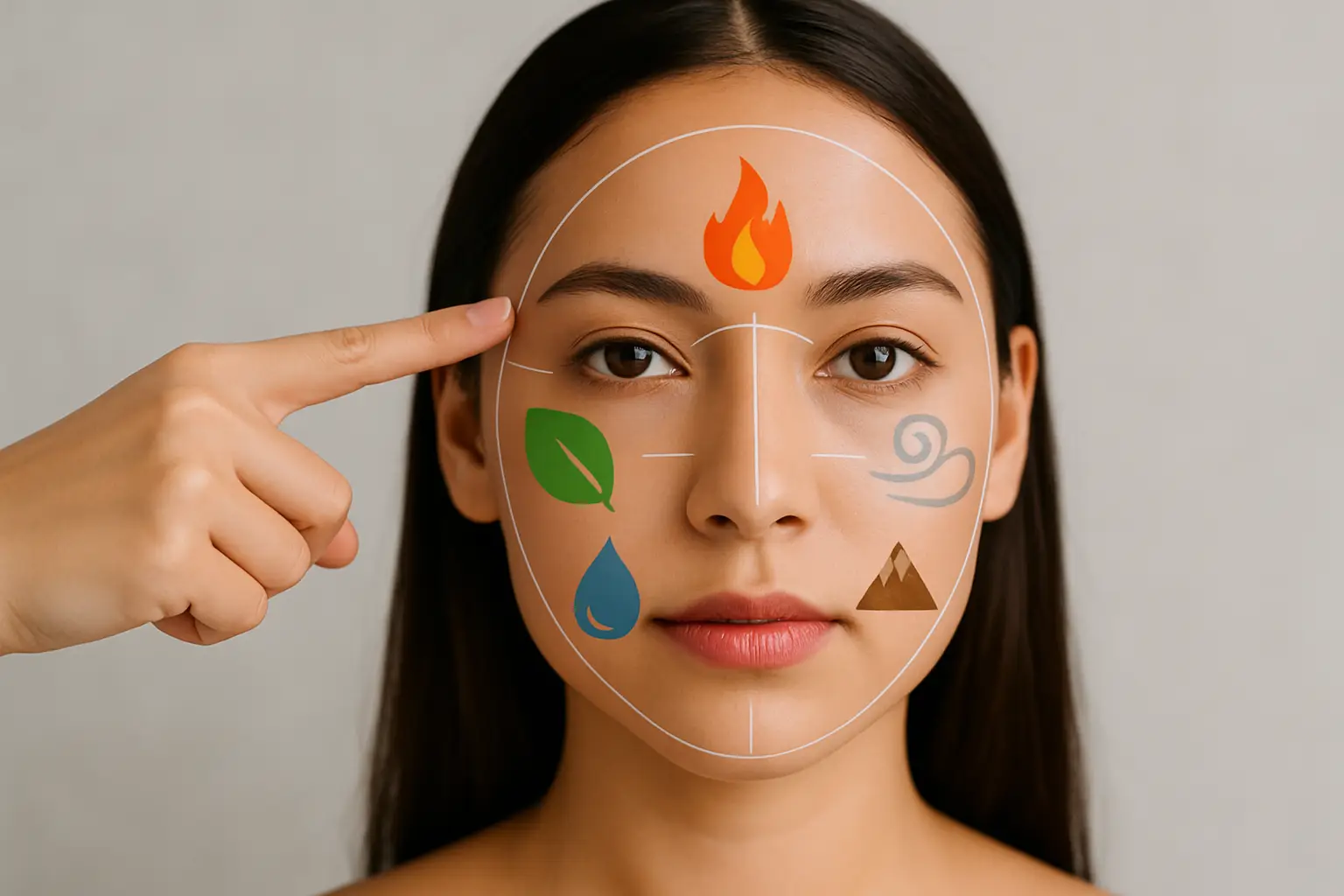
If you have ever looked at someone and felt like you “got” them before they said a word, you already understand why face mapping keeps resurfacing in high-stakes rooms. Hiring. First dates. Sales calls. Leadership meetings where one person’s emotional default changes the entire temperature.
Five element face mapping is the version of face reading that tries to turn that instinct into a structured model. Not vibes. Not a single feature interpreted in isolation. A repeatable pattern language that says: the face shows dominant tendencies, and those tendencies cluster into five recognizable “elements.”
This article is the clear, modern explanation - what it is, what each element typically signals, how mixed types show up, and when the method helps versus when it overreaches.
What “five element face mapping” is actually doing
At its core, five element face mapping assigns meaning to facial structure by grouping features into five pattern families: Wood, Fire, Earth, Metal, and Water. Each family is treated as a personality architecture - a default way a person tends to move through pressure, relationships, risk, and decision-making.
Two things make this different from casual face reading.
First, it is a mapping system. It does not claim “one eyebrow shape equals one trait.” It looks for clustering: overall face shape, proportions, muscular tension, softness versus sharpness, and how the features harmonize.
Second, it is comparative. Most people are not a pure element. You look for the primary driver (what leads under stress), then secondary traits (what shows up in collaboration, intimacy, or ambition).
Used well, the model produces a fast hypothesis: “This person likely prefers X, reacts like Y, and stabilizes through Z.” Used poorly, it becomes a stereotype machine.
The five elements as personality architectures
Different traditions describe the elements with slightly different language. In practical terms, you can think of them as five operating systems.
Wood: forward drive and directive energy
Wood is the “builder” pattern. It tends to read as directional: growth, goals, momentum, and intolerance for stagnation. In interpersonal terms, Wood patterns often prefer clarity over comfort. They do best with autonomy and measurable progress.
In a workplace setting, Wood is the person who pushes the project forward and gets restless with endless discussion. In a relationship setting, it can look like protectiveness, decisiveness, or impatience when the pace feels slow.
The trade-off is friction. Wood energy can over-index on winning and under-index on collaboration unless it is paired with a stabilizing secondary element.
Fire: expression, warmth, and social velocity
Fire is the “signal” pattern. It’s often associated with high expressiveness, relational magnetism, and the ability to move emotion through a group quickly. Fire types tend to communicate with presence: enthusiasm, humor, charm, and fast bonding.
In teams, Fire patterns can lift morale and create alignment without a long memo. In dating, Fire can feel like instant chemistry.
The trade-off is volatility. Fire can burn bright and burn out. Under pressure, some Fire patterns swing into defensiveness, impulsive decisions, or emotional overexposure. Fire needs rhythm - rest, boundaries, and a clear channel for expression.
Earth: steadiness, care, and practical loyalty
Earth is the “stabilizer” pattern. It tends to read as grounded, consistent, and people-protective. Earth energy is often the glue in teams and families: the person who remembers what matters, keeps the peace, and handles the practical details nobody wants.
In management, Earth patterns frequently excel in mentorship and retention because they notice emotional undercurrents early. In relationships, Earth often shows love through reliability and support.
The trade-off is over-responsibility. Earth can take on too much, struggle with saying no, or get stuck in comfort when change is required. Earth does best when it is respected, not exploited.
Metal: precision, standards, and controlled intensity
Metal is the “editor” pattern. It leans toward structure, boundaries, and refinement. Metal types often value competence, clean rules, and strong standards - not to be rigid, but to make reality workable.
In professional contexts, Metal energy can be a superpower: quality control, risk assessment, clear feedback, and the ability to hold a line when everyone else wants to compromise. In relationships, Metal can be loyal and protective, but it usually wants respect before vulnerability.
The trade-off is distance. Metal patterns can come off as cold or critical when they are actually trying to keep things correct and safe. Metal works best when paired with warmth and permission to be human.
Water: depth, perception, and adaptive strategy
Water is the “analyst” pattern, but not only in a logical sense. Water reads as depth, observation, and long-range perception. Water types often track what is not being said, and they can adapt quickly because they notice subtle shifts.
In business, Water patterns are frequently strong in strategy, negotiation, and complex problem-solving where patience beats speed. In relationships, Water can be intensely loyal and emotionally deep, but typically needs trust and time.
The trade-off is withdrawal. Under stress, Water can disappear, overthink, or become guarded. Water tends to do best when it has psychological safety and room to process.
How the “map” part works: regions, proportions, and balance
People want a quick diagram, but the real power of five element face mapping is balance assessment.
Most modern interpretations look at a few consistent signals: overall facial geometry (rounded versus angular), the prominence of the midface versus jaw, the clarity of edges (sharp lines versus soft transitions), and the way features “pull” the attention (upward, outward, inward).
The logic is simple: structure suggests priorities.
A face that reads as more angular and defined tends to map toward directive or boundary-driven patterns (often described through Wood or Metal). A face that reads softer and fuller tends to map toward relational or stabilizing patterns (often Earth). A face that reads highly animated in expression and “signal” tends to map toward Fire. A face that reads deep-set, contained, or highly perceptive can map toward Water.
This is not about attractiveness. It is about how the face presents energy: assertive, expressive, stabilizing, precise, or deep and adaptive.
Mixed elements are the rule, not the exception
If you are trying to categorize someone as a single element, you are using the model at its lowest resolution.
A more useful read is a primary and secondary:
Wood-Fire often looks like a high-output driver who also sells the vision well. Great founder energy, but can run hot.
Earth-Metal often looks like a dependable operator with standards. Great for management and compliance-heavy environments, but may struggle with abrupt change.
Water-Wood can look like a strategist with execution power. Strong in negotiations and long games, but can become controlling under stress.
Fire-Earth can look like a warm connector who also follows through. High trust, strong culture-building, but may avoid conflict too long.
The point is not labels. The point is prediction. Under pressure, do they push, perform, stabilize, control, or retreat and reassess?
Where five element face mapping helps in real life
This is a pattern tool, so it shines when you use it as a first-pass read, not a final verdict.
In hiring and team fit, it can help you spot likely friction points early. A high Metal manager with a high Fire direct report is not doomed, but they will need explicit agreements around communication pace and emotional tone.
In relationships, it can explain repeating loops. If one partner is Wood-dominant, they may interpret “processing time” as avoidance. If the other partner is Water-dominant, they may interpret “push for closure” as aggression. Same situation, different operating system.
In leadership, it can improve how you deliver feedback. Metal often wants clean specifics. Earth often wants context and reassurance. Fire often needs tone management. Wood often wants a direct path forward. Water often wants time and privacy.
Where it can mislead (and how to avoid that)
Face mapping becomes sloppy when people treat it like a lie detector or a morality score.
First, expression is not identity. Stress, sleep, health, age, weight change, and even camera angles can alter what you think you are reading.
Second, culture and personal style matter. Some people have trained their expression for years. A calm face can hide a high Fire personality, and an expressive face can belong to someone who is actually highly controlled.
Third, context beats type. A Wood-dominant person can look “Earth-like” when parenting. A Water-dominant person can look “Metal-like” when managing risk.
The clean way to use the model is as a hypothesis generator: “This is the likely pattern. What evidence confirms or rejects it?”
The modern approach: AI-assisted mapping vs. guesswork
Traditional face reading depends on the reader’s consistency. The modern consumer demand is different: people want speed, repeatability, and a report that feels professional enough to share.
That is where AI-assisted five element face mapping comes in. Instead of one person eyeballing a feature and improvising a narrative, an engine can standardize the scan: consistent extraction of proportions, consistent pattern language, and a structured output that reads like an assessment.
If you want that productized experience, SomaScan.ai positions its scans around named frameworks like Five-Element Mapping and Pattern Analysis to produce a PDF-ready read you can use personally or in professional conversations.
How to use five element mapping without getting weird about it
Treat it like you would treat any fast signal: useful, incomplete, and strongest when paired with real interaction.
Use it to choose your approach, not to decide someone’s fate. If you read strong Metal, lead with specifics and respect. If you read strong Fire, manage tone and give space for expression. If you read strong Water, avoid public pressure. If you read strong Wood, be direct. If you read strong Earth, be consistent and clear.
And keep one rule: the goal is better conversations, not instant certainty.
FAQ: five element face mapping
Is five element face mapping scientific?
Not in the way clinical psychology is scientific. It is a framework that organizes observation into patterns. It can be practical as a heuristic, but it should not be treated like a medical or diagnostic tool.
Can someone’s element change over time?
The underlying tendencies are often stable, but expression and presentation can change with age, stress, fitness, life role, and emotional healing. You may see different elements lead in different seasons.
What if the mapping feels wrong?
Then it is wrong, or incomplete. Mixed types are common, and context can mask traits. A good read should feel like a high-accuracy draft, not a rigid box.
Is it ethical to use this for hiring?
It depends. Using any face-based insight as the sole basis for employment decisions is a bad idea. Where it can help is in communication planning and team dynamics, not in replacing interviews, references, or job-relevant evaluation.
People-reading is already happening in every room. Five element face mapping is simply the attempt to formalize it into a language you can check, challenge, and improve. Use it to get sharper about how you relate to people, and you will get value even when the label is imperfect.