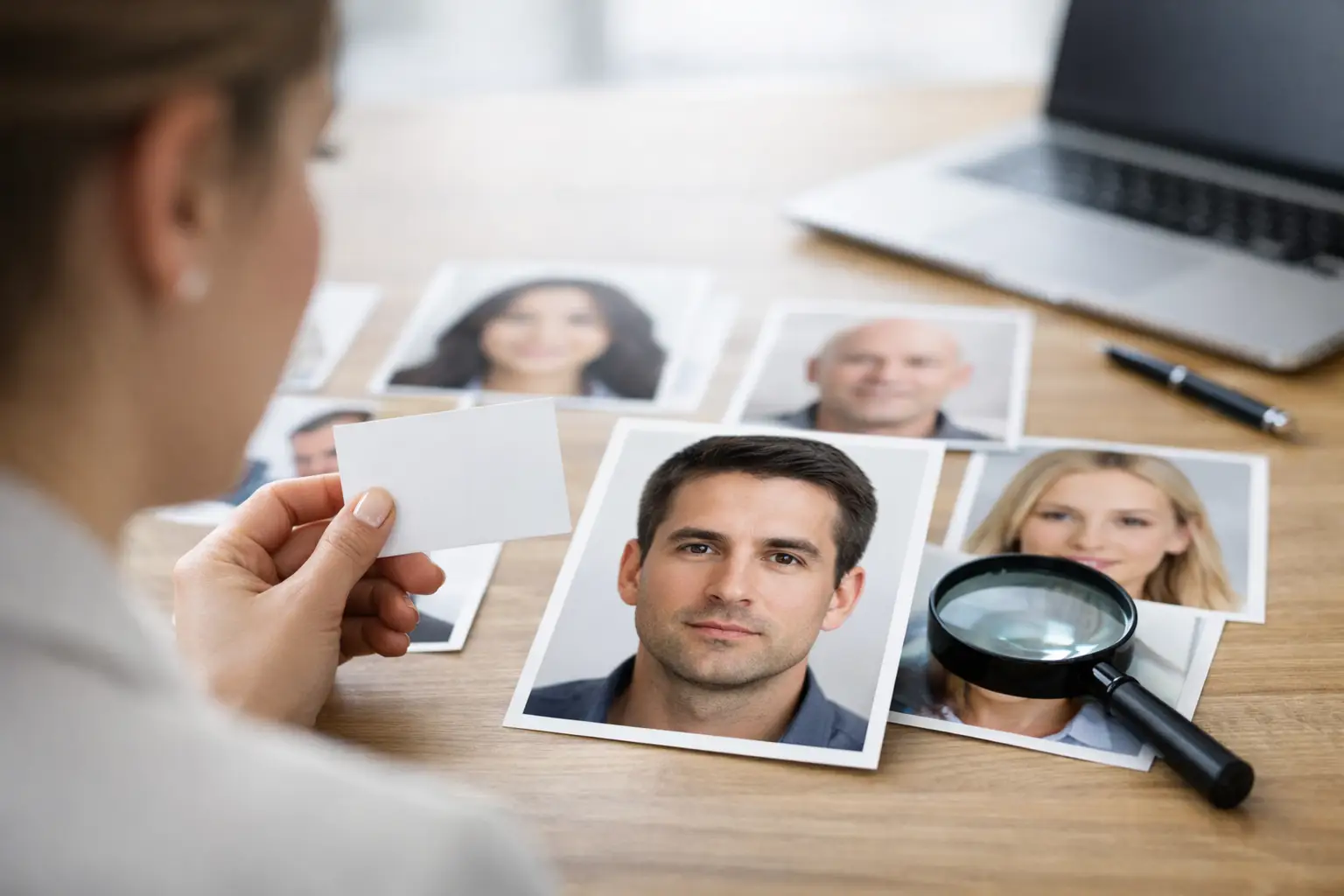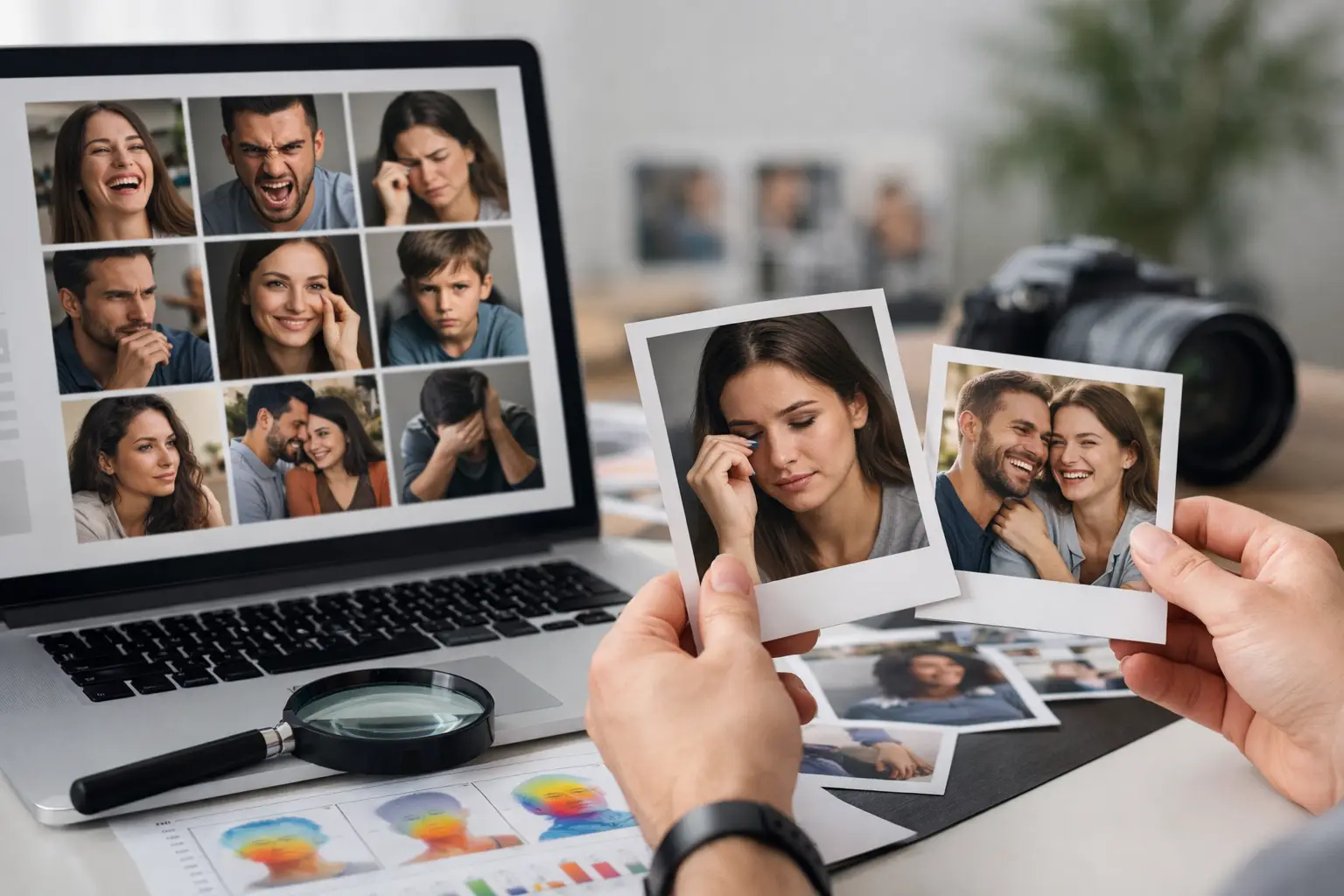
A single photo can fool you. A pattern rarely does.
That is the real starting point for anyone asking how to interpret emotional patterns from photos. One image might catch a forced smile, a tired face after a long day, or a guarded expression taken out of context. But when you learn to read recurring facial signals across multiple images, you move from guesswork to pattern recognition. That is where sharper emotional insight begins.
For professionals, this matters because emotional patterns affect trust, team fit, communication style, and pressure response. For personal use, it helps explain why someone feels warm but hard to read, expressive but inconsistent, or calm on the surface while carrying tension underneath. The goal is not to label a person from one snapshot. The goal is to identify repeatable emotional tendencies that show up across time.
What emotional patterns in photos actually reveal
Photos do not give you direct access to someone's inner life. They give you visible outputs - tension, openness, control, animation, withdrawal, receptivity, and emotional pacing. Those outputs can be observed through facial structure, expression habits, eye behavior, mouth tension, asymmetry, and the way emotion settles on the face when a person is not actively posing.
This is the distinction that most people miss. You are not reading a momentary mood only. You are looking for emotional style. Mood changes fast. Emotional style tends to repeat.
A person who consistently shows compressed lips, limited eye softness, and rigid cheek tension across different photos may not simply be having a bad day every time. That cluster can point to restraint, guardedness, or a habit of emotional self-control. On the other hand, someone with relaxed facial muscles, responsive eyes, and naturally lifted expression lines may signal emotional accessibility and lower resistance to connection.
It depends, of course, on the image set. Better reads come from multiple photos across different settings, angles, and emotional states.
How to interpret emotional patterns from photos without overreading
The first rule is simple - stop treating one cue as a verdict.
A smile is not always warmth. Direct eye contact is not always confidence. A neutral face is not always coldness. Strong interpretation comes from clusters, not isolated features. If three or four signals point in the same direction across several photos, your confidence goes up. If the signals conflict, slow down.
Start with baseline expression. What does the face look like when it is doing very little? This matters more than the biggest smile in the camera roll. Baseline expression often reveals where emotion settles naturally. Some faces return to softness. Others return to vigilance, pressure, skepticism, or reserve.
Then look at muscular tension. Emotional patterns often live in the forehead, around the eyes, and at the mouth. Repeated forehead tightening can suggest mental strain, caution, or hypervigilance. Tension around the mouth may indicate suppression, emotional filtering, or a habit of holding back reactions. Eye area softness, by contrast, often correlates with receptivity and emotional ease.
Next, compare posed photos with candid ones. This is where many reads either sharpen or collapse. Posed images show social performance. Candid images show emotional default. If a person appears highly animated in posed shots but flat or tightly controlled in candid ones, that gap tells you something. It may suggest effortful sociability rather than natural expressiveness.
The core signals to watch
When people ask how to interpret emotional patterns from photos, they usually want the fastest path to useful signals. The strongest emotional indicators tend to come from repetition in five areas.
The eyes show engagement, withdrawal, alertness, and emotional accessibility. Look at whether the eyes appear focused, distant, narrowed, warm, or guarded across images. Not one image - across images.
The mouth shows restraint, spontaneity, and emotional filtering. A relaxed mouth often reads differently than lips that are repeatedly pressed, unevenly tightened, or held in a controlled smile.
The brow and forehead show internal pressure. Habitual brow compression can point to concern, analytical strain, or guarded processing. A more open upper face can indicate lower internal resistance.
Facial symmetry under expression can also matter. Strong asymmetry during smiles or reactions may suggest mixed feelings, social masking, or uneven emotional signaling. That does not mean deception. It means complexity.
Finally, the transition between expressions matters. Some people shift fluidly from neutral to expressive. Others look locked, delayed, or effortful. That can signal emotional pacing - how quickly a person lets feeling become visible.
Context changes the read
This is where disciplined interpretation separates itself from lazy face reading.
Lighting changes tension. Camera angle changes dominance and openness. Stress, sleep, age, makeup, cosmetic work, and cultural expression norms all affect the face. A recruiter reading professional headshots will get a narrower signal range than someone reviewing casual, social, and candid photos together. A dating profile may overrepresent charm cues. A work bio may overrepresent control cues.
That does not make photo interpretation useless. It means context must sit beside the facial read, not behind it.
A smart approach is to ask three questions. Is this signal repeated? Does it appear in different environments? Does it align with other visible cues? If the answer is yes to all three, you are no longer reacting to an image. You are identifying a pattern.
How emotional pattern reading helps in real decisions
Emotional patterns from photos are most useful when the decision is interpersonal.
Managers and team leads often want a quicker sense of how someone may show up under pressure. Photos can sometimes reveal whether a person projects steadiness, intensity, openness, or emotional containment. That is not a substitute for interviews or performance data. It is an added signal layer.
In relationships, photo pattern reading can help explain recurring impressions. Why does someone look inviting yet hard to access? Why do they appear friendly but emotionally distant? Why does their expression seem warm in one setting and tightly controlled in another? Repeated visual cues can surface those contradictions early.
For self-discovery, the value is often strongest. Most people have never seen their own emotional style from the outside. They know what they feel, but not always what they repeatedly project. A structured scan can expose the gap between self-perception and visible pattern.
When human judgment hits its limit
Most people can notice obvious emotion. Fewer can track subtle repetition across dozens of images with consistency. That is where systemized analysis becomes more useful than casual intuition.
A platform like SomaScan.ai is built for exactly this problem. Instead of relying on a single impression, it applies a guided scan workflow and pattern framework to identify recurring facial signals tied to personality architecture, emotional tendencies, and interpersonal style. For users who want speed, structure, and a PDF-ready output they can actually use, that model is far more practical than trying to manually decode every facial cue alone.
The advantage is not magic. It is standardization. A method-driven scan can reduce random interpretation and force attention onto repeat markers rather than emotional guesswork.
FAQs about how to interpret emotional patterns from photos
Can one photo accurately reveal emotion?
Sometimes it reveals a moment. It rarely reveals a reliable pattern by itself. Emotional pattern reading gets stronger when you compare multiple images over time.
Are facial expressions enough to judge personality?
No. Photos can suggest tendencies, not complete truth. The best use case is identifying likely emotional habits, not making absolute claims about character.
What kind of photos work best?
A mix works best - professional, casual, candid, front-facing, and natural-light images. More variation gives you a cleaner read on what repeats and what was situational.
Can photos help with hiring or team fit?
They can support early impressions, especially around openness, control, and emotional signaling. They should never be the only input, but they can add context when used carefully.
What is the biggest mistake people make?
They confuse a single strong expression with a stable emotional pattern. The right question is not what this face shows once. It is what this face shows repeatedly.
Reading emotional patterns from photos is not about pretending a face tells you everything. It is about noticing what keeps showing up when the pose drops, the context changes, and the same emotional habits still remain.