You already do it.
You see a face on a Zoom call, a LinkedIn headshot, a dating profile, a candidate’s intro video, a new manager’s team photo - and within seconds you’ve formed a working theory. Confident. Directional. Tense. Warm. Hard to read. You might not say it out loud, but you use it anyway.
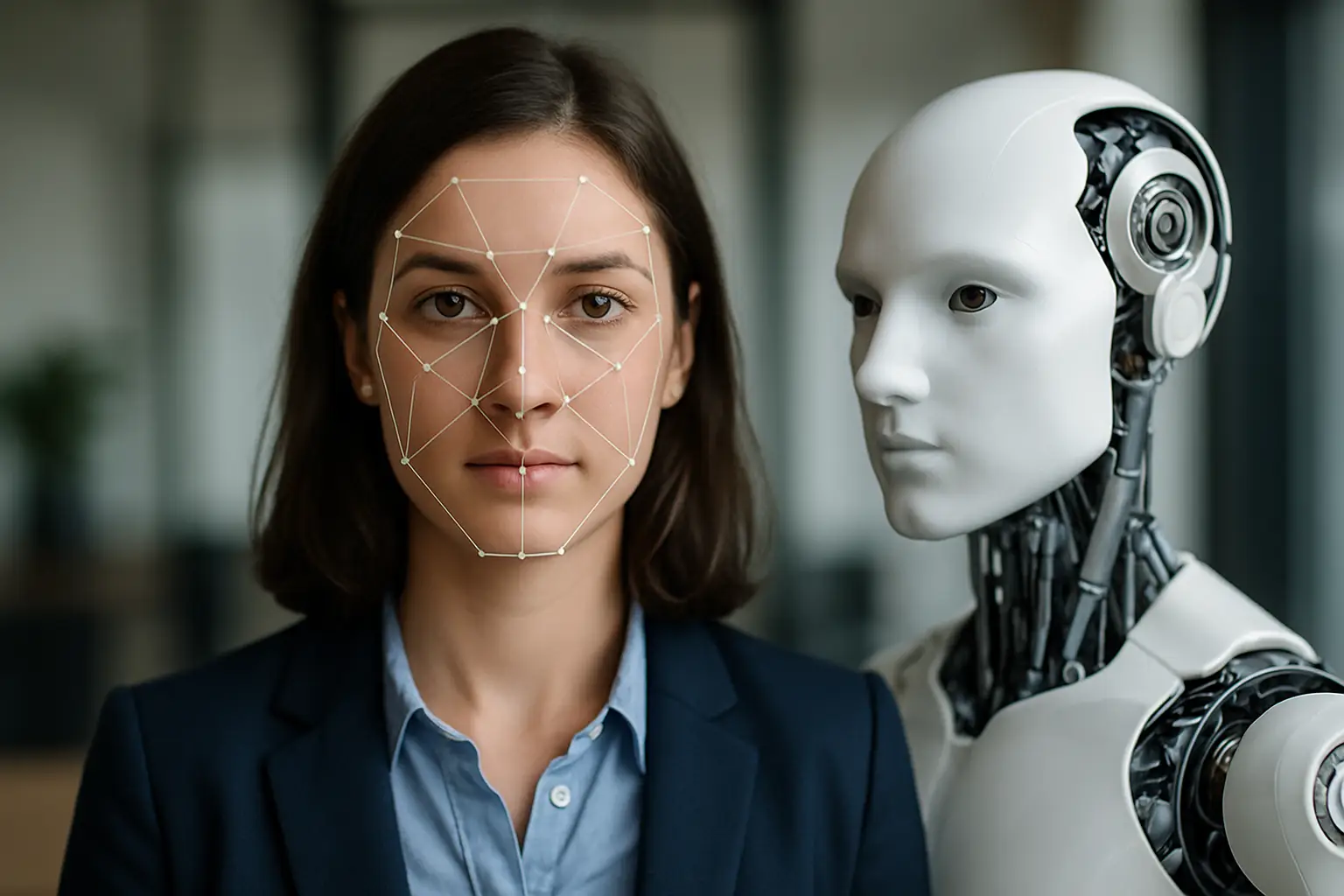
“read personality from face ai” is simply the productized version of that human reflex, with one key difference: it can standardize the process, label the outputs, and deliver a repeatable report you can share, compare, and reference later.
That’s the promise. The reality is more nuanced - and if you’re using face-based personality signals for hiring, team fit, coaching, or compatibility, you want that nuance.
What “read personality from face ai” is actually doing
Most people imagine an AI staring at a face and magically “knowing” someone’s inner life. That’s not how it works. Even the most confident systems are running pattern recognition on visual inputs and mapping them to trait-language.
At a high level, face reading AI typically does three things.
First, it extracts measurable facial and head features from an image or a set of images. That can include geometry, proportions, symmetry, and structural emphasis. Second, it compares those patterns to an internal framework - a model that was trained or designed to associate certain visual structures with temperament or behavioral tendencies. Third, it generates a narrative output: personality traits, emotional patterns, social style, and sometimes compatibility or career alignment.
That last step matters. The output isn’t just “data.” It’s interpretation packaged into language that feels usable. If the system is built for consumers and professionals, it usually leans into decisive phrasing, strong archetypes, and clean report formatting because that’s what people can act on.
Why people want it (and why it converts fast)
Face-based personality readouts sell because they solve a real problem: people-reading is high-stakes and most of us are improvising.
In hiring, you’re often trying to answer “Is this person going to work the way the role demands?” before you have enough evidence. In team leadership, you’re trying to anticipate conflict styles, communication needs, and what motivates someone. In relationships, you want a shortcut to emotional patterns and compatibility.
Traditional tools exist - interviews, references, personality tests - but they cost time, they’re easy to game, and they don’t always produce an immediately shareable format. Face reading AI is the opposite: fast, low friction, and packaged as a crisp signal.
That speed is both the advantage and the risk. Used as a directional input, it can sharpen your questions. Used as a verdict, it can harden your biases.
Where face-based personality AI tends to be most useful
The best use case is not “decide who someone is.” It’s “generate a structured hypothesis.” When you treat it as a hypothesis engine, you get value without pretending it’s mind-reading.
Team fit and communication style
If you manage people, you live inside communication mismatches. One person needs directness and speed. Another needs context and reassurance. A third needs autonomy and hates being micromanaged.
A face-based report can give you a starting profile of how someone may respond under pressure, how they present socially, and where their default emotional posture tends to land. That’s not destiny, but it’s a way to walk into a conversation with better calibration.
Coaching and self-awareness
Some people don’t want therapy language. They want a clean mirror: “Here are your tendencies. Here’s what you do when stressed. Here’s what you avoid. Here’s what you overuse.” Face reading AI outputs are often written in that direct style, which makes them easier to absorb.
Compatibility and friction forecasting
Compatibility isn’t just shared interests. It’s emotional pacing, conflict response, and how each person protects their identity when challenged. A good face-based personality framework can highlight likely friction points early: control versus flexibility, intensity versus steadiness, independence versus closeness.
Again, it’s a hypothesis. But in the real world, even a hypothesis can save months.
The trade-offs nobody should ignore
If you want real decision support, you have to be honest about limitations.
It’s not a lie detector for character
A face can’t confirm integrity, loyalty, competence, or ethics. It can only suggest patterns that correlate with expression, structure, and the way someone carries themselves in captured images.
If you’re using face AI to “prove” someone is trustworthy or untrustworthy, you’re doing it wrong. That’s not a technology problem. That’s a user problem.
Images are not neutral inputs
Lighting, lens distortion, camera angle, facial hair, makeup, sleep deprivation, recent stress, and even temporary inflammation can shift what a system reads. A single headshot can overrepresent a moment.
The best systems reduce this risk by using multiple images, profile views, or an intentional discovery workflow. Still, the input quality controls the output quality.
The Barnum effect is real
People accept vague descriptions as personal truth, especially when the writing is confident. Any “read personality from face ai” tool has to fight this by being specific enough to be testable.
Specificity looks like: naming behavioral trade-offs (strengths and costs), describing what happens under stress, and pointing to consistent patterns rather than flattering generalities.
Bias and misuse are the real threat
If you’re in HR or management, you already know the danger zone: using a tool like this as a gatekeeper. Personality signals should inform your questions, not replace evidence.
If you want to use face-based analysis ethically, use it the same way you’d use a quick profile impression: as a prompt for deeper observation, not as a final label.
How to use a face personality report like a professional
The difference between amateur use and professional use is simple: professionals treat outputs as tools for better conversations.
Start by separating three layers in your mind. There’s stable temperament (how someone tends to operate), adaptive behavior (how they’ve learned to present), and current state (what’s happening in their life right now). A face-based report is usually strongest on temperament cues, weaker on adaptive behavior, and weakest on current state.
Then use the report to build questions that expose reality.
If a report suggests high intensity and strong control orientation, ask how they delegate, what they do when someone misses a deadline, and what “good work” looks like to them. If it suggests high sensitivity and social attunement, ask how they handle blunt feedback, how they reset after conflict, and what environments drain them.
You’re not “testing the AI.” You’re using it to test the person’s lived patterns in a respectful, structured way.
What a strong system does differently
Not all face reading AI is the same. Some outputs are basically horoscope-style trait clouds. Others are built like an engine: consistent methodology, clear sections, and a repeatable framework.
A strong system usually has three qualities.
It uses structured pattern mapping rather than random trait lists. It names internal frameworks and versions so the output feels stable and iterative, not improvised. And it produces a report that’s clean enough to be used in real contexts - coaching notes, team conversations, compatibility discussions, even personal reflection.
That’s why platforms like SomaScan.ai position their workflow as an engine: identity anchoring, discovery, and a PDF-ready personality architecture report. The product pitch is straightforward: fast clarity, high-confidence language, and a format that can actually be shared.
The question you should ask before trusting it
Don’t ask, “Is it accurate?” as if accuracy is a single number.
Ask, “Accurate for what?”
If you need a clinical diagnosis, face AI is not the lane. If you need a fast directional read to improve communication, coaching, and interpersonal awareness, it can be highly useful - especially when the output is structured and consistent.
Also ask, “What would change my mind?” A good report should create predictions you can validate. If it says someone is conflict-avoidant, you should be able to observe how they respond to tension. If it says someone is high-agency and resistant to micromanagement, you should see it in their reactions to control.
When the report creates testable expectations, it becomes a practical instrument, not a vibe.
FAQs
Is it possible to read personality from a face at all?
Humans do it constantly, and some facial cues do correlate with typical expression patterns and social signaling. AI can systematize those cues, but it’s not a direct window into someone’s morals or life history.
Can I use face reading AI for hiring decisions?
Use it to sharpen interviews, not to screen people out. If you treat it as an input for better questions and role-fit discussions, it can help. If you treat it as a verdict, it can amplify bias and lead to poor decisions.
What kind of photo works best?
Clear, well-lit images with minimal distortion work best. Multiple angles or multiple images usually produce more stable reads than a single headshot taken on a wide-angle phone lens.
What if the report feels wrong?
That’s useful data. Either the input images didn’t represent the person well, the framework doesn’t fit the individual, or the person has learned to present in a way that differs from their default temperament. The right move is to treat disagreement as a prompt for deeper questions, not a failure you need to hide.
If you’re going to use “read personality from face ai,” use it the way you’d use any powerful shortcut: to get to better conversations faster. The goal isn’t to reduce a human to a label. The goal is to see patterns early enough that you can choose your next move with intent.