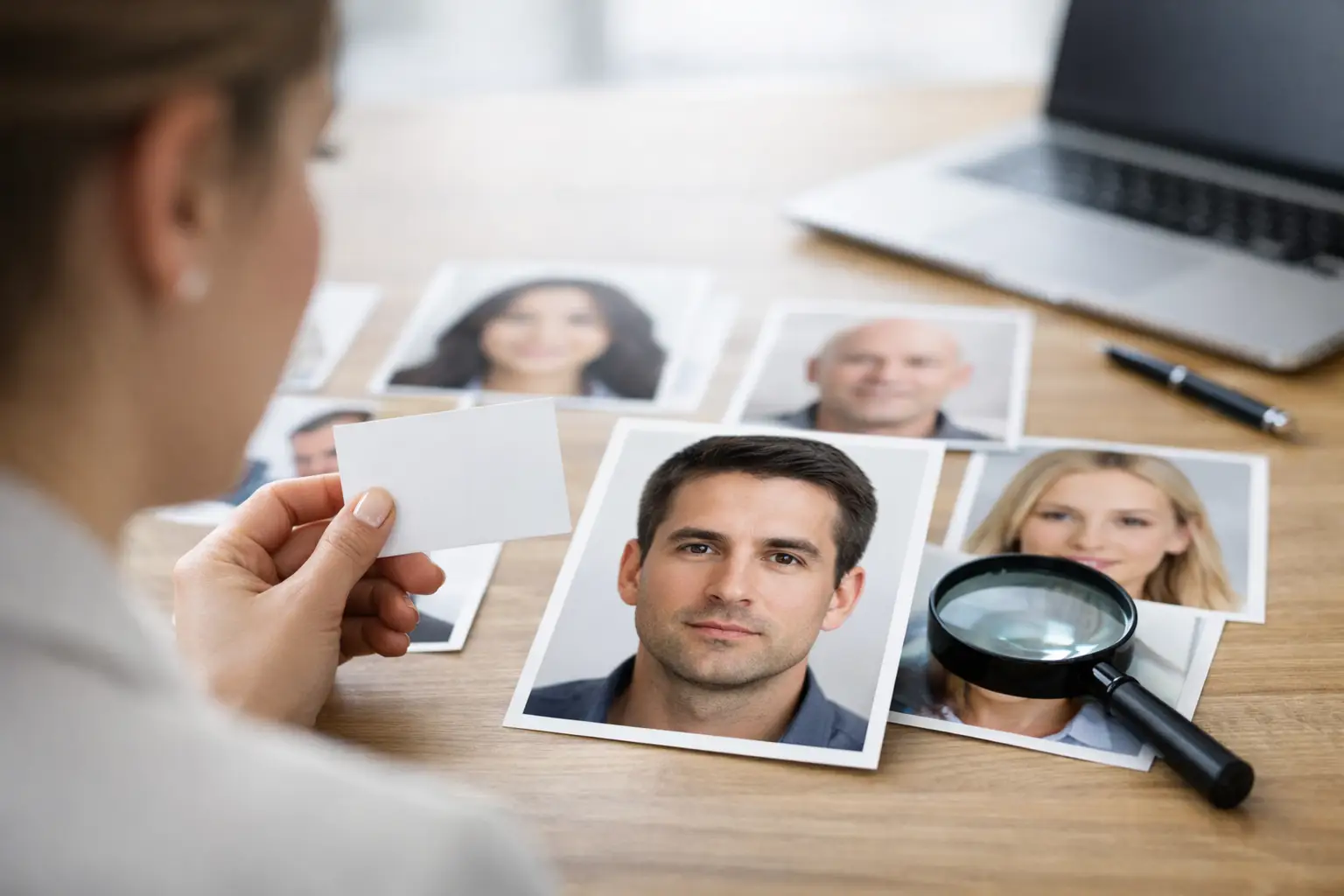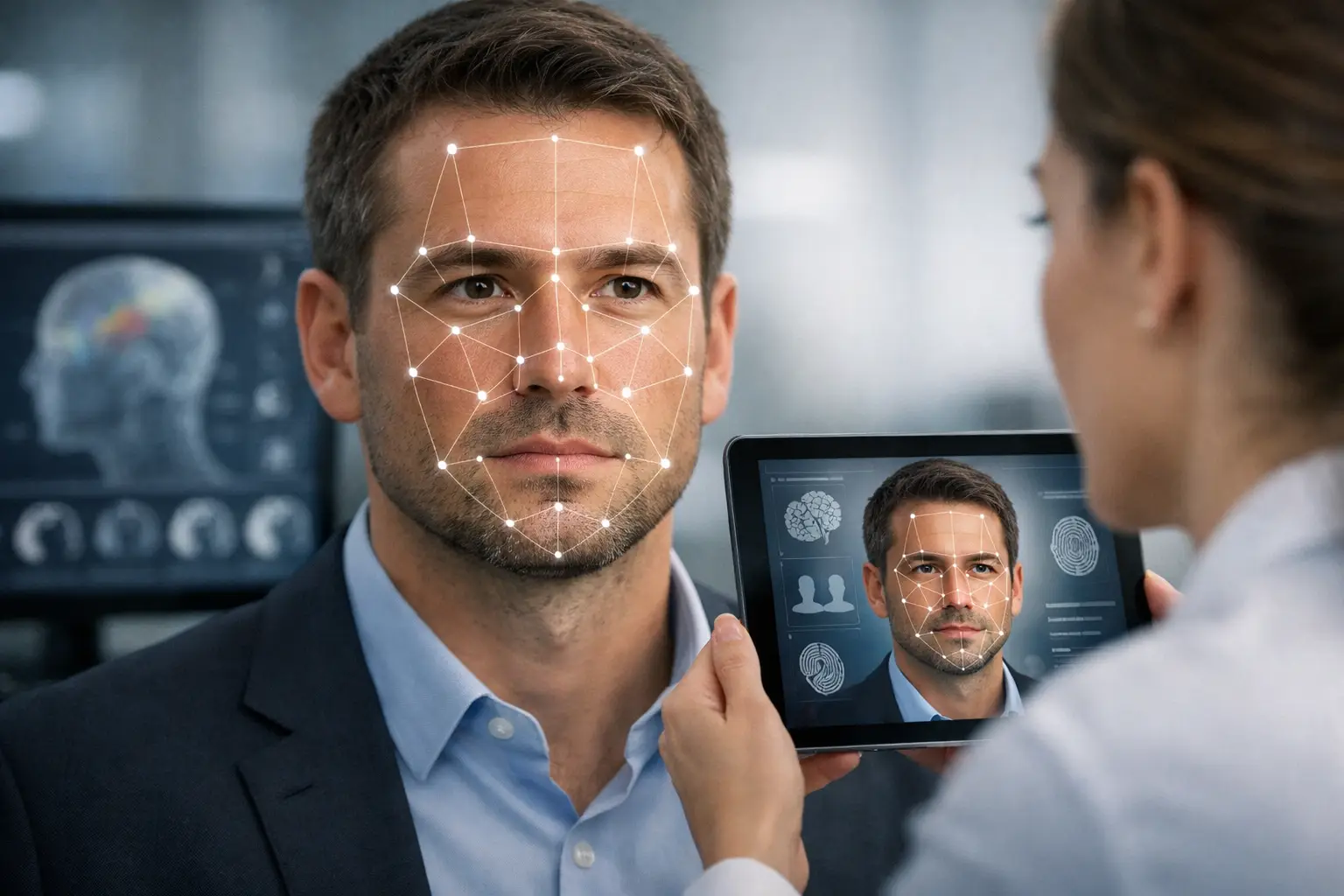
You can spot confidence in a handshake or tension in a voice, but those signals appear late. The real appeal of tools that detect hidden tendencies from face scan inputs is speed. In a few guided steps, users get a structured read on personality patterns, emotional habits, social style, and potential fit - without sitting through a long questionnaire or waiting weeks for a formal assessment.
That promise is exactly why facial analysis has moved from curiosity into decision support. Managers want faster team-read signals. Coaches want cleaner starting points for conversations. Individuals want clarity about why they keep repeating the same relationship or career patterns. A face scan report enters that gap by turning visible structure into a framework people can actually use.
What it means to detect hidden tendencies from face scan
When people hear the phrase, they often imagine mind reading. That is not the useful frame. A strong face scan system is not claiming to read every private thought or predict every future choice. It is identifying patterns that may correlate with stable tendencies - how someone processes pressure, expresses emotion, manages control, responds socially, or defaults under stress.
The word hidden matters here. Many tendencies are not obvious in daily conversation because people mask them, overcompensate, or adapt to context. Someone can present as highly social while carrying strong internal caution. Another person can look calm while operating with intense competitive drive. Facial analysis aims to detect those less visible layers by examining structural and expressive cues together rather than relying on self-description alone.
That difference matters. Self-assessments tell you how people see themselves. A face scan report is positioned to show how their architecture presents underlying tendencies, including traits they may not name on their own.
How AI face scan systems read beyond appearance
Not all face-reading tools are built the same. The basic versions generate generic personality copy from a photo. The more credible systems use a staged workflow that treats the scan as an analysis process rather than a novelty filter.
In practice, the engine starts with identity anchoring, then image discovery or upload, then pattern extraction. From there, it maps facial structure, proportion, tension, symmetry, feature dominance, and expression markers into report categories. Those categories are what make the output useful. Instead of random trait labels, the report organizes findings into clear areas such as character tendencies, emotional response style, compatibility patterns, and career alignment.
That structure is what turns a scan into something actionable. A user does not just want to hear that they seem determined or warm. They want a readable explanation of how those traits combine, where they become strengths, and when they become friction.
The signals these systems often analyze
A quality platform looks at more than one static detail. It reads patterns across the face as a whole. That can include feature balance, profile shape, forehead and jaw relationships, eye area intensity, symmetry, tension markers, and how different regions support or contradict one another.
This is where proprietary frameworks matter. When a platform names and organizes its methodology - for example through pattern analysis models, structural integrity scoring, or trait mapping systems - it gives users a clearer reason to trust the result. The report feels less like algorithmic guesswork and more like a defined engine.
For users, that credibility layer is practical, not cosmetic. If you are using a report to think about hiring, team fit, leadership style, or relationship dynamics, you want a system that feels repeatable and professionally framed.
Where face scan reports are actually useful
The biggest mistake is expecting one scan to make a decision for you. The best use case is directional clarity.
For hiring or team-building, a face scan report can offer an early lens on communication style, authority patterns, adaptability, and possible stress behaviors. It should not replace interviews, references, or performance history. But it can sharpen the questions you ask next. If a report suggests a candidate may be highly independent but low in collaborative patience, that is something worth testing in conversation.
In relationships, the value is often even more immediate. People usually know what happened in a conflict. They do not always know the pattern beneath it. A face scan report can frame why one person pursues control while another withdraws, or why one partner seeks emotional openness while the other leads with restraint.
For personal growth, the appeal is simple. Most people are too close to their own habits to describe them clearly. A polished report gives language to recurring tendencies that have been shaping choices for years.
What makes a report feel accurate
Accuracy, in this category, is partly technical and partly narrative. Users respond when a report is specific enough to feel observed but structured enough to feel credible.
Generic outputs fail because they are too broad. They tell everyone they are complex, ambitious, and sensitive. Stronger reports isolate tensions. They show the contradiction between external composure and internal intensity, or between social charm and guarded trust. Those details feel sharper because they reflect how real people operate.
Presentation also matters more than most platforms admit. If the output is clean, organized, and PDF-ready, people are more likely to share it, revisit it, and use it in actual conversations. A professional format signals that the scan is not just entertainment. It is a usable artifact.
That is one reason product-led platforms like SomaScan.ai position the analysis as a professional-grade report rather than a one-screen result. The report format creates gravity. It gives the user something that feels complete.
The real trade-offs behind face scan analysis
This is where authority matters more than hype. Yes, AI can detect hidden tendencies from face scan data in ways that feel fast and compelling. But usefulness depends on how the user interprets the result.
A scan is strongest when it identifies tendencies, not certainties. People are dynamic. Context changes behavior. Training, age, stress, and environment all shape how traits show up. A highly dominant structure may produce executive confidence in one setting and interpersonal rigidity in another. The pattern may be real, but the outcome depends on the person and the situation.
Image quality also matters. Poor lighting, heavy filters, extreme angles, or low-resolution photos can flatten or distort signals. That does not make the method worthless. It just means input quality affects output confidence.
There is also a human tendency to overread. If a report feels precise, users may treat it like final truth. That is the wrong move. The right move is to use the report as a high-speed interpretive tool - one that helps you notice patterns, ask better questions, and move faster toward clarity.
How to get the most useful result from a face scan
The simplest way to improve results is to treat the process seriously. Use a clear image. Follow the scan workflow. Avoid photos with exaggerated expressions or visual noise. If the system uses profile discovery or guided selection, do not rush it. Better inputs usually produce better pattern mapping.
It also helps to start with a real question. Are you trying to understand your leadership style, a new hire, a dating pattern, or a communication problem on your team? The clearer the use case, the more valuable the report becomes.
After you receive the analysis, read it for pattern clusters rather than isolated traits. One trait alone can be misleading. A combination of high control, emotional reserve, and sharp analytical orientation tells a stronger story than any single label. That layered reading is usually where the insight lands.
When a scan is worth it
A face scan report is worth it when speed matters, when you want a structured second lens, and when you are open to using the result as guidance rather than gospel. It is especially effective for people who do not want long assessments but still want a confident, polished interpretation.
That audience is larger than it used to be. Professionals are overloaded. Teams move fast. Relationships become complex quickly. A guided scan with a clear report meets modern demand because it compresses interpretation into a format people can actually act on.
The deeper appeal is not mystery. It is efficiency. People want to understand themselves and others faster, with less friction, and with more structure than instinct alone can provide.
If that is the goal, face scan analysis makes sense - not as a replacement for judgment, but as a sharper starting point for it. The most useful insight is often not the label itself. It is the moment a pattern clicks and you finally see what has been driving behavior all along.