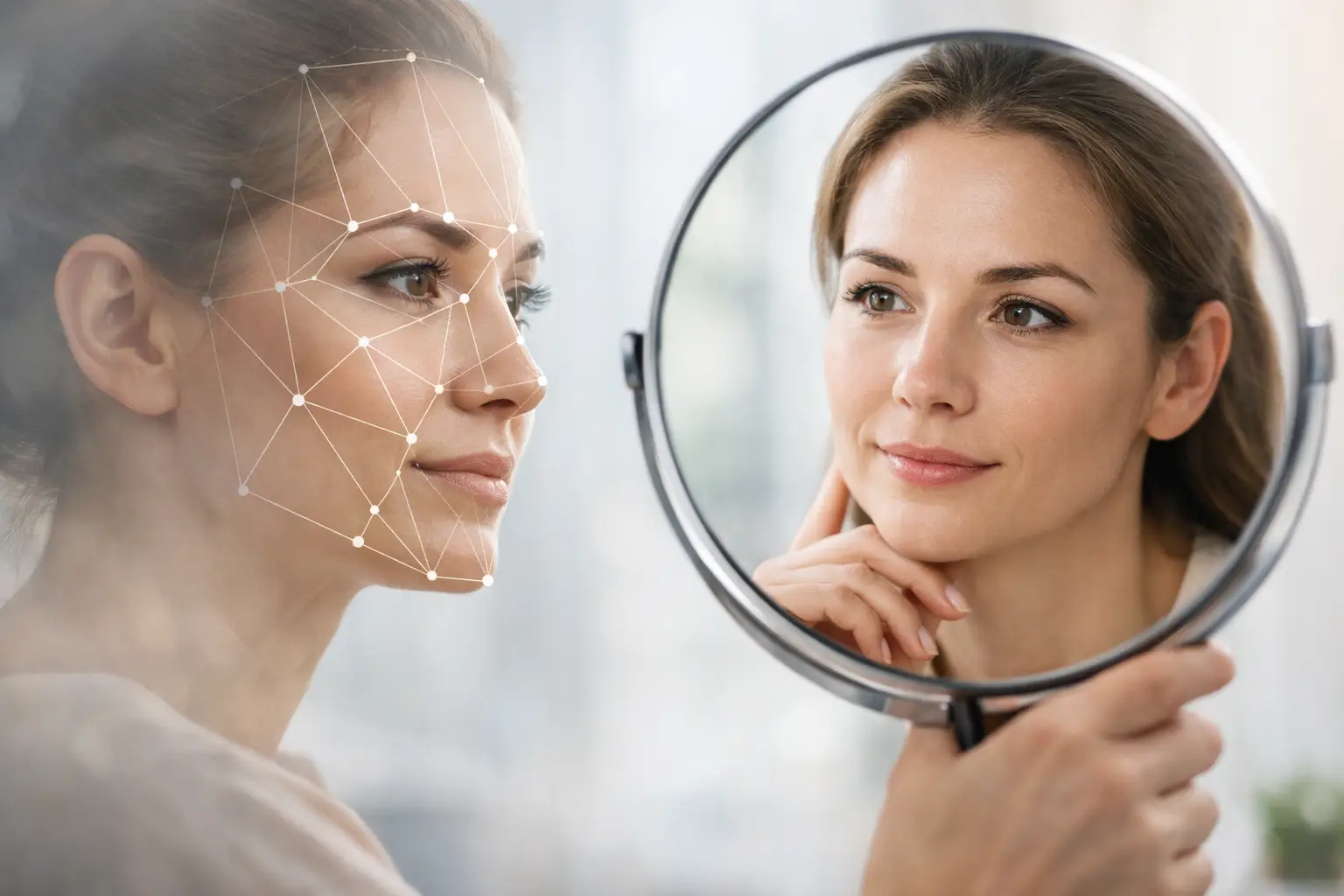
You can tell when a personality test misses. The language is vague, the result feels generic, and you’re left trying to force yourself into a category that never quite fits. That’s why interest in how to use face reading for self discovery keeps growing. It feels faster, more direct, and more personal because it starts with something you already carry every day - your face.
Face reading appeals to people who want sharp signals, not endless introspection. For professionals, it offers a way to spot tendencies that affect leadership, communication, and stress response. For individuals, it can surface emotional patterns, relationship habits, and the traits you lean on when life gets demanding. Used well, it is not fortune telling. It is a structured way to reflect on visible patterns and turn them into practical insight.
What face reading is actually useful for
The strongest use case for face reading is pattern recognition. Certain facial structures, expressions, and balances can prompt better questions about your default behavior. Do you come across as controlled or open? Do you show intensity before you speak? Do you project warmth but struggle with boundaries? Those are self-discovery questions worth asking because they affect your work, relationships, and decision-making.
This matters most when your self-image and your real-world impact are not the same. Many people believe they are calm, approachable, or decisive, yet others experience them very differently. Face reading gives you another lens. Not the only lens, but a valuable one when you want a faster read on how your traits may present externally.
There is a trade-off here. Face reading is best used to identify tendencies, not fixed truths. A good read can highlight probable strengths and emotional habits. It should not be treated as a final verdict on your identity.
How to use face reading for self discovery without drifting into fantasy
Start with the right goal. If you approach face reading hoping it will tell you everything, you will either overbelieve it or dismiss it. A better goal is to use it as a structured mirror. You are looking for themes that help explain your behavior under pressure, in connection, and at work.
That means focusing on three areas. First, personality tendencies. These are the traits that shape how you move through the world - directness, caution, adaptability, intensity, empathy. Second, emotional patterns. These speak to how you process conflict, trust, frustration, and attachment. Third, compatibility and career expression. These insights matter because self-discovery is not only about who you are alone. It is also about how you function with other people.
A useful reading should make you more precise, not more dramatic. If a result says you have strong drive but uneven patience, that gives you something to test in meetings, deadlines, and relationships. If it says you project confidence while carrying hidden tension, that can explain why others expect more emotional steadiness from you than you actually feel.
The best way to read your face is through patterns, not isolated features
A common mistake is obsessing over one trait. Someone fixates on eye shape, jawline, forehead width, or smile tension and tries to build a whole identity from it. That usually leads to weak conclusions.
Real self-discovery comes from combinations. A broad upper face may suggest one type of cognitive style, but paired with a softer lower face it can point to a very different interpersonal pattern than if it were paired with sharper structural lines. The signal is in the architecture, not a single feature.
That is why modern tools perform better when they use a structured framework rather than casual guesswork. The point is to evaluate facial balance, visible tension, relational symmetry, and expression patterns together. When those signals are organized into a report, the output becomes much easier to apply.
A practical process for self-discovery through face reading
If you want a face reading to actually help, treat it like a diagnostic pass on your behavioral defaults. Begin with a clear image and a neutral mindset. You are not trying to prove something about yourself. You are trying to see what repeats.
The first step is identity anchoring. A guided process that starts with your name and image creates a cleaner frame for interpretation because the report is built around you as a whole person, not a random face. From there, the analysis should map structural patterns into readable themes such as emotional regulation, relational style, ambition, sensitivity, or resilience.
Next, look for the sections that create tension with your self-perception. Those are usually the most valuable. If the report suggests a strong internal need for control, ask where that shows up. If it points to high receptivity but selective trust, think about your friendships, team dynamics, and leadership style. The goal is not agreement with every line. The goal is friction that leads to insight.
Then convert the reading into action. A result means very little if it stays abstract. If your face reading suggests intensity, your action might be softening your delivery in interviews or one-on-ones. If it suggests relational warmth with weak boundaries, your action might be tightening commitments and communication standards. Self-discovery only counts when it changes behavior.
How to use face reading for self discovery at work
This is where the method becomes especially useful. Work settings expose your default patterns quickly. Pressure compresses personality, and hidden tendencies become visible in decision-making, conflict, and collaboration.
A face reading can help you understand how you likely show up in a professional environment before you even speak. That matters if you lead teams, hire candidates, coach clients, or manage high-stakes relationships. Some people project certainty and structure, which helps in authority roles but can reduce approachability. Others project openness and empathy, which builds trust but can complicate decisive calls.
For your own development, use the report to refine your role fit. A pattern that suggests strategic patience may align with planning, advising, or operations. A pattern that points to fast drive and direct expression may fit sales, leadership, or entrepreneurial environments better. These are not hard limits. They are directional signals that help explain where you gain energy and where friction tends to build.
For team dynamics, face reading works best as an added layer, not a replacement for experience or performance data. It can help you ask smarter questions about fit, communication style, and emotional range. It should never be the only basis for a serious decision.
Why structured AI reports work better than casual interpretation
Traditional face reading often depends on the reader’s intuition, which creates inconsistency. One person sees strength where another sees rigidity. That is exactly why structured AI systems feel more usable for modern audiences. They package observation into repeatable analysis.
A platform such as SomaScan.ai frames this process with guided discovery, image analysis, and report generation that feels professional rather than mystical. That matters for users who want clean outputs they can reflect on, share, or apply in personal and professional settings. When a report organizes findings into categories like personality architecture, emotional tendencies, compatibility, and career expression, the experience becomes less about guessing and more about interpretation.
The advantage is speed and clarity. The limitation is that any AI-generated reading still depends on input quality and framework design. Strong tools can surface meaningful patterns. They cannot replace lived context, self-awareness, or direct feedback from people who know you well.
FAQ
Is face reading accurate enough for real self-discovery?
It can be, if you use it the right way. Face reading is strongest as a pattern-based reflection tool. It is less reliable when treated as a rigid identity label.
Can face reading help with relationships?
Yes, especially if you use it to understand emotional habits, trust patterns, and communication style. It can reveal why certain dynamics repeat, though it should not be used to reduce a partner to a type.
Should I trust a face reading more than a personality test?
It depends on what you want. Personality tests rely on self-report, which can be biased or aspirational. Face reading offers an external lens. The best insight often comes from comparing both.
What should I do after getting a report?
Pull out two or three traits that feel both accurate and actionable. Then test them in real life - at work, in conflict, and in close relationships. That is where self-discovery becomes useful.
The real value in face reading is not the novelty. It is the speed at which it can reveal a pattern you were already living but had not clearly named yet. Once you can name it, you can work with it.