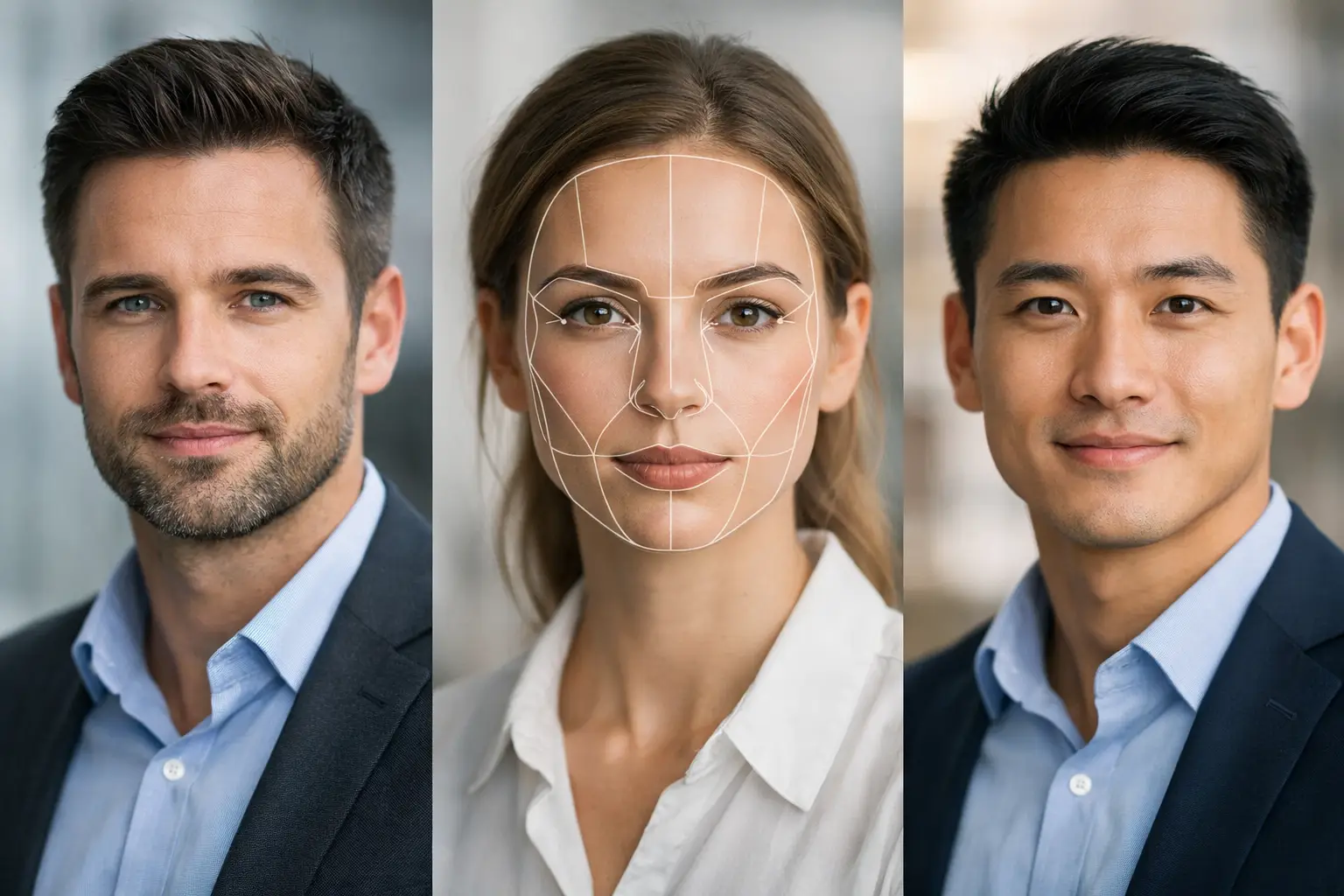
You can learn a lot from how someone speaks, writes, and reacts under pressure. But before any of that happens, the face makes the first impression. That is why interest in personality cues from facial structure keeps growing among hiring managers, coaches, team leads, and curious individuals who want a faster read on temperament, emotional style, and interpersonal fit.
The real value is not mind reading. It is pattern recognition. Facial structure can suggest tendencies - how a person may hold tension, project confidence, process social pressure, or present themselves to others. Used well, these cues help people ask better questions, spot likely strengths, and avoid flat, one-note judgments.
What personality cues from facial structure can actually reveal
Facial structure is most useful when it is treated as a signal system, not a verdict. Bone proportions, symmetry, spacing, contour, and feature dominance can all shape how a face is perceived. Those perceptions often connect to real-world personality impressions, especially around steadiness, intensity, sociability, caution, and control.
For example, a broader face may be read as forceful or action-oriented, while a longer, narrower face may project restraint or thoughtfulness. A pronounced jaw can create an impression of persistence. Wider-set eyes may be interpreted as openness, while closer-set features can suggest focus or concentration. None of these cues should be treated as absolute truth. They are directional indicators.
This is where many people get it wrong. They expect one feature to explain the whole person. That is not how advanced interpretation works. A face is a system. The most reliable read comes from combinations, not isolated traits.
Structure sets the baseline, expression changes the message
A person’s underlying facial architecture stays relatively stable. Expression, grooming, camera angle, lighting, and age all modify what you see on top of that structure. Someone with naturally strong facial lines may appear intense even when calm. Someone with softer contours may be perceived as agreeable even when highly strategic.
That tension matters. If you ignore expression, you miss current emotional state. If you ignore structure, you miss the baseline pattern. Strong analysis separates the permanent frame from the temporary signal.
The high-value facial markers people notice first
Most people read faces instinctively, but they do it loosely. A more disciplined approach looks at dominant zones and how they interact.
The forehead area is often associated with planning style and cognitive presentation. A broader upper face can be read as mentally active or idea-driven. The mid-face, including the eyes and cheek structure, often shapes emotional readability and social warmth. The lower face, especially the jaw and chin, tends to influence impressions of willpower, resolve, and follow-through.
Symmetry also plays a role, but not in a simplistic attractive-equals-better way. Higher structural balance can create an impression of internal stability or consistency. More asymmetry can suggest complexity, adaptability, or uneven energy distribution. Again, this is not good versus bad. It is signal versus signal.
Feature prominence matters too. When one region clearly dominates the face, it can influence the entire personality read. A highly developed lower face may push the impression toward determination and grounded action. Strong eyes with a less dominant jaw may shift the read toward perception and internal processing. The face presents hierarchy, and hierarchy affects interpretation.
Why context changes everything
This is where authority matters. Reading personality from facial structure without context is weak analysis. The same facial pattern can play very differently in leadership, dating, sales, or conflict.
A highly angular face may signal decisiveness in a management setting, but in a personal relationship it may be perceived as emotionally guarded. A softer, more open facial structure may support trust and warmth in coaching or client-facing work, but under high-pressure executive demands it might be read as lower edge unless balanced by other markers.
Context is also cultural and situational. Stress, fatigue, age, body composition, cosmetic work, and photo quality all influence perception. That does not make face reading useless. It means serious interpretation needs a framework.
That is why productized systems have gained traction. A guided scan can standardize image review, compare structural patterns, and reduce random guesswork. Instead of a vague opinion, the output becomes a structured personality map with repeatable logic behind it.
Where facial structure analysis helps in real life
For professionals, the biggest advantage is speed. You are often making decisions before a full behavioral profile exists. A recruiter screens a candidate. A manager meets a new direct report. A founder evaluates a possible partner. In each case, early pattern recognition can sharpen observation.
That does not mean replacing interviews or performance evidence. It means entering the conversation with stronger hypotheses. If facial structure suggests intensity, control, and low expressiveness, you might probe communication style more carefully. If it suggests openness and responsiveness, you might test whether that comes with resilience and execution discipline.
The same principle applies in relationships. People want fast clarity on compatibility, emotional rhythm, and likely friction points. Facial structure can offer clues about how someone carries pressure, seeks connection, or defaults in conflict. It will not tell you everything. It can tell you where to look.
For self-discovery, the appeal is even more direct. Many people recognize themselves instantly when a facial analysis names patterns they have felt but never organized. That is the power of a strong report. It does not just describe appearance. It frames behavior, emotional tendencies, and interpersonal style in a way that feels usable.
The limits of personality cues from facial structure
Bold claims attract attention, but smart users know where the edges are. Facial analysis is strongest as an interpretive tool, not a final judgment engine. It can surface tendencies, probable strengths, and likely relational patterns. It cannot account for every life experience, value system, skill set, or conscious act of self-control.
People also change. Not always in structure, but in behavior. A person may have facial markers associated with caution and reserve, then build strong leadership presence through experience. Another may project warmth and openness while being highly selective and guarded in private. Structure gives you the architecture. Life writes the operating history.
This trade-off is not a flaw. It is the reason the best use case is guided interpretation. You want a report that sees patterns clearly, names them confidently, and still respects complexity.
What makes a facial personality report worth using
A weak report gives generic adjectives anyone could apply to anyone. A strong report identifies structural patterns, translates them into personality tendencies, and shows how those tendencies may play out in work, relationships, and decision-making.
It should also feel organized. Users do not want abstract theory. They want a clear breakdown of what stands out, why it matters, and how to apply it. That is why a system-led format performs well. When analysis is presented through defined layers such as structural integrity, emotional patterning, and compatibility implications, the result feels less like novelty and more like decision support.
This is also where AI changes the experience. A modern scan workflow can process facial inputs quickly, compare multiple cues at once, and produce a polished, shareable report without the friction of traditional assessment tools. For a platform like SomaScan.ai, that speed is part of the value proposition. Users are not signing up for academic debate. They want a fast, professional-grade read they can actually use.
How to use facial cues without overreaching
The smartest approach is simple. Treat the face as the opening signal, not the full case file. Use it to guide attention. Use it to shape smarter questions. Use it to test assumptions against real behavior.
If a face suggests emotional control, ask how the person handles conflict. If it suggests sociability, look for whether that translates into trust-building or just charm. If it suggests tenacity, check whether that becomes resilience or stubbornness under pressure. Every cue becomes more valuable when it is verified in context.
That mindset keeps the process sharp. You are not trying to label people too early. You are trying to reduce blind spots. In fast-moving personal and professional decisions, that edge matters.
Faces speak before words do. The win is not pretending they tell the whole story. The win is knowing how to read the architecture well enough to ask better questions, make cleaner calls, and see more than the surface.