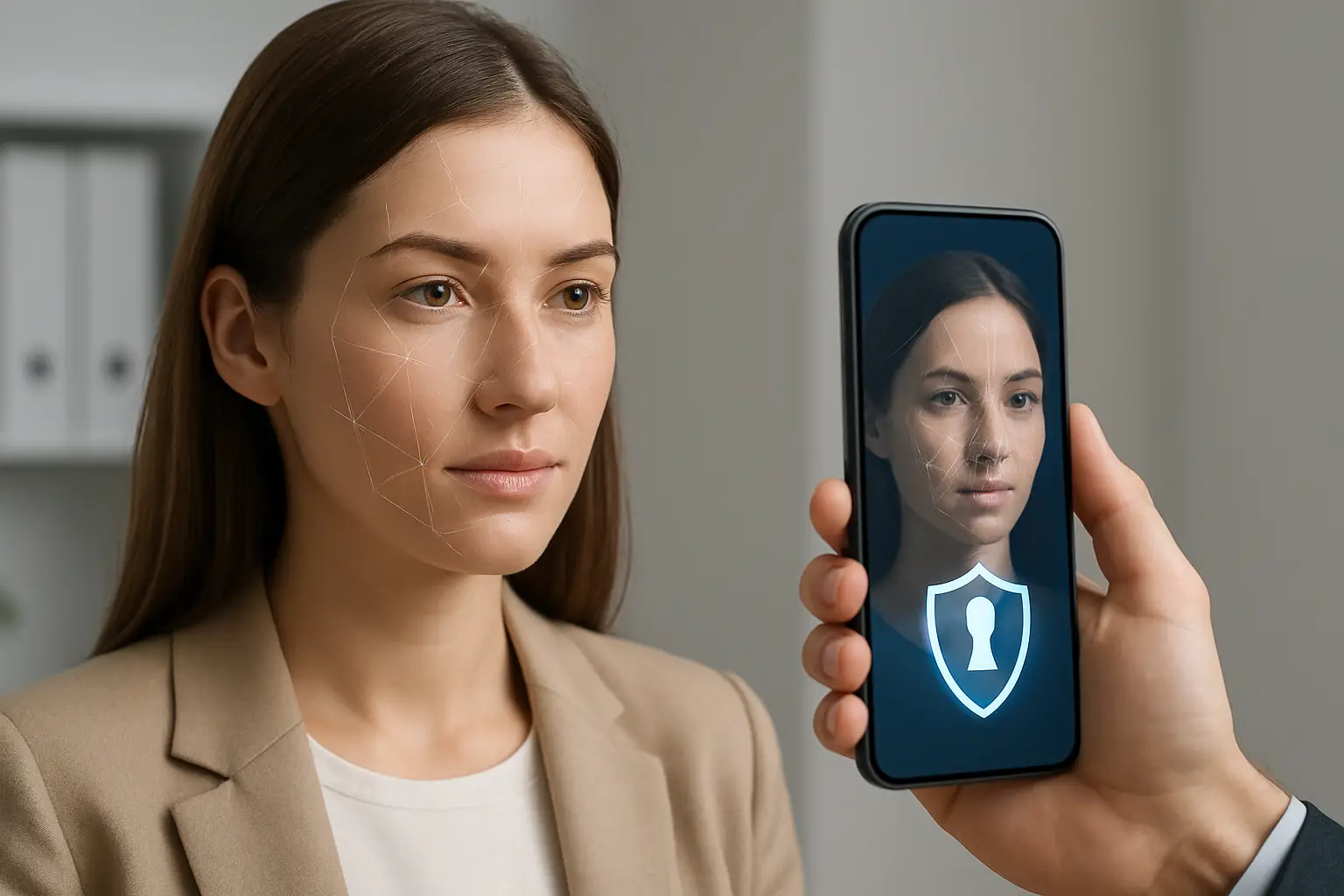
A face scan is not an email address. It is a durable identifier tied to someone’s body, their identity, and often their reputation. That is why the privacy policy for AI face scan apps is not a “legal footer” problem - it is a product trust problem. If your policy is vague, users assume the worst: hidden training, silent sharing, indefinite retention, and no control.
If your app promises personality insights, compatibility signals, or “face reading” reports, the trust bar goes even higher. You are not just processing pixels. You are generating conclusions people may use in dating, hiring, coaching, and team decisions. A strong privacy policy is how you make the boundary clear: what you collect, what you infer, what you store, and what you never do.
What a privacy policy must do for face scan apps
Most privacy policies try to cover everything and end up saying nothing. A face scan app needs the opposite: crisp disclosures in plain English, supported by precise legal language.
At minimum, your policy should answer five questions without hedging.
First, what data do you collect to run the scan workflow? This usually includes the image itself, metadata (device type, IP address, timestamps), and account or transaction details. If you ask for a name to anchor identity, say that clearly and explain why you ask.
Second, what do you generate from the scan? Users care about derived data: facial landmarks, embeddings, similarity matches, demographic estimates, and personality-style outputs. Even if your system is “just analysis,” those outputs can be sensitive. Treat inferences as first-class data.
Third, where does processing happen? On-device, in your cloud, or via service providers? If a third party touches biometric data, users deserve to know.
Fourth, how long do you keep inputs and outputs? The difference between “we delete the image after analysis” and “we retain images to improve our models” is the difference between confident consent and instant churn.
Fifth, what control does the user have? Access, deletion, correction, opt-out of training, and how to contact you.
A privacy policy that nails those five questions reduces refunds, chargebacks, and “this feels sketchy” reactions that kill conversion.
Define your data categories like a system, not a slogan
If your product has named frameworks and versioned methods, your policy should have the same discipline. Break data into categories users can understand and that your engineers can map to reality.
Biometric data vs. facial images: do not blur the line
In many states, a facial scan can be treated as biometric information when it is used to identify someone or create a template. Your policy should distinguish:
- Facial images users upload or capture
- Biometric identifiers (templates, embeddings, faceprints)
- Biometric information derived from processing (measurements, landmarks)
Do not hide behind “we don’t store biometrics” if you are generating embeddings in memory, storing them, or sending them to vendors. If you create a template even briefly, disclose it, explain the purpose, and state the retention window.
Inferences: the data users care about most
AI face scan apps often create personality or behavioral inferences. Even if those are “for entertainment,” they can be personally sensitive and socially risky. Your policy should define inferences as data you generate and explain how they are used.
This is also where you reduce misuse. If people might use the report in hiring or other high-stakes contexts, you can state intended use boundaries. That is not just legal protection. It is brand clarity.
Consent: your policy needs an on-screen moment, not just a page
For face scans, consent cannot be implied by scrolling. Your policy should describe your consent flow, and your product should actually match it.
If you collect biometric data, many laws expect informed, written-style consent. In practice, that means a clear checkbox or tap-to-agree that references biometric processing, retention, and deletion. Put it immediately before the scan begins, not buried in account settings.
It also “depends” on your app’s features. If you allow people to scan someone else’s photo, you inherit an extra risk layer: you may be processing data without the subject’s knowledge. Your policy should address this scenario directly, including whether it is allowed and what responsibilities the uploader has.
Retention and deletion: say it like a timer
Retention language is where most face scan apps lose trust. Users do not want “as long as necessary.” They want a clock.
If you can delete inputs after report generation, say so. If you keep images for customer support, fraud prevention, or re-download, name that purpose and set a limit. If you store reports, explain how long and why.
A strong privacy policy for AI face scan apps typically includes:
- A short default retention window for raw images
- A separate retention window for generated reports
- A clear user-initiated deletion process
- What happens to backups and logs (and how long they linger)
Be careful with “delete” claims. If you cannot remove data from backups immediately, do not promise instant erasure. Promise what you can execute: removal from active systems promptly, and backup deletion on a defined cycle.
Training and model improvement: the line you must draw
Users assume face scan apps train on their data unless you clearly say otherwise. If you do train, you need explicit disclosure and, in many cases, an opt-out. If you do not train, state it in plain language.
This is also where trade-offs matter. Training on user images can improve accuracy, but it increases privacy risk and can trigger biometric compliance obligations. Some apps choose a strict posture: do not use customer images for training, period. Others use de-identified data with consent. Either approach can work, but ambiguity does not.
If you use third-party AI services, address whether providers can use submitted data to improve their models. Many vendors offer configurations that limit training use, but your policy should reflect the setting you actually use.
Sharing and selling: define “service providers” with teeth
“We don’t sell personal information” is not enough. Users want to know who touches their face scan.
Your policy should separate:
- Service providers (cloud hosting, analytics, payment processors, customer support tools)
- Business transfers (merger, acquisition)
- Legal disclosures (subpoenas, law enforcement)
- User-directed sharing (exporting a PDF, emailing a report)
If you allow users to generate a PDF-ready report, say what happens when they share it. Once it leaves your platform, recipients can store or forward it. You cannot control that, but you can warn users and provide “privacy-forward” report options, like omitting the original image or using first name only.
Security: be specific without giving attackers a blueprint
Security sections often turn into fluff. Keep it confident and bounded.
State the basics you can stand behind: encryption in transit, access controls, least-privilege access, monitoring, and incident response. If you store face images or biometric templates, say they are protected with heightened safeguards.
Also disclose the reality: no system is perfectly secure. Users respect honesty when it is paired with concrete controls.
Children and sensitive uses: decide your posture up front
If your app is not for kids, say so and explain what happens if you learn you collected a child’s data. If you might attract teens, talk to counsel and set a clear age gate.
If your app outputs personality-style insights, you should also consider whether you are handling sensitive data categories. Even if you are not collecting medical data, users may interpret the output as psychological. Your policy should avoid implying diagnosis and should clarify the nature of the product.
State privacy rights: make the rights section usable
US privacy rights are a patchwork. Your policy should have a rights section that is actionable.
At a minimum, cover access, deletion, correction, and opting out of certain processing where applicable. If you are subject to state laws like California’s, include the required notices and methods for submitting requests.
But do not bury the lede. Put a short “How to control your data” section near the middle of the policy and repeat key actions in settings: download report, delete scan, delete account, contact support.
One example of product-aligned policy language
Here is the tone and clarity users respond to, without overpromising:
“We process your facial image to generate an analysis report. We do not use your uploaded images to train our models unless you explicitly opt in. You can request deletion of your image and report at any time, and we will remove them from our active systems within X days.”
That reads like a product spec, not a legal maze. And it creates a clean expectation boundary.
How this maps to face-reading style apps
If your app positions itself as a definitive “engine” with named methods and a guided scan workflow, align the privacy policy to that same structure. Users should feel the same confidence they feel when they click “Begin Analysis.”
That means the policy should explain the workflow in order: what you ask for first (like a name), how images are obtained (upload, camera capture, discovery), what gets generated (reports and underlying signals), and how users can erase the trail.
If you operate a consumer platform like SomaScan.ai, this is the trust layer that keeps professional users comfortable sharing a PDF in a team context without worrying they just fed a permanent biometric database.
FAQs
Is a face photo considered biometric data?
It depends on how you use it. A simple photo stored as an image may not be treated the same as a face template used for identification. If your app creates embeddings, templates, or unique measurements tied to a person, you should treat it as biometric processing and disclose it clearly.
Can an AI face scan app keep my image forever?
It can, but that is exactly what triggers user resistance and, in some places, stricter legal obligations. Most trustworthy apps set a defined retention window and offer user-driven deletion.
If I delete my account, is everything deleted?
Not always instantly. Many services remove data from active systems quickly but keep backups for a limited period. A good policy explains the difference and gives a realistic timeline.
Do face scan apps train AI on my scans?
Some do, some do not. Your policy should state the rule in plain language and, if training occurs, provide an opt-in or opt-out mechanism depending on your approach and legal requirements.
What should I look for before I upload my face?
Look for clear answers on retention, training use, third-party sharing, and deletion controls. If those points are vague, assume your data may be kept and reused.
A privacy policy is not where you lower your voice. For AI face scan apps, it is where you prove you run a controlled system: defined inputs, defined outputs, defined retention, and user-controlled exits. If you can say those four things cleanly, users stop hesitating and start scanning.