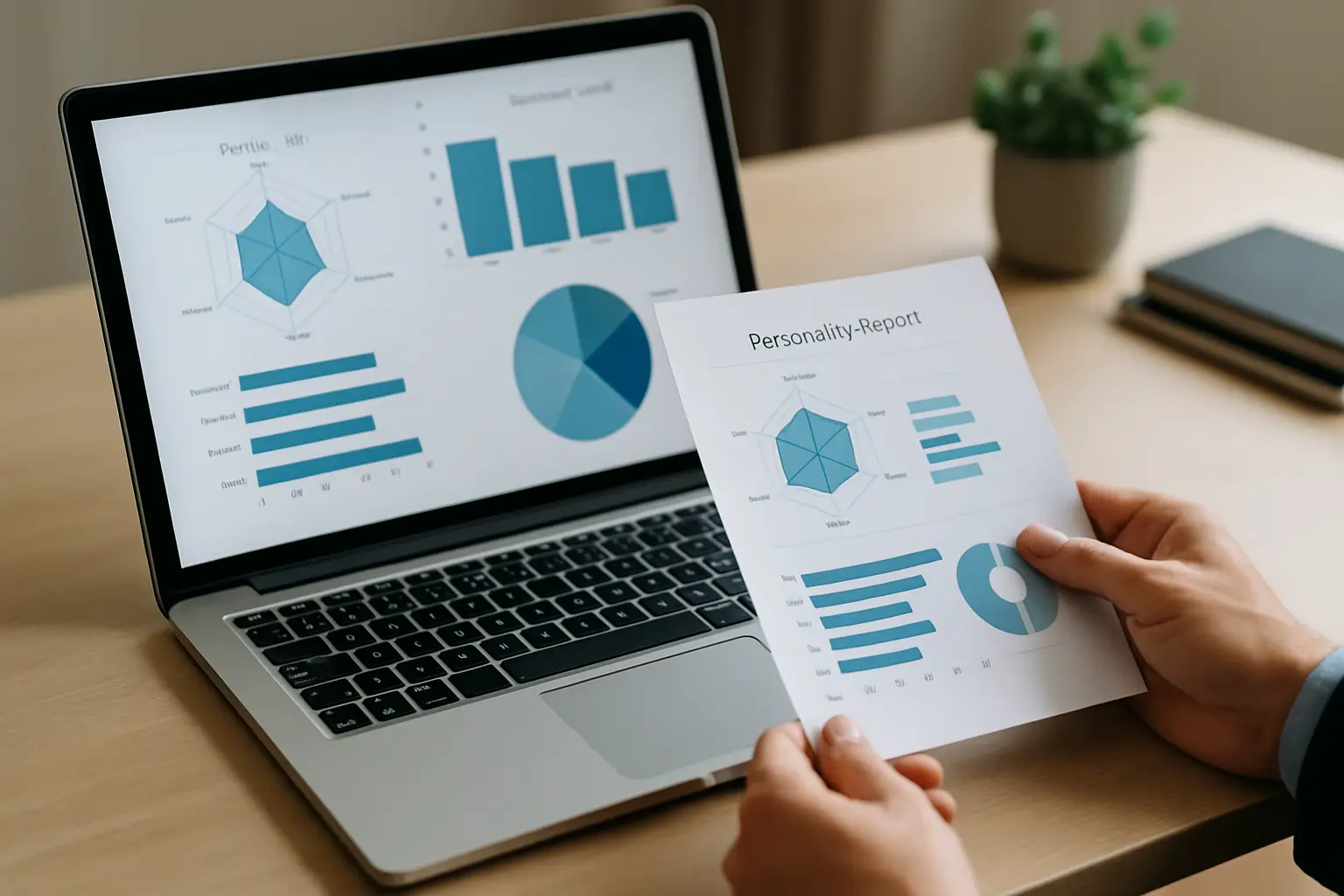
You do not need another vague “you are an empath” paragraph dressed up as insight. You need a fast signal you can use in a real conversation - a team check-in, a candidate debrief, a relationship friction point, a career decision that has been stuck for months.
That is the real promise behind an AI face reading report: speed, clarity, and a narrative you can actually work with.
This SomaScan.ai personality report review looks at what the experience is trying to do, why it feels different from generic personality quizzes, and the trade-offs you should understand before you use it in a professional setting.
What this report is really selling
At face value, you are buying a PDF-ready personality breakdown built from a guided scan workflow. The product is positioned like an engine, not a quiz - a system with named layers and versioned methods that imply repeatability.
That matters because most “personality tools” fail for one of two reasons. Either they are academic and slow (useful, but you will not deploy them mid-week with a hiring panel), or they are fun and fluffy (shareable, but not operational). A face reading report tries to sit in the middle: structured enough to feel professional, fast enough to actually get used.
The platform leans hard into that “structured system” feel by framing its output as personality architecture - cores, tendencies, emotional patterns, compatibility cues, and career direction signals. In practice, you are not just getting traits. You are getting a story that claims to explain why those traits appear and how they show up under pressure.
The scan flow: speed is the feature
The experience is designed to reduce friction. You start with a name to anchor identity, then move through discovery and scan steps that look and feel like an automated profile analysis. The point is not to teach you psychometrics. The point is to deliver a clean result quickly.
That speed has real utility for busy users. If you are a manager trying to understand why two high performers clash, you are not looking to run a multi-hour assessment process. You want a directional read that helps you ask better questions tomorrow.
It also changes how you should judge the product. You are not evaluating it like a clinical instrument. You are evaluating it like decision support - an accelerant for conversations, not a final verdict.
SomaScan.ai personality report review: what’s inside
The report experience is built around framework language. You will see labels that sound like a proprietary stack: Pattern Analysis v4.2, Structural Integrity, Five-Element Mapping, and the 100-Year Life Map.
Those labels are not there for decoration. They do two jobs.
First, they give the output a predictable structure. Even if you scan different people, the report is designed to read like the same “engine” ran the analysis each time, rather than a one-off AI essay. That consistency is a big reason professionals like reports - they can compare sections, not just vibes.
Second, the frameworks create a lens for interpretation. Instead of “you are extroverted,” you get something closer to: here is your core pattern, here is how you maintain stability, here is what disrupts your baseline, here is what you look like in conflict, here is what you optimize for.
If you are buying this for team use, that structure is the selling point. It gives you language for dynamics that teams feel but rarely articulate.
“Personality architectural cores” and why that lands
A strong personality report does not just list traits. It names the underlying pattern that generates those traits. That is what “cores” are trying to represent.
When the report works, it gives you:
- A stable self-description that feels recognizable
- A pressure-mode description that explains specific misfires
- A relational pattern that predicts common misunderstandings
The best use case is not self-validation. It is tension reduction. If a report can help someone say, “This is what I do when I feel cornered,” you just made a hard conversation easier.
Emotional patterns: the part people actually use
Most users do not change their lives because a report told them they are ambitious. They change something because a report described an emotional loop they have been repeating.
This is where a face reading report can be surprisingly effective, even for skeptical users. Not because it is magically reading your soul, but because it forces specificity. It pushes you to consider how you react, what you avoid, and what you default to when you are tired.
If you use it professionally, treat emotional pattern sections as hypothesis generators. You are looking for prompts that help you ask sharper questions in one-on-ones, coaching sessions, or relationship conversations.
Where this kind of report shines (and where it doesn’t)
The smartest way to evaluate a personality engine is to judge it by context.
If you need a defensible hiring instrument, you should not treat any face reading report as a standalone gatekeeper. Employment decisions require fairness, consistency, and compliance practices that go beyond a marketing-grade insight tool.
But if you need a fast read to improve communication, onboarding, role fit discussions, or team pairing, this style of report can perform extremely well. The output is designed to be digestible, quotable, and shareable.
It is also useful for personal decisions that are stuck because the person cannot articulate what they want. A structured narrative can clarify priorities quickly, even if you do not accept every line as literal truth.
The limitation is obvious: a face-based report is interpreting signals through an algorithmic lens. That means it will sometimes feel eerily accurate and sometimes miss the mark. If you expect perfection, you will be disappointed. If you expect a sharp framework you can test in conversation, you will get value.
The credibility layer: why “pro-grade” feels believable
SomaScan.ai builds confidence the same way high-performing consumer tools do: it pairs speed with authority cues.
You see “engine” language instead of “quiz” language. You see versioning and method naming instead of generic descriptors. You see social proof positioned like a professional standard, not a casual trend. That combination is powerful because it tells the user: this is not random output; it is a system.
The trade-off is that authority language can encourage over-trust. A clean PDF can feel official even when it should be treated as directional. If you are using it with teams or clients, your job is to keep it in the right lane.
A practical guideline: use the report to start conversations, not end them.
How to use the report like a professional (not a tourist)
If you want this to be more than entertainment, you need a usage protocol.
Start by treating the report as a map of likely patterns. Pull out two or three claims that feel specific and testable. Then validate them with real behavior: recent conflicts, decision styles, work habits under deadlines, relationship stressors.
If you are a manager or coach, share only the sections that support growth. Do not weaponize the language. A “compatibility” line is not a verdict. It is a prompt to discuss expectations and communication styles.
If you are using it for hiring, keep it out of pass-fail decisions. Use it after you already think the candidate is qualified, as a way to craft onboarding, management approach, and early coaching themes. Even then, be careful: anything that looks like physiognomy-based judgment can raise ethical and reputational concerns if handled irresponsibly.
Privacy and consent: the non-negotiable piece
Any face analysis product introduces a higher sensitivity category than most quizzes. If you are scanning yourself, the consent question is straightforward. If you are scanning someone else, it gets complicated fast.
In professional contexts, do not run scans on people without explicit permission. Even if the tool allows a name-based flow, responsible use means informed consent, clear purpose, and careful sharing. The report is designed to be shareable. That is a feature, but it can become a liability if you treat it casually.
So, is it worth it?
If your benchmark is a scientifically standardized personality assessment used in regulated settings, you are in the wrong aisle.
If your benchmark is: “Give me a structured, fast, PDF-ready personality narrative I can use to understand patterns and start better conversations,” this product category makes sense - and SomaScan.ai is clearly engineered to win on presentation, structure, and confidence.
The value is highest for:
- Managers and team leads who need language for friction and collaboration
- Coaches who want new angles for self-awareness conversations
- Individuals who want a decisive, structured interpretation they can react to
The value is lower for:
- Anyone looking for clinical-grade validity claims
- Teams that cannot commit to consent and responsible usage
- Users who prefer raw data over narrative framing
If you decide to try it, treat the report as a high-speed mirror. Not a judge. Not a diagnosis. A mirror that gives you a bold pattern hypothesis you can confirm, refine, or reject through real behavior.
For people who live in decisions, that is often enough to create momentum - and momentum is usually what you were paying for in the first place.
If you want to see how the workflow and report framing are positioned, the product experience is presented at https://somascan.ai.
The best closing move is simple: pick one insight you disagree with, and test it for a week. The fastest growth often starts with the line that irritated you, because it usually points at a pattern you have been managing on autopilot.