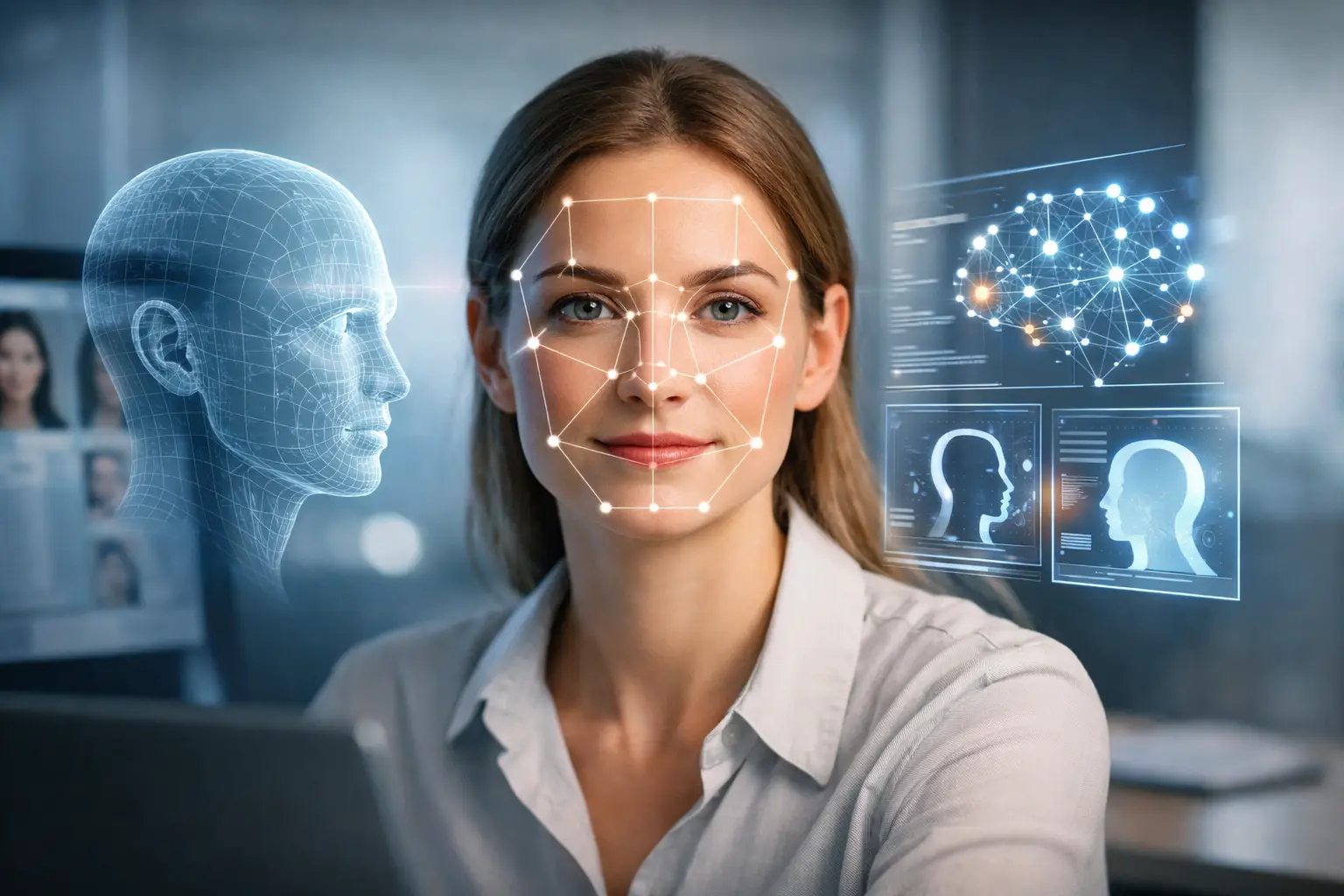
You can learn a lot about someone from how they answer a questionnaire. But when you need a fast read before the first call, the first interview, or the first date, that method is too slow. AI face analysis is built for a different job - turning facial inputs into structured personality signals you can use right away.
That shift matters because most people are not looking for another theory-heavy assessment. They want a clear report, a fast workflow, and something they can actually act on. For managers, that might mean reading team dynamics before conflict shows up. For recruiters, it might mean spotting communication tendencies early. For individuals, it often comes down to one question: what patterns am I projecting, and what do they say about how I move through work, relationships, and pressure?
What AI face analysis actually does
At its best, AI face analysis is not just image recognition with a new label. It is a guided interpretation system that takes visual facial data, maps structural and expressive patterns, and turns them into readable outputs. The real value is not in detecting a nose, jawline, gaze, or symmetry in isolation. The value is in translating those markers into a report people can understand.
That is where most basic tools fall apart. They stop at surface-level detection. A stronger engine goes further. It uses a layered framework to identify patterns connected to temperament, emotional expression, social style, and decision tendencies. Instead of handing users raw measurements, it produces a professional-grade breakdown that feels usable in real life.
This is why presentation matters almost as much as processing. If the output is vague, people ignore it. If the output is overcomplicated, they distrust it. The right experience gives users a guided path from identity anchoring to scan to final report, with enough structure to feel credible and enough clarity to feel immediate.
Why people use AI face analysis now
There is a practical reason this category is growing. People are overloaded with choices and short on time. They want faster ways to understand personality, compatibility, and risk. That does not mean they want a replacement for judgment. It means they want a stronger starting point.
For consumer users, the appeal is simple. A face scan feels more direct than filling out a long set of questions that can be gamed, second-guessed, or answered based on mood. Facial analysis promises something more observational. It suggests that personality leaves visible traces, and that those traces can be organized into a readable pattern map.
For professional users, speed is the edge. Coaches, team leads, and hiring managers are often forced to make early calls with incomplete information. A face-based report can add another layer of context before deeper conversations happen. Used well, that context helps shape better questions, clearer communication, and more realistic expectations about fit.
The keyword there is used well. AI face analysis works best as a decision-support tool, not as a machine that makes final calls for you. That distinction protects both the user experience and the credibility of the output.
How a strong AI face analysis workflow should feel
The strongest platforms do not ask users to become experts. They turn a complex process into a clean sequence. First comes identity anchoring, often with a name or profile reference. Then comes image discovery or upload. Then the engine runs pattern detection, maps facial indicators against its internal framework, and generates a finished report.
That report should feel decisive, not messy. It should identify personality architectural cores, emotional patterns, behavioral tendencies, and likely strengths or friction points. It should also organize those findings into sections people naturally care about, such as relationships, communication, career alignment, and compatibility.
A good system makes all of this feel fast. A great system makes it feel fast and premium. That means polished language, logical structure, and a result you would actually save, share, or bring into a professional conversation.
This is exactly why productized frameworks matter. Terms like Pattern Analysis v4.2 or Structural Integrity do more than sound technical. They create a sense that the analysis follows a repeatable model instead of improvising on the spot. For the user, that increases confidence. For the brand, it separates a real engine from a novelty feature.
Where AI face analysis is useful - and where it is not
There is real utility here, but only if expectations stay sharp. AI face analysis is useful when the goal is to generate fast personality hypotheses, identify probable emotional tendencies, and create a structured starting point for reflection or conversation. It is especially useful for people who want insight without spending an hour on forms, interviews, or interpretation.
It is less useful if someone expects absolute truth from a single image. Faces carry signal, but context still matters. Lighting, angle, expression, and image quality can all affect what gets picked up. Personality itself is not static either. People adapt across work, family, stress, and ambition. So the strongest read is usually directional rather than final.
That is not a weakness. It is the reality of any human insight tool. Even traditional assessments depend on honesty, self-awareness, and timing. Face analysis simply starts from a different input source.
The practical question is not whether a scan can explain every detail of a person. It is whether it can produce a meaningful pattern read faster than most alternatives. In many cases, yes.
What separates premium AI face analysis from gimmicks
A weak tool gives generic language that could apply to anyone. A premium tool creates the feeling of precision. You see that in the workflow, the frameworks, and the final report structure.
First, premium systems are guided. They reduce friction and keep the process simple. Second, they use branded analytical models that make the output feel organized rather than random. Third, they deliver insight in a format that matches how users want to consume it - clean sections, professional wording, and PDF-ready presentation.
Just as important, they address real use cases. If a platform can speak to team building, compatibility evaluation, communication style, and career direction without sounding scattered, it has product-market fit. It understands that users are not buying abstract analysis. They are buying faster clarity.
SomaScan.ai is built around that exact promise: a guided scan workflow, a professional-grade report, and a system that positions personality reading as an engine, not a toy. For users who want speed, structure, and shareable outputs, that product design makes sense.
AI face analysis for work, relationships, and self-discovery
In work settings, the biggest benefit is early signal. If a manager knows someone trends toward caution, intensity, reserve, or expressiveness, that can shape communication and delegation. It does not replace observation, but it sharpens it. Teams often struggle not because people lack skill, but because style mismatches go unnamed.
In relationships, the appeal is different. People want to know how someone processes emotion, conflict, and closeness. A face analysis report can frame those tendencies in a way that feels concrete enough to discuss. That is often more helpful than broad compatibility talk with no structure behind it.
For personal growth, the value is reflection with edges. Many people have a rough idea of who they are, but not a clean language for it. A strong report can give shape to instincts they already sense but have never organized. Once that happens, career moves, communication habits, and relationship choices become easier to evaluate.
FAQ: Common questions about AI face analysis
Is AI face analysis accurate?
It depends on what you mean by accurate. If you expect exact, final judgments from one image, that is the wrong standard. If you want useful personality signals, pattern detection, and a structured read that helps you ask better questions, the technology can be highly effective.
Can AI face analysis replace interviews or personality tests?
No. It works better as a first-pass intelligence layer. It can complement interviews, assessments, and human judgment by adding fast observational insight before deeper evaluation begins.
Who is AI face analysis best for?
It is a strong fit for professionals, recruiters, managers, coaches, and curious individuals who want quick, readable insight without a long intake process. The less patience someone has for traditional assessments, the more appealing this format becomes.
What makes one platform better than another?
Look at the workflow, the clarity of the report, and whether the system feels like a real methodology instead of a generic text generator. Better platforms create structured outputs with distinct frameworks, not vague personality filler.
The biggest advantage in AI face analysis is not novelty. It is compression. A strong system compresses observation, pattern mapping, and report generation into one fast decision-support layer. If that layer helps you read people with more clarity and less guesswork, it earns its place. Start there, then let real-world interaction confirm the rest.