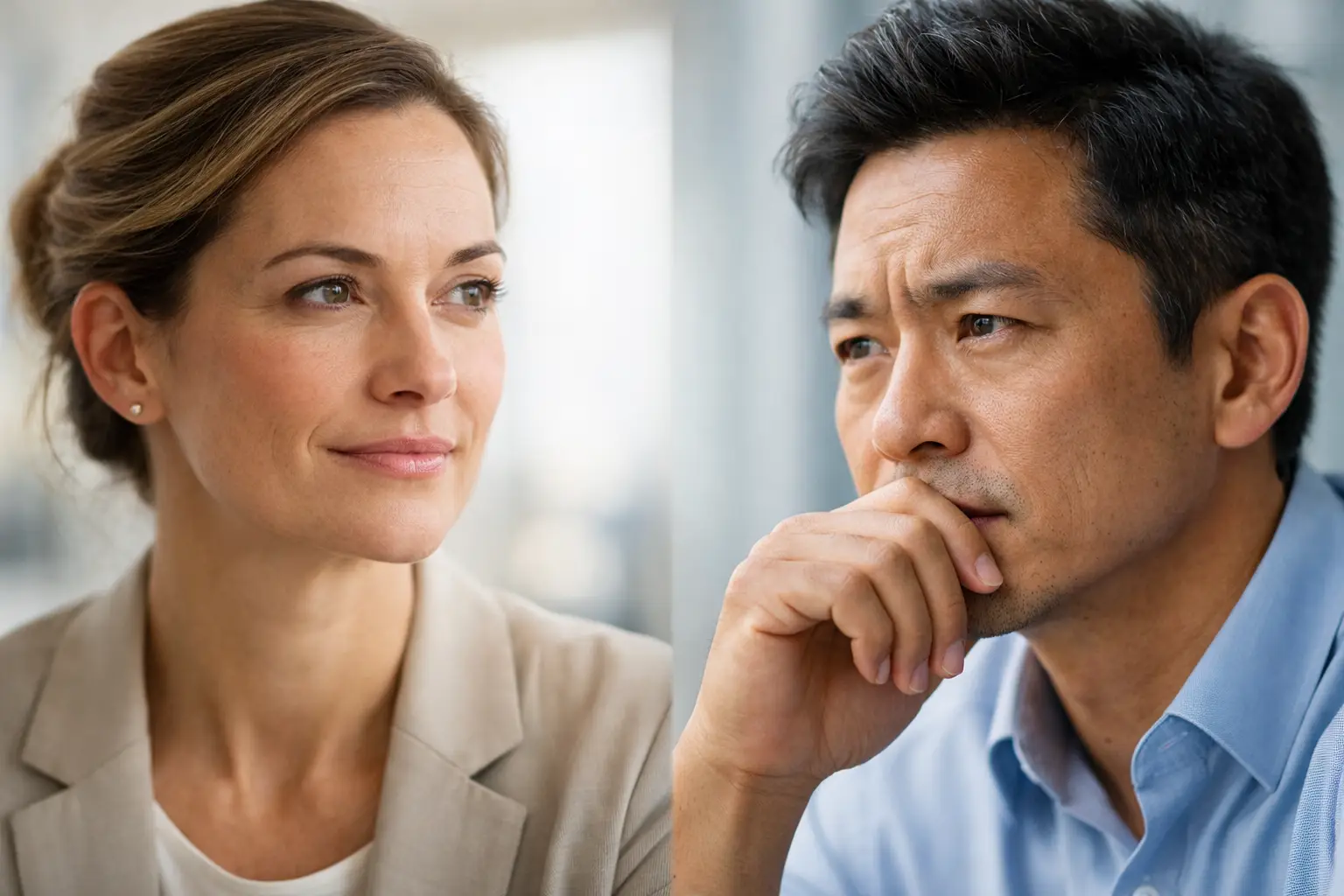
Some people recover fast after a hard conversation, a missed promotion, or a sudden change in plans. Others carry the impact for days. That difference is exactly why emotional resilience insights from facial traits attract so much attention. People want faster reads on stress tolerance, emotional recovery, and how someone is likely to respond when pressure gets real.
For professionals, this is not just curiosity. It is decision support. Managers want better signals on team fit. Coaches want clearer language around coping style. Individuals want to understand why they stay steady in conflict or why they absorb stress more deeply than people around them. Facial analysis enters the picture because the face often presents stable structural cues alongside visible emotional habits. Read correctly, those patterns can point to resilience tendencies that standard personality talk tends to miss.
What emotional resilience insights from facial traits can actually show
Emotional resilience is not a single trait. It is a performance pattern. It includes how quickly someone stabilizes after stress, how intensely they react, whether they internalize pressure, and how well they maintain judgment under emotional load.
Facial traits do not give a perfect forecast of behavior in every setting. They do something more useful. They offer a pattern map. Structural features, tension zones, muscle habits, and facial balance can suggest whether a person tends toward emotional containment, expressiveness, guardedness, endurance, or volatility. That matters because resilience is often less about whether someone feels stress and more about how their system processes it.
A strong facial reading looks at the difference between fixed structure and temporary expression. Fixed structure may suggest baseline tendencies. Temporary expression may reveal current strain, fatigue, defensiveness, or emotional openness. When those two layers align, the read becomes sharper.
The core facial markers often linked to resilience
Certain facial regions are especially useful when reading emotional resilience patterns. The eye area often shows sensitivity, vigilance, and recovery load. A face that consistently carries tension around the eyes may suggest sustained internal processing, especially when paired with restrained expression elsewhere.
The forehead can indicate habitual cognitive pressure. Deep habitual contraction may point to a mind that stays active under stress, which can be a strength in problem solving but a weakness in emotional recovery. Some people hold pressure mentally long after the event has passed.
The jaw and lower face often signal how a person handles containment. A more defined, firm lower structure is frequently associated with endurance and control. That can look like resilience from the outside. But there is a trade-off. High control can mean slower emotional release. In other words, steadiness and suppression can look similar unless you read the full face.
The mouth area adds another layer. A face that naturally settles into guardedness may indicate emotional filtering and selective disclosure. That can support resilience in high-stakes professional settings, but it may also reduce help-seeking behavior when pressure builds.
None of these cues should be read in isolation. A resilient pattern is usually visible through combinations, not a single feature.
Why facial structure matters more than a single expression
A common mistake is treating a smile, frown, or neutral look as the whole story. That is surface reading. Stronger analysis focuses on the architecture beneath the expression. Emotional resilience insights from facial traits become more credible when the reading separates what is structural from what is situational.
For example, someone may appear calm in a photo because they are socially trained to present control. But if the facial structure shows high tension storage, compressed expression, and signs of emotional guardedness, the deeper pattern may be resilience through restraint rather than resilience through ease. Those are not the same thing.
Ease-based resilience usually reflects faster recovery, emotional flexibility, and lower friction after conflict. Restraint-based resilience can produce excellent performance under pressure, but it may come with delayed emotional processing. In leadership, both profiles can succeed. They simply need different recovery strategies.
How these insights help in work and relationships
In team settings, resilience patterns influence far more than stress management. They affect collaboration, feedback response, conflict style, and decision quality during uncertainty. A person with a contained facial profile may stay composed in meetings and perform well during deadlines, yet struggle to surface concerns early. Another person with more visible emotional expressiveness may look reactive in the moment but recover faster and adapt more fluidly after disruption.
This is why quick reads matter. When you understand resilience style, you stop confusing silence with strength or expressiveness with instability. You start reading the actual pattern.
The same applies in relationships. Emotional resilience is not only about surviving conflict. It is about how someone metabolizes it. Some people need verbal processing. Others need time and internal reset. Facial traits can reveal which side of that spectrum someone is more likely to occupy. That can reduce misreads, especially when one person sees distance as detachment and the other sees it as self-regulation.
What AI adds to facial resilience analysis
Human observation is useful, but it is inconsistent. People overvalue first impressions, project bias, and miss structural details. This is where AI-led analysis becomes powerful. A systemized scan can detect proportions, symmetry patterns, tension indicators, and relational feature dynamics at a scale the average observer cannot maintain.
That does not mean AI turns the face into destiny. It means AI can organize subtle signals into a structured output. Instead of vague statements like seems strong or looks sensitive, a stronger engine can classify patterns with more precision and consistency. That is especially valuable for users who want a clean, professional framework rather than guesswork.
Platforms like SomaScan.ai package this into a report experience that feels usable right away. For the audience that wants clarity fast, that matters. The value is not just the scan. It is the translation of visual complexity into decision-ready language.
Where the trade-offs are
Bold claims are easy. Accurate interpretation is harder. Facial analysis can reveal tendencies, but context still matters. Sleep loss, recent stress, illness, age, and camera angle can all affect visible presentation. A good reading accounts for that by emphasizing stable patterning over temporary distortion.
There is also a difference between emotional resilience and emotional hardness. A face that suggests high tolerance for pressure may belong to someone who performs well in chaos but struggles with vulnerability. That profile can be highly effective at work and less effective in close relationships. On the other side, a face that suggests sensitivity may belong to someone who feels stress sharply yet adapts quickly because they process emotions openly.
So the right question is not who is resilient. The better question is what kind of resilience is this.
How to read resilience signals more intelligently
If you are using facial analysis for personal growth, hiring discussion, coaching, or compatibility, the smartest move is to look for pattern clusters. Do not isolate a strong jaw or intense eye zone and call it done. Look at containment, openness, tension storage, recovery indicators, and emotional visibility together.
Then ask whether the likely resilience style fits the environment. A high-control profile may thrive in crisis management, executive decision-making, or negotiation. A more adaptive, expressive profile may excel in collaborative leadership, client work, or coaching roles. Neither pattern is universally better. Fit decides value.
This is also where report-based analysis has an edge. A structured output helps people move beyond instinct and into repeatable interpretation. That is useful when the goal is not entertainment but clearer decisions about communication, role placement, or self-understanding.
The real value of emotional resilience insights from facial traits
The strongest use of facial analysis is not prediction theater. It is pattern recognition with practical payoff. When you can identify whether someone tends to absorb pressure, deflect it, process it outwardly, or stabilize through control, you get a better read on how they will function when life stops being easy.
That matters in careers, partnerships, leadership, and self-management. Emotional resilience is one of the most expensive blind spots people carry because it only becomes obvious after stress hits. Facial analysis offers an earlier signal.
And that is the real advantage. You do not need a perfect forecast of every future reaction. You need a sharper starting point. When the face is read with structure, context, and discipline, it can reveal the hidden operating style behind recovery, pressure, and emotional staying power. That kind of insight is not just interesting. It is useful the moment real life applies pressure.