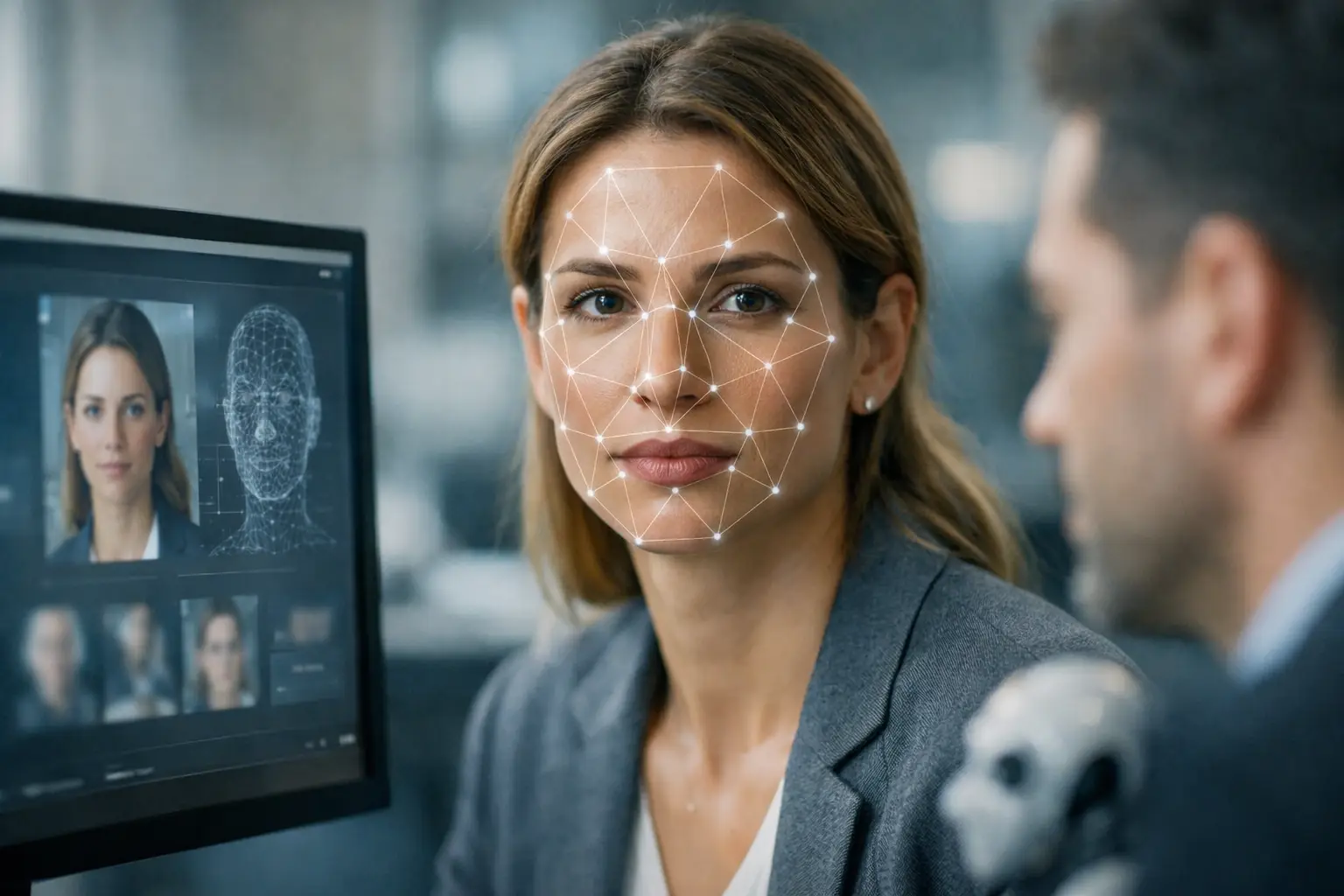
You can usually tell within 30 seconds whether someone feels sharp, guarded, warm, intense, or hard to read. The real question is whether a machine can do that at scale - and whether is AI face reading accurate enough to be useful when the stakes are real, from hiring conversations to dating decisions to personal insight.
The short answer is yes, but only if you understand what kind of accuracy you are talking about.
That distinction matters more than most people realize. AI face reading is not a mind-reading device. It is not a lie detector. It is not a crystal ball for personality. What it can do, when built well, is detect visible patterns, map them into structured interpretations, and produce fast, consistent signals that many people find directionally useful. If you expect perfect truth, you will be disappointed. If you expect a disciplined pattern engine, you will understand its real value.
Is AI face reading accurate in real use?
Accuracy in this category is not one single number. It breaks into layers.
First, there is visual accuracy. Can the system detect facial landmarks, proportions, asymmetries, tension zones, age-coded features, and expression markers correctly from an image? Modern computer vision is very strong here, especially with high-quality photos. If the image is clear, front-facing, and well lit, the machine can often identify facial structure more consistently than an untrained human.
Second, there is interpretive accuracy. This is where face reading becomes more complex. A system may correctly detect that someone has a high degree of symmetry, a pronounced jawline, compressed lips, or elevated brow tension. But turning those patterns into claims about personality, emotional style, compatibility, or career tendencies is not the same as measuring eye distance or contour ratios. Interpretation depends on the model, the framework behind it, and the logic used to connect physical signals to behavioral tendencies.
Third, there is practical accuracy. This is the standard most users actually care about. Does the report feel true? Does it describe recurring patterns that match lived experience? Does it help someone make a sharper decision, ask better questions, or notice a blind spot? A tool can be imperfect in a lab sense and still be highly valuable in real-world use if it consistently produces relevant insight.
That is why debates around this topic often go nowhere. One person asks whether AI face reading is scientifically perfect. Another asks whether it is useful. Those are not the same question.
Where AI face reading performs best
AI face reading tends to perform best when it is used for pattern recognition, not absolute judgment.
It is good at surfacing tendencies. A strong system can identify signals associated with intensity, composure, sociability, restraint, emotional volatility, or disciplined presentation. It can compare those signals against a structured model and generate a readable profile that feels faster and more organized than informal people-reading.
This is especially useful for users who want a starting point. Managers trying to understand communication styles, coaches looking for emotional pattern cues, or individuals exploring relationship dynamics do not always need a clinical-grade verdict. They need a clean first-pass analysis that helps them frame the person in front of them more clearly.
It also performs well when the workflow is controlled. Better inputs usually mean better outputs. A guided scan, identity anchoring, image discovery, and structured report logic all improve consistency. That is one reason productized systems often outperform random face-analysis apps. They are not just analyzing a face. They are organizing a repeatable process around the face.
Where accuracy breaks down
This is where the hype needs discipline.
AI face reading becomes less reliable when the image quality is poor, when the subject is angled heavily, when lighting distorts shape, or when cosmetic edits change visible features. It also struggles when temporary states are mistaken for stable traits. Fatigue, stress, swelling, facial tension, makeup, camera lens distortion, and even a forced smile can shift the reading.
There is also a deeper limitation. A face shows patterns, but a person is more than facial structure. Upbringing, culture, trauma, ambition, training, and current life context all shape behavior. Two people can share similar visual features and express them in very different ways.
That means AI face reading should not be treated as final judgment. It is strongest as a signal engine, not a sentencing tool.
For professional users, this matters a lot. If you are using facial analysis for hiring, team fit, or leadership development, the output should support observation, not replace it. A report can help you notice likely tendencies, but it should never outrank interviews, references, work samples, or real interaction.
Why some reports feel uncannily right
When people say an AI face reading was "scarily accurate," a few things may be happening at once.
First, facial structure does carry real social and emotional information. Humans read faces constantly, often without realizing it. Machines are extending that process with more consistency and less fatigue.
Second, well-designed systems use layered interpretation rather than one-note statements. They do not just say "confident" or "introverted." They describe tensions, strengths, contradictions, and likely behavioral patterns. That nuance makes the result feel more personal and more precise.
Third, many users are seeing themselves in a structured format for the first time. A polished report has power because it turns vague self-perception into language. That does not automatically make every line objectively true, but it does make the output more usable.
This is where a proprietary framework can matter. A system that combines facial structure, pattern mapping, behavioral categories, and report architecture will usually feel more grounded than a novelty app that spits out generic adjectives. Platforms like SomaScan.ai lean into this by framing analysis through named systems and report logic, which can make the experience feel more disciplined and more decision-ready.
How to judge whether an AI face reading is worth trusting
Do not ask whether the tool is magic. Ask whether the system is credible.
Start with the input standards. Does the platform guide the image process, or does it accept anything and promise certainty anyway? Serious analysis depends on image quality and consistency.
Then look at the output style. If a report makes cartoonishly confident claims with no structure, be careful. Better systems explain patterns in clusters. They show tendencies, tensions, and trade-offs rather than pretending a face reveals every answer with zero ambiguity.
You should also consider the use case. For self-reflection, compatibility conversations, or team communication, a strong AI face reading can be extremely useful. For medical conclusions, legal judgments, or high-stakes decision-making in isolation, it is not enough on its own.
The best question is simple: does this tool improve judgment, or replace it? If it improves judgment, it has value. If it asks you to stop thinking, it does not.
Is AI face reading accurate enough for hiring, dating, and self-discovery?
It depends on the standard.
For self-discovery, often yes. People use these systems to get language for their own strengths, emotional habits, and interpersonal patterns. That can be genuinely clarifying, especially for users who want fast insight without taking a long assessment.
For dating and compatibility, it can be useful as a conversation starter and pattern lens. It may highlight emotional style, attachment tendencies, and social energy in a way that helps people ask better questions. It should not be used to eliminate someone before you know them.
For hiring, the answer is more cautious. AI face reading can support a broader evaluation by offering quick personality signals or communication clues, but it should never be the sole filter. Smart operators use it as one layer in a larger decision stack.
That is the balanced answer many buyers are actually looking for. Not whether the technology is flawless, but whether it earns a place in the process.
The real standard: useful, structured, and honest about limits
So, is AI face reading accurate? Accurate enough to be useful, often yes. Accurate enough to replace human judgment, no.
That middle ground is not a weakness. It is the category. AI face reading works best when it delivers structured insight, highlights patterns you might miss, and sharpens how you read yourself or others. Its value comes from speed, consistency, and pattern depth - not from pretending human identity can be reduced to a single scan.
If you use it the right way, it can become a powerful signal layer. Not the whole story, but a faster way to start reading the story with more precision. And in a world where most people are guessing, a disciplined signal is already an advantage.