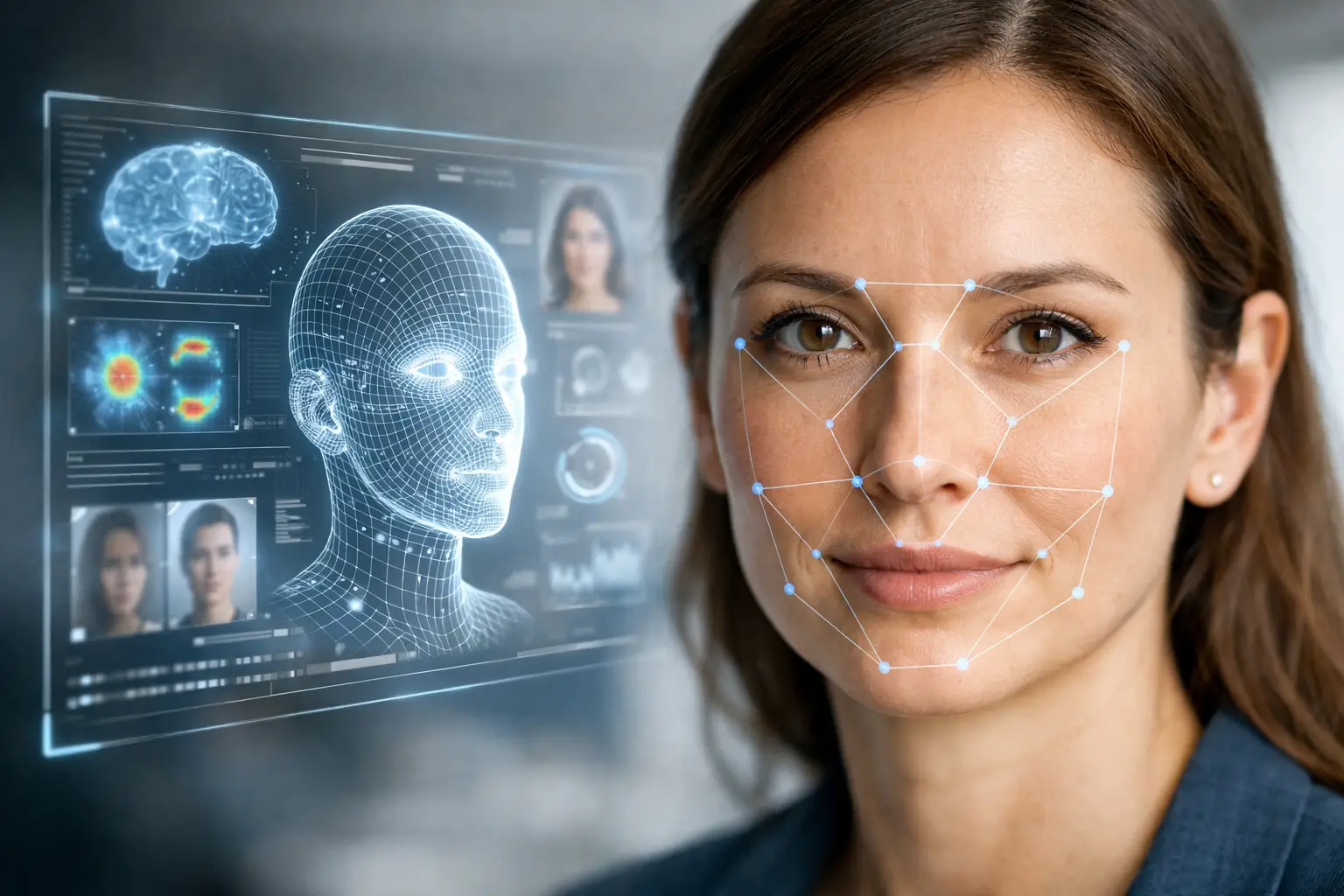
Most people do not struggle to collect information. They struggle to read people fast enough to use it. That is exactly where an ai face reading engine changes the game. Instead of relying on vague instinct, scattered first impressions, or long assessments nobody finishes, it converts visible facial patterns into a structured readout you can actually use.
For a hiring manager, that might mean a faster signal on interpersonal style. For a coach, it can sharpen the way a client understands stress patterns and emotional tendencies. For someone navigating dating, career direction, or team fit, it offers a cleaner starting point than guesswork. The appeal is simple - speed, structure, and a report that feels decisive.
What an AI face reading engine actually does
An AI face reading engine is not just a photo analyzer with flashy branding. At its best, it is a guided inference system. It starts with identity anchoring, gathers relevant image inputs, analyzes facial structure and expression-linked patterns, and maps those signals into a report organized around personality tendencies, emotional themes, compatibility clues, and professional strengths.
That structure matters. People do not buy analysis because they want raw image data. They buy it because they want a readable answer to questions like: How does this person handle pressure? Are they likely to be direct or guarded? Do they project steadiness, ambition, volatility, warmth, precision, or social flexibility?
A serious engine packages those answers through a framework. That may sound technical, but the reason is practical. Framework language creates consistency. When a system labels outputs through categories such as Pattern Analysis, Structural Integrity, or Five-Element Mapping, it gives users a repeatable way to interpret results rather than a pile of disconnected observations.
Why people want this now
The old way of reading people is slow. Personality tests take time. Interviews are influenced by mood and bias. Social profiles are curated. Self-description is unreliable because people often describe who they want to be, not how they actually show up.
An ai face reading engine promises a different route. It reads the one thing people present before they say a word - their face. That is a powerful proposition for anyone who needs rapid judgment support. Managers want early signals. Recruiters want another layer of pattern recognition. Individuals want clarity without a two-hour process.
Speed is not the only reason. Format matters too. A polished, PDF-ready report feels more actionable than a vague conversation or an app screen full of abstract scores. It can be saved, shared, compared, and revisited. That makes the experience feel less like entertainment and more like a professional-grade diagnostic.
The workflow that makes it useful
The most effective systems do not throw users into a blank upload box and hope for the best. They guide the scan. That often starts with a name, which gives the process a sense of identity anchoring and makes the experience feel specific from the first step.
From there, image discovery and selection become critical. A strong engine needs usable inputs. Profile angle, clarity, lighting, and facial visibility all shape the result. Better systems handle this with a clean discovery flow rather than burying users in technical instructions.
Then comes the real product moment - report generation. This is where weak tools collapse into novelty and stronger ones pull ahead. If the output is generic, users feel it immediately. If the report is structured, layered, and confident, it creates traction. That is what turns curiosity into a product people share with a partner, manager, coach, or team.
What the report should reveal
A credible face reading report should not stop at personality adjectives. It needs to translate traits into patterns people recognize in real life.
That means emotional patterns, not just emotional labels. Is the subject likely to internalize pressure or externalize it? Do they recover quickly from conflict, or carry tension forward? Are they naturally measured, highly reactive, or strategically restrained?
It also means character tendencies. Reports become more valuable when they point to consistency, decisiveness, flexibility, dominance, receptivity, and social posture. These are the traits people are actually trying to evaluate in dating, leadership, collaboration, and hiring.
Career and compatibility insights add another layer. Not because a face alone should dictate a major life decision, but because people want a directional read. They want to know whether someone appears more aligned with independent work, people leadership, stable systems, dynamic environments, deep-focus roles, or high-visibility communication.
The strongest reports make these calls in a language that feels firm, organized, and useful. They do not hide behind endless hedging. But they also work best when they recognize that humans are not static. A pattern is a tendency, not a prison sentence.
Where an AI face reading engine helps most
This kind of system is especially attractive when the cost of misreading someone is high. Team building is an obvious example. A manager does not just need to know who is qualified. They need a fast read on temperament, communication style, and interpersonal friction risk.
Compatibility is another strong use case. People want fast insight into relational dynamics, especially early. A face reading report can act as a conversation starter that feels more structured than asking vague questions about values and chemistry.
There is also a strong self-discovery angle. Many users are not trying to decode someone else. They are trying to understand themselves through a more external lens. They want language for how they are perceived, where they may be overextending, and what deeper patterns shape their choices.
That is part of why systems like SomaScan.ai gain traction. The value is not just in scanning a face. It is in turning a face into a professional-looking narrative people can use in personal and work contexts without needing specialized knowledge.
The trade-offs smart users should understand
Authority matters here, but blind certainty is not the goal. An AI face reading engine is useful as a decision support tool, not a replacement for judgment.
Photo quality changes outcomes. A polished headshot and a low-light casual image can produce different reads because facial visibility and expression cues differ. That does not make the system pointless. It means input discipline matters.
Context matters too. A person under stress, recovering from poor sleep, or posing deliberately for social effect may project a different signal than they do in a neutral state. Strong platforms reduce noise through methodology, but no engine fully erases the human complexity behind the image.
Then there is the interpretation issue. A report becomes most valuable when it is used as a lens, not a verdict. If it says someone trends reserved, that can suggest thoughtful control or emotional distance depending on the setting. The same trait can be a strength in one environment and friction in another.
That is the real difference between novelty users and smart users. Smart users understand that a system can offer sharp pattern recognition without pretending to know every variable.
What separates a serious engine from a gimmick
The fastest way to spot a weak tool is generic output. If every report sounds flattering, broad, and interchangeable, the system is not reading much of anything.
A serious ai face reading engine feels methodical. It has a defined process, named frameworks, and outputs that reflect internal logic. It does not rely on mystical language alone, and it does not drown the user in technical jargon. It creates a middle ground - proprietary enough to feel specialized, clear enough to feel usable.
Presentation also matters more than people admit. If the analysis arrives as a polished document with structured sections, layered findings, and professional formatting, users are more likely to trust it, revisit it, and share it. That is not cosmetic. It is part of the product.
Trust signals matter as well. Users want to know the system is not an experiment held together by hype. Process clarity, versioned methodology, and visible adoption all strengthen credibility because they imply the tool has moved beyond pure novelty into repeatable use.
FAQ: common questions before you run a scan
Is an AI face reading engine accurate?
It depends on the quality of the input, the strength of the methodology, and how the result is used. The best use is directional insight, not absolute judgment.
Can it help with hiring or team fit?
It can support those decisions by surfacing personality and communication patterns quickly. It should complement interviews, references, and judgment rather than replace them.
Is this only for personal curiosity?
No. Many users apply face reading reports to coaching, compatibility discussions, leadership development, and team dynamics because the format is fast and easy to share.
What makes one engine better than another?
A better engine has a cleaner workflow, stronger image handling, more structured reporting, and outputs that feel specific instead of generic.
The real value of this category is not that it claims to know everything. It is that it gives people a faster, clearer way to start seeing what they would otherwise miss.